
At the end of summer, wide ceramic dishes would suddenly appear in the refrigerator of our family home at Spisone, on the bay below Taormina.
They were filled almost to the rim. Under the refrigerator light, the surface shone the red of ripe watermelon, scattered with dark chocolate and green pistachios. Before anyone served me a spoonful, I could stand there simply looking.
The dishes came from zia Ero, my grandfather’s sister. She was tall, slender and very elegant. She brought them without ceremony, spent half a day with us by the sea, and left.
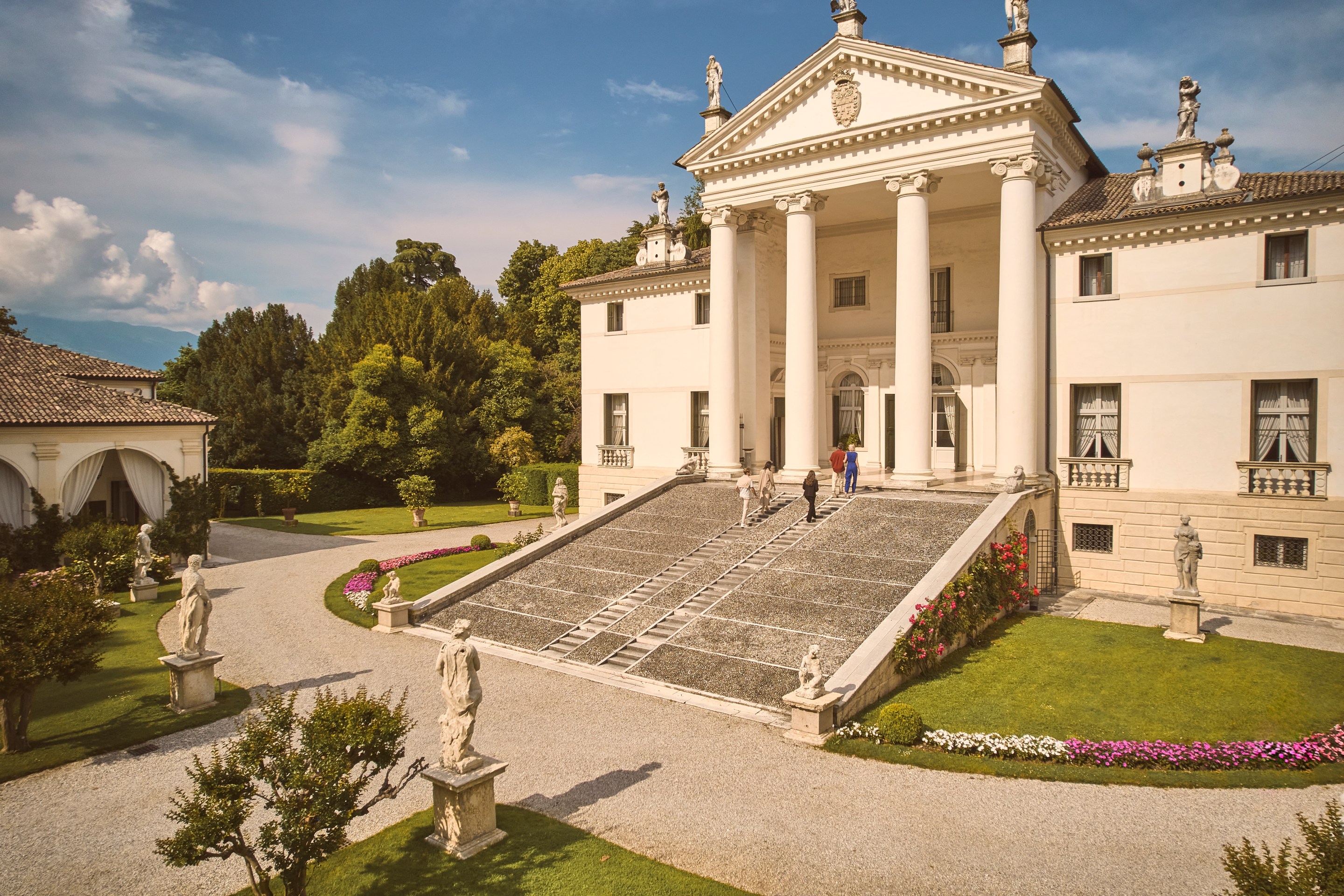
That house was my grandfather’s idea. He had bought it so that nearly 25 of us could live there together each summer, at the edge of the sea.
When I finally tasted the gelo, it was cold and tender, holding for a moment before giving way to the spoon. The watermelon remained unmistakable, though its familiar crunch had vanished. Cinnamon warmed its sweetness; dark chocolate interrupted it; pistachio gave the cool, yielding texture something to resist. Beneath them was a floral note I could not yet name. I had no vocabulary for the way it lingered. Now I would call it sensual.
In English, this dessert is often introduced as watermelon pudding; in standard Italian, as gelo d’anguria. In my family, it was always gelo di mellone. Mellone was the word for watermelon in my grandfather’s Palermo. And gelo, despite the temptation of a literal translation, does not mean frozen. It belongs to a Sicilian family of fruit preparations set with starch, without eggs, milk or animal gelatin.
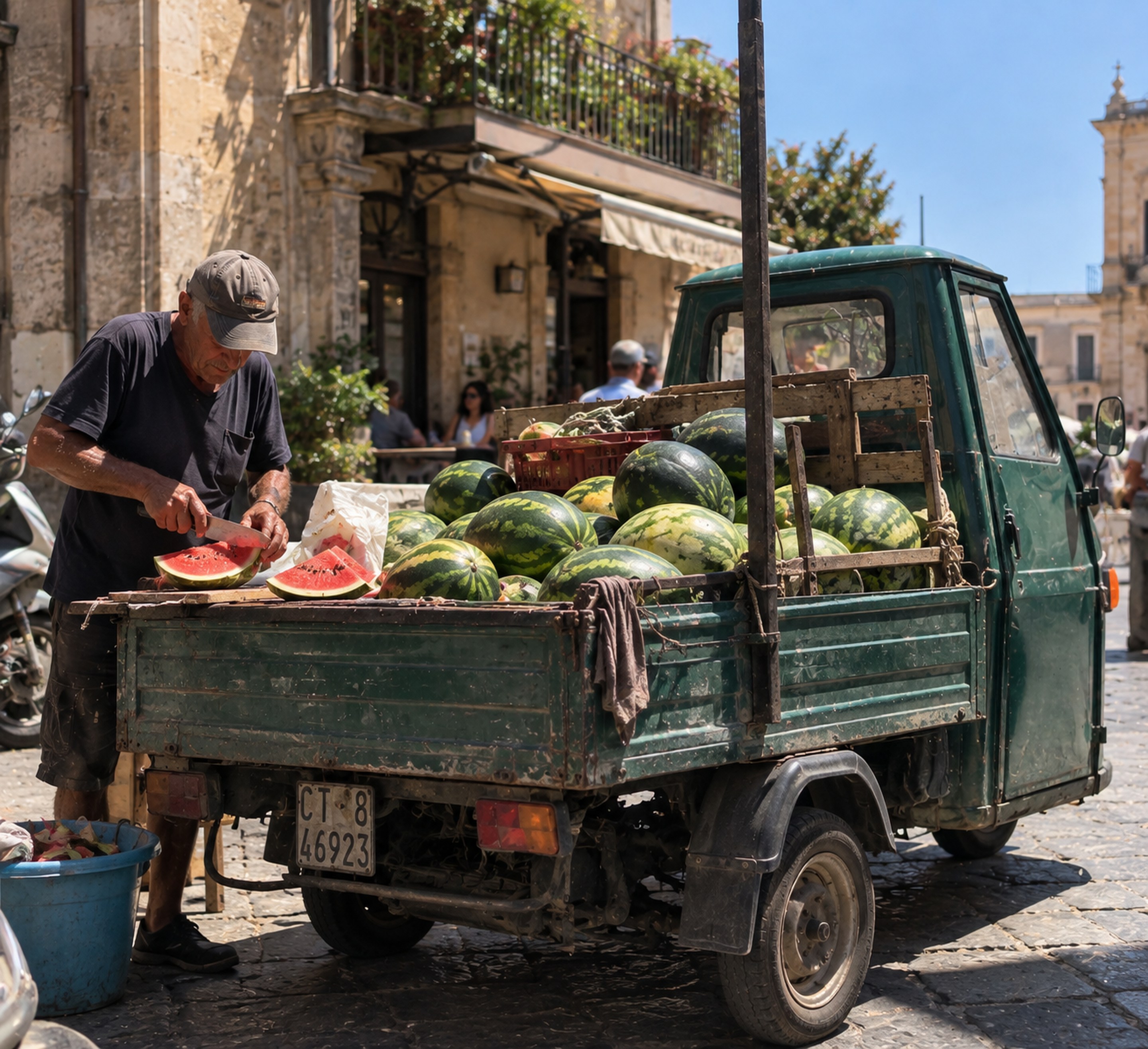
Watermelon was known around the Mediterranean in antiquity, although the sweet red flesh we recognize appeared much later in the record. The history of the gelo is harder to fix. It is often given an Arab origin, but Sicilian confectionery rarely has only one inheritance. Arab influence is one layer, not the whole explanation.
My family’s history of the gelo begins with Elena.
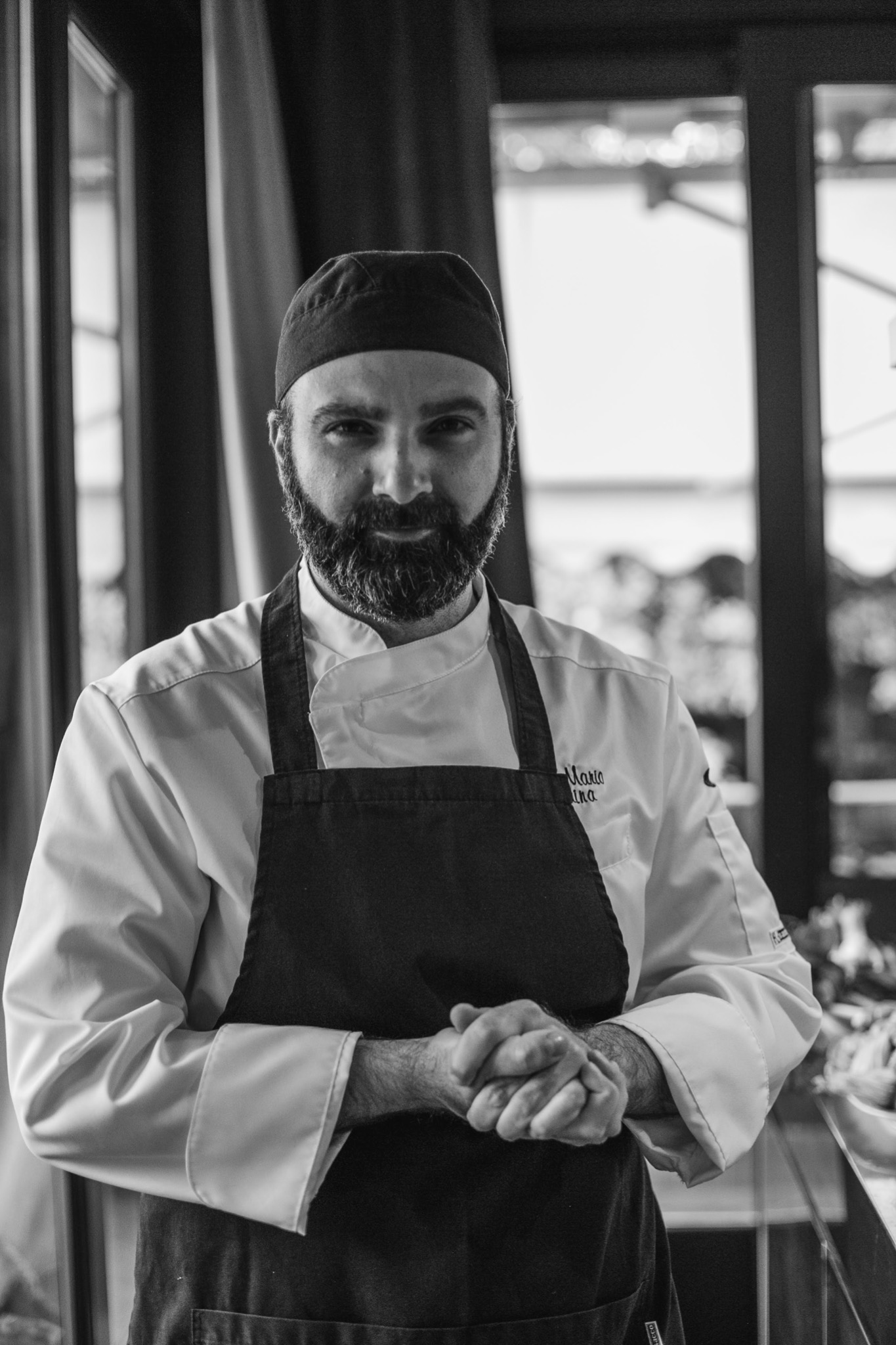
She was the mother of my grandfather Mario and of his sister Ero. Her recipe survived in a handwritten family notebook and, later, in her daughter’s memory. Every summer, when zia Ero carried a pirofila to Spisone, she was returning to her brother a flavor made by their mother.
Watermelon is almost entirely water. In Elena’s gelo, wheat starch makes that water hold a shape. As the mixture warms, the starch granules swell and bind the juice into a tender gel. The liquid slows, turns glossy and begins to close behind the spoon. The amount of sugar follows the fruit: its soluble solids may be measured in degrees Brix, but no number cancels the first instruction. Taste the juice.
The most delicate part begins the night before. Jasmine flowers are gathered after dark, when their fragrance reaches its peak, then left in the refrigerator with cold water and sugar. The next day, the infusion is strained and added only after the watermelon has thickened and the pot has come off the heat. Added then, the fragrance enters the gelo instead of leaving with the steam. In Elena’s method, the jasmine went in last.
It should not sit above the watermelon like perfume. It should emerge after the first cool sweetness, so that the fruit you know ends with a scent you did not expect.
We all loved the gelo, but my grandfather’s devotion bordered on obsession. Once the pirofila entered the refrigerator, he could think of little else. He would go to bed and, sometime after midnight, return to it.
Nobody watched. In the morning, the evidence waited behind the refrigerator door.
My grandmother would find that half the dish had mysteriously vanished. She laughed under her breath at a culprit requiring no investigation, though she was genuinely worried by how much sweet food her husband could eat.
He was eating watermelon, starch, sugar and jasmine, but also Palermo, his sister’s care and the kitchen of a mother who was no longer there. With each spoonful, the man who had gathered all of us under one roof became Elena’s child again. In our house, his nostalgia did not look sad. It looked like a ceramic dish missing half its red.
I do not yet have the family manuscript. One day I will. Until then, I can begin with what Ero preserved in practice: sugar according to the fruit, jasmine after the flame, the moment when juice becomes gelo. I do not want to improve Elena’s recipe. I want to make that red appear again in a refrigerator at the end of summer.
And by morning, perhaps, find half of it gone.
Love discovering Italy one bite at a time? Subscribe to the free Appetito newsletter for the latest in Italian food, travel and favorite recipes.