
There is a sound to a working food plant that can be mesmerizing. It’s the low hum of machinery turning grain, the rhythmic shuffle of product moving through processing lines, and the murmur of employees who have been doing this so long that their hands know the work without their eyes. If you stand inside Sunnyland Mills in Fresno, California long enough, you start to hear what the Orlando family has been hearing for decades: a kind of family language.
Mike Orlando remembers his father, Carl, walking through the original plant on Gearhart Avenue and pausing at a machine the way a doctor listens to a heartbeat. “Something’s not right,” Carl would say, without looking at a gauge or opening a panel. He had no formal education and no engineering training, but he had spent enough years pressed against the work that his ear had become an instrument. That kind of intuition only comes from showing up, every day, for decades, and caring enough to listen.
A Sicilian beginning
Almost a century before Sunnyland Mills became part of the Orlando family story, there was Misilmeri, a small town in the hills outside Palermo, where Pietro Orlando was born in 1888. In 1907, he boarded the S.S. Calabria in steerage class, alone, with a $20 gold piece and the names of relatives in San Francisco. He arrived at Ellis Island, and like so many Sicilian immigrants of his generation, he eventually found his way to California's Central Valley, where the soil and the promise of work made Fresno a magnet for Italian families.
Peter, as he came to be called, worked as a butcher before building Orlando's Market at the corner of Tuolumne and E Street on Fresno's westside, a neighborhood thick with immigrant families who needed exactly what he provided. The building he constructed in the 1920s was ambitious for a man of his means — market and print shop on the ground floor, his growing family and Garibaldi Hall above it, a community gathering space for weddings and celebrations that turned the building into something more than a business. The $5,000 he needed was lent by Herbert and Leon Levy, whose father was a signer of the original Fresno City Charter. They believed in Peter's integrity before they believed in his collateral. That detail tells you something about how Fresno's business community operated in those years, and why certain families endured.
When the Great Depression emptied his shelves, Peter remembered a recipe from Misilmeri and began pickling peppers and vegetables to fill the gaps. What began as survival became Orlando Foods, a company that grew from backyard manufacturing into a regional brand carried by Safeway and other major retailers across the United States and parts of Canada. Peter’s sons, Carl and John, grew up working in that plant, Carl on the machinery and John in sales, and when Peter retired, they took the reins.
In 1964, they built a modern facility in Fresno's Calwa Industrial Park, where they perfected the "fresh pack" pickling process, an innovative method for the industry. But success in a family business is rarely a straight line. In the mid-1970s, skyrocketing interest rates and inflation forced a sale of Orlando Foods to Pacific Choice Brands, which still operates out of the same Calwa address. Carl and John found themselves between companies and between chapters, looking ahead.
Love discovering Italy one bite at a time? Subscribe to the free Appetito newsletter for the latest restaurant openings and Italian travel news.
The Elks Lodge
What came next started at the Elks Lodge, which in 1970s Fresno was the place where deals were discussed over cocktails before they were discussed in offices. Carl and John had been watching Sunnyland Bulgur Wheat, founded by Assyrian immigrant brothers George and Jivon Perch, and they recognized a good fit — of temperament as much as product. The Perches had made it known they would sell only to people who carried the same integrity, humility, and work ethic they brought to the business every day. Carl and John fit the bill, but the Perches were in no rush.
John, who handled sales and was known for his persistence, was not willing to wait. After one particular Elks meeting, he followed George Perch home and pulled into the driveway behind him. George stepped out of his car, confused. "John, what are you doing?" John's answer was characteristically direct: they were the right people, the time was now, and they wanted to sign papers the next day. They did. The scene contains everything that defines the Orlando family's approach to business. They had conviction, a refusal to wait for permission, and boldness that only works when it is backed by genuine character. In 1976, Sunnyland Mills passed into the hands of its second set of brothers.
Enjoying this feature? Explore more stories from California’s Central Valley at Beyond the Fork.
The third set of brothers
Carl ran the plant the way he ran everything: hands-on, ears open, sleeves rolled. He and John loaded 100-pound bags by hand alongside their employees, a fact that still resonates through the company's culture today. Employees who worked under Carl stayed, some for 30 and 40 years, and the reason isn't complicated. When the owner is on the line next to you, sweating through the same shift, the relationship between management and labor becomes mutual.
John and Carl’s sisters, Jean, Prudy, Rose and Josephine, were part of the operation, too, working alongside their brothers at the original westside plant. They are remembered by the family for their joyful spirit, dedication and strong work ethic.
Mike, the eldest of Carl's sons, grew up in that environment in his younger years but worked outside of the business in commercial real estate before re-entering the food business in 1993. He was a founder and the first chairman of the Whole Grains Council. His work helped launch the Whole Grain Stamp, now an internationally recognized symbol of whole-grain content in food products.
Steve, 13 years younger, came into the business in 1996 after working at a food service manufacturing and distribution center. There he learned everything from human resources, sales, accounting, customer service, and many other jobs that helped him succeed in his next venture.
This was a requirement the family had codified into its bylaws. Any Orlando who wanted to join the company had to earn experience somewhere else first. By the time Steve arrived at Sunnyland, he understood the business from the outside in, and that perspective influenced everything the brothers would build together.
The early years were not seamless. They were both strong-willed, driven men who had inherited their father's intensity. They made the relationship durable on purpose. They hired a family business consultant who helped write job descriptions. They bought into the company rather than receiving it as a gift, and they ran it as a company first and a family business second. They drew boundaries around their roles and respected them. And underneath all of that structure, they made a decision that many families in their position fail to make: the relationship mattered more than the money. They paid themselves fair salaries, lived comfortably without chasing the last dollar, and refused to let ego dictate strategy. "We did not want to be those people," Mike says, referring to the families he had watched splinter apart over money and control.
Their father's death was the moment that tested everything. Carl was gone, and the brothers faced what Steve calls a sink-or-swim decision. Their middle brother, Pete, who served as a partner and board member before retiring, stood with them through the transition while providing excellent counsel and guidance. Their mutual faith in Jesus Christ and in each other became the foundation that held everything together.
Those values began at home. Their mother, now 93 and still sharp-witted, gave them their sense of humor. Their father gave them their work ethic. Carl rarely spoke about the poverty of his childhood, including Christmas when the only gift he received was a single orange. The brothers learned that story from their mother, who said Carl had little interest in looking back. He was focused on giving his own children more and moving the family forward.
What they built
According to the family's history of the company, Sunnyland Mills eventually became the country's only premium producer of bulgur wheat. In 1993, they built the most modern bulgur facility in the United States, increasing production tenfold, as the number of domestic bulgur producers declined. But the number Mike and Steve seem to care about more than market dominance is the number of years their customers have been buying from them — some for over 60 years, relationships that predate even the Orlando family's ownership.
For years, Sunnyland relied heavily on Middle Eastern food distributors, which meant seasonal peaks and valleys. Mike pushed to expand into selling to food manufacturers, educating buyers about what bulgur is, how to use it, and why its nutritional profile made it relevant far beyond the communities that had been cooking with it for centuries.
As the second generation of Orlando family ownership, Mike and Steve also expanded Sunnyland’s product line, introducing certified organic bulgur products, brown bulgur, KAMUT® Khorasan bulgur wheat and Grano-Golden Pearled Durum.
The next generation
Steve’s son Luke represents the next Orlando generation in the food business. He started by working summers at the plant and then, following the family code, he worked outside the business at a large food distribution company learning how the wheels turn. Luke is now working part time at Sunnyland while simultaneously finishing his last year at Fresno State University where he is studying business.
Watching his nephew Luke bring that same dedication to the business has been especially meaningful for Mike. He recalls asking Luke to walk the building with him one day, only to be told by Luke that he was busy getting a truck out and would join him when he could. It was a small moment, but one that stayed with Mike, who admits he may not have had that same level of dedication at Luke’s age. In the Orlando family, carrying the business forward has always meant earning your place in it.
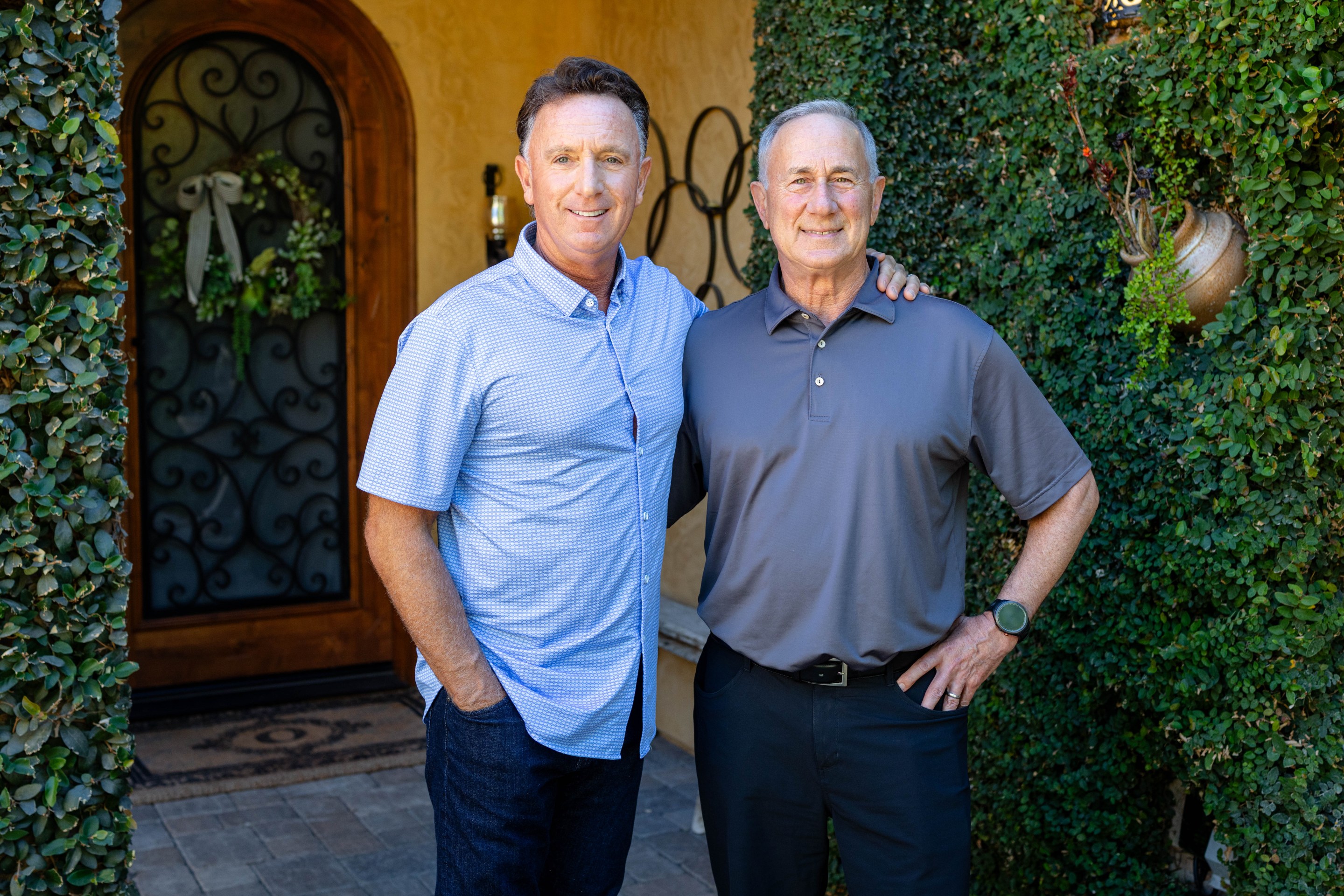
Mike is semi-retired now, but he and Steve still talk constantly, still partner on projects, and approach each new decision with the same question they have been asking each other for 30 years: Do you want to do this? Money matters, of course, but the final question was always whether the work was worth doing and whether they would enjoy doing it together. “I respect him as a partner, and I love him as a brother,” Mike says of Steve, a relationship strengthened by decades of working side by side.
And after all those years of listening to each other, Steve still listens to the voice that helped shape them both. When making a decision about machinery, he sometimes hears his father whispering to him: “Do it right. Hire the best contractor or supplier, and do it for the long term.”
Steve is now carrying on his father’s footsteps and, just like his dad, listening to every piece of equipment, running the operations and keeping those same business relationships close. Their father Carl told him, “always take care of your vendors and suppliers because one day you will need them when things break and when that happens they will be by your side.”
Pietro Orlando arrived at Ellis Island with broken English and a refusal to look back. When someone once suggested he might return to Sicily someday, he reportedly said he would drive back when they built a freeway to it. His spirit, stubborn, optimistic and fiercely proud of the country he chose, is still audible in the hum of the plant today and in the laughter of two brothers who figured out how to run a company without losing each other. Mike and Steve often say they are blessed by the hard work of those who came before them. The feeling, walking through Sunnyland Mills today, is mutual.
This story is part of Beyond the Fork, a series by Sarah Campise Hallier and photographer Patty Schmidt exploring California's food industry, business owners, chefs and the communities they serve.
Follow @forkboundfoodies or visit their website for future features.