

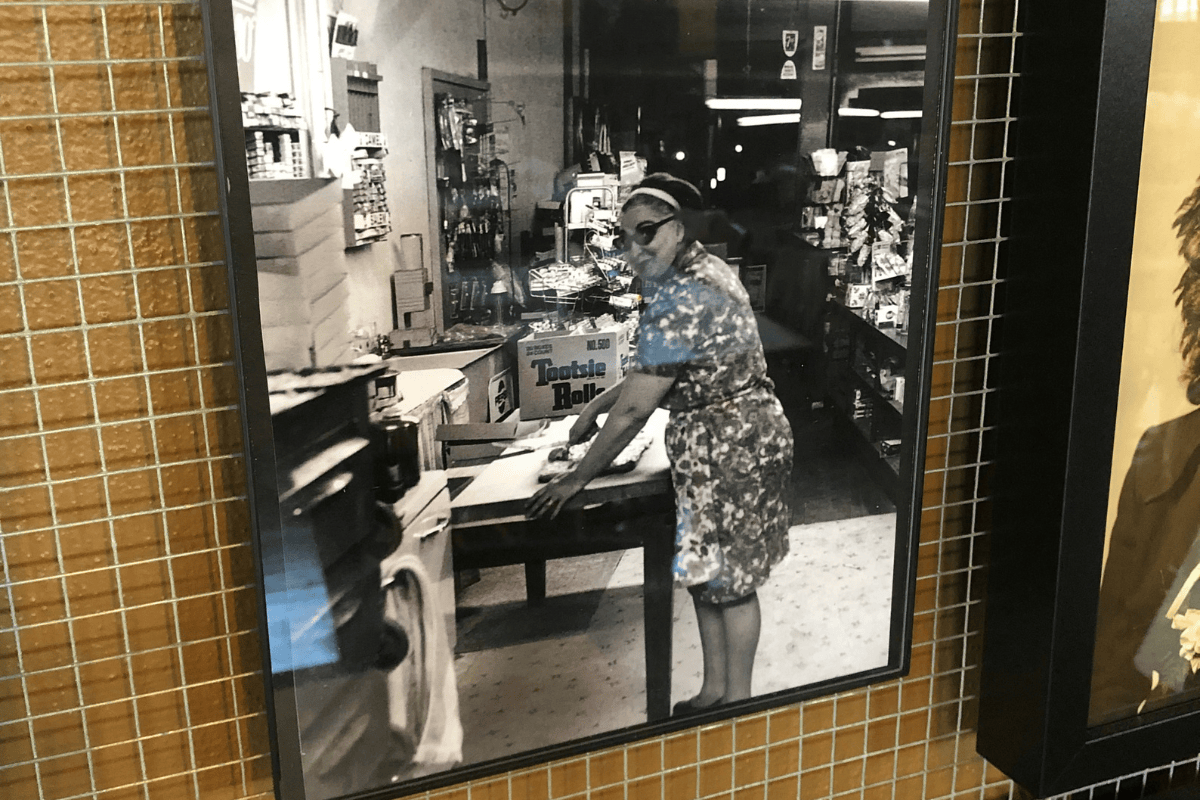
My Nonna D’Arcangelo passed away in 2007, right before I gave birth to my daughter. I still remember visiting her bedside in the hospital, six months pregnant, crushed by the quiet grief that these two lives would never cross. Since our whole family worked at the pizzeria, I basically grew up in her home. No matter when you looked, she was always in the kitchen.
She had every recipe memorized, just like she knew the face of every single customer who walked through the door. My grandmother loved her family deeply. She also wasn’t afraid to give you her opinion on absolutely anything, whether you asked for it or not. There was nothing quite like Friday nights in our pizzeria. The back kitchen was a wall-to-wall family affair: my Nonna and our good family friend Pearl at the counter, my mom and her best friend, my papa, and an endless stream of aunts, uncles, cousins, my siblings, and me right in the middle of it all.
The dining room buzzed with the sound of our community having dinner with their families, the constant opening and closing of the oven doors and the pizzas being cut on the board. But if you sat in the kitchen on a Friday afternoon before the dinner rush hit, you’d find a weekly family ritual taking place.
The legend of the pizza fritta
In our shop kitchen, where hundreds of pounds of dough were rolled every week, Nonna and Pearl operated under a foundational rule of cucina povera: You wasted nothing. As the Friday prep was finalized, scraps and trimmings from the dough trays accumulated. To anyone else, they were just throwaway offcuts. To Nonna and Pearl, they were the base of an entirely new recipe: the pizza fritta.
This wasn't just a clever pizzeria trick; it was rooted right in our Abruzzese heritage. Back in Abruzzo, these fried dough scraps were known as pizz’onta, a simple, common treat.
The recipe for pizza fritta wasn't hanging on the wall. We didn’t have a scale, and, most of the time, my nonna measured with her hands, not a measuring cup. She would simply roll the leftover dough scraps into rough, pillow-shaped rounds, dropping them into a pan of shiny hot oil. Pearl stood right beside her, spider-skimmer in hand, waiting for the dough to puff instantly, and lifting it out of the oil on a plate lined with paper towels to absorb the oil.
The women holding the spoons
There were always two distinct versions, and I still can’t decide which one I like better.
The first was the crowd favorite for anyone stepping into the back kitchen, a version retrieved piping hot from the oil, drained for just a second on the plate, and immediately tossed in a shallow bowl of granulated white sugar. The heat of the dough melted the sugar crystals just enough to create a delicate, sweet crust over the salty, fried exterior.
The second version was more traditional. Strips of dough were folded around plump raisins before hitting the oil. The raisins would warm and swell inside the steamy pockets, offering little bursts of natural sweetness against the crisp, savory dough. The fried strips were then dusted lightly with sugar.
Biting into a warm, sugar-dusted pizza fritta is something I’ll never forget. You wouldn't find it on our menu, and money couldn't buy it during the dinner rush. It was simply a gift we laid out for our family and customers, many of them Italian immigrants who found a little piece of home in that simple plate of fried dough.

Nonna and Pearl’s Friday Pizza Fritta
4
servings15
minutes15
minutesIngredients:
For the fried dough base
1 lb. 1 pizza dough (store-bought or homemade), brought to room temperature
4 cups 4 neutral frying oil (such as canola or vegetable oil) for traditional frying
pinch of fine sea salt
- For the sweet sugar coating:
1/2 cup 1/2 granulated white sugar (or cinnamon-sugar blend)
- For the raisin variation:
1/2 cup 1/2 seedless dark raisins or golden sultanas - you can also combine them if you want additional raisins or a variety of both types
Directions
- Prep the dough and fillings: If making the raisin version, place the raisins in a small bowl, cover with warm water, and let soak for 10 minutes to plump up. Drain completely and pat dry with paper towels.
- Shape the pillows: Divide your pizza dough into two equal portions if making both varieties.
- For the sugar version: Stretch or roll the dough on a lightly floured surface to about ½-inch thickness. Cut into 2-inch squares or rustic rectangles.
- For the raisin version: Flatten the dough, scatter the plumped raisins evenly over the top, and gently knead the dough to distribute them. Roll to ½-inch thickness and cut into rustic rectangles.
- Heat the oil: Fill a heavy-bottomed Dutch oven or deep skillet with about 2 inches of oil. Heat over medium-high until a thermometer reads 350°F (175°C), or until a small piece of dough dropped into the oil sizzles and floats to the top immediately.
- Fry to golden perfection: Working in small batches so as not to overcrowd the pan, carefully lay the dough pieces into the hot oil. Fry for 1 to 2 minutes per side, turning once with a slotted spoon or tongs, until puffed and deeply golden brown.
- Finish and serve: For the sugar version, immediately remove the hot dough with a skimmer, drain briefly on paper towels, and while still piping hot, dredge thoroughly in the bowl of granulated sugar to coat all sides.
- For the raisin version: Drain on paper towels, sprinkle with a tiny pinch of sea salt and dust of white sugar.
- Serve immediately while hot, preferably alongside a fresh cup of espresso (or a cappuccino if it’s before 11:00 a.m.).
Did you make this recipe?
Tag @appetitomagazine on Instagram and hashtag it with #italianfoodanddrink
Like this recipe?
Follow @Appetitomagazine on Pinterest
Follow us on Facebook!
Follow us on Facebook