

There are places in Tuscany where history feels carefully preserved, and others where it still feels alive.
The drive towards Trequanda takes you deeper into the Tuscan countryside, through rolling hills, vineyards and olive groves, along roads that seem to follow the contours of the landscape rather than cut through them. It is the kind of journey that makes you conscious of how closely wine here is connected to place.
Arriving at Fattoria del Colle feels like entering another layer of that history.
Part of the villa and its chapel were built in 1592 by Donatella Cinelli Colombini’s ancestors, the Socini, an important Sienese family whose religious beliefs eventually led to excommunication and the confiscation of their property. More than three centuries later, in 1919, the estate found its way back into the family.
Today, the stone buildings still form an almost self-contained Tuscan hamlet, surrounded by vineyards, olive groves and countryside.
But this is not a place standing still.
Inside, old stone walls sit alongside contemporary winemaking equipment. Rooms carrying the character of a Tuscan country house lead towards spaces created for tasting, hospitality and wine. Tradition is present everywhere, but so too is the sense that it is continually being reconsidered.
Love discovering Italy one bite at a time? Subscribe to the free Appetito newsletter for the latest restaurant openings and Italian travel news.
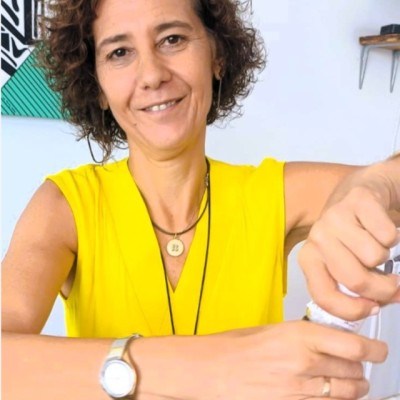
I had already interviewed Donatella before making the journey, but being at Fattoria del Colle brought many of the things we had discussed to life. Her story is deeply connected to this landscape and its history, yet much of her career has been about looking forward and questioning how things have always been done.
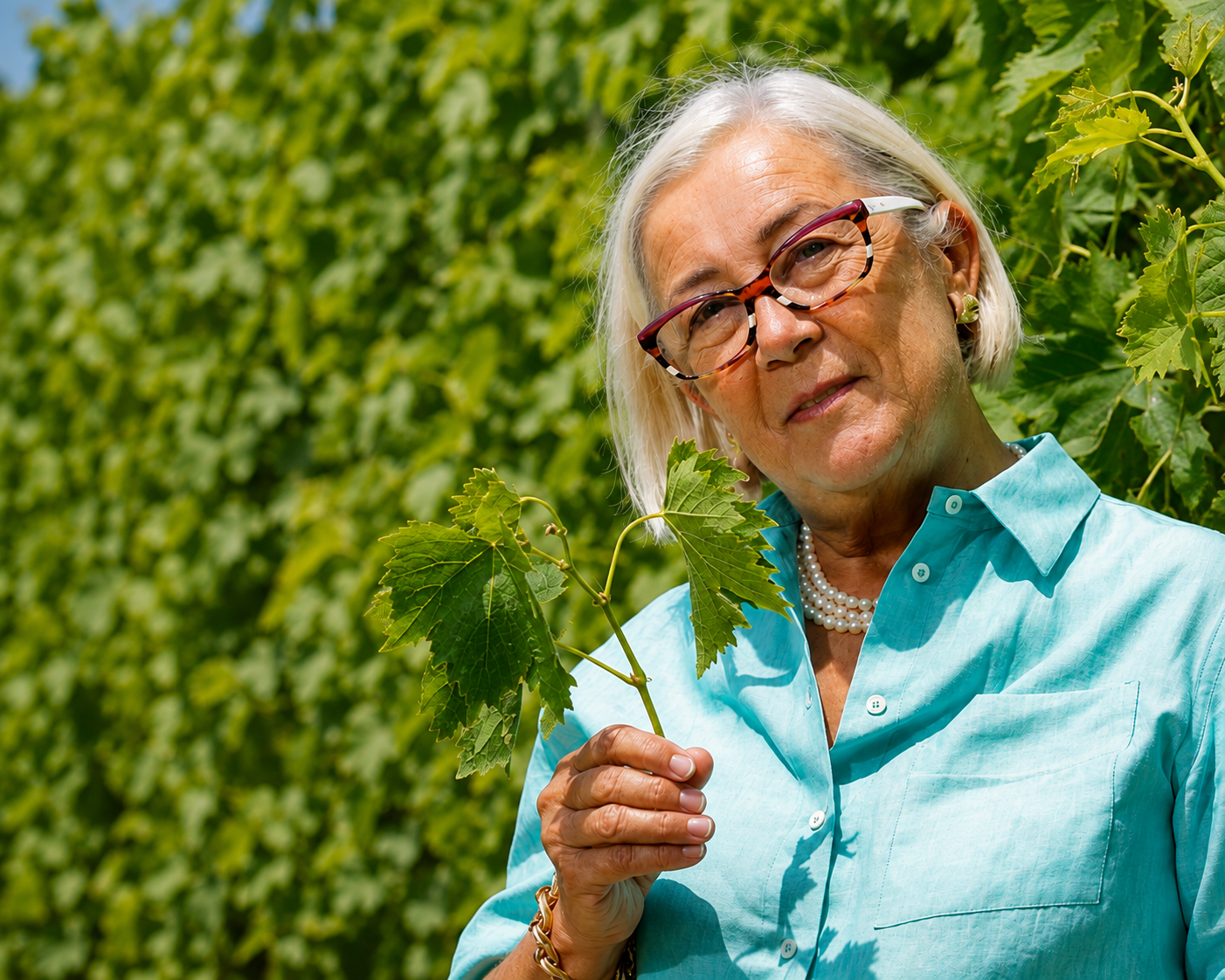
Donatella is one of the best-known female figures in Italian wine. A producer of Brunello di Montalcino and other Tuscan wines, she has also been a pioneer of wine tourism and a prominent advocate for women working across the Italian wine sector.
Her world extends across two distinct Tuscan estates:
Fattoria del Colle at Trequanda, the historic estate and wine-tourism destination I visited, and Casato Prime Donne at Montalcino, her Brunello winery and the heart of her pioneering all-female project. It is at Casato Prime Donne that one of the most remarkable chapters of Donatella's story began.
When Donatella began building her own wine business in the late 1990s, she discovered something extraordinary. Skilled winemakers were difficult to find, yet trained female oenologists were available, largely because many wineries did not want women working in their cellars.
Donatella did.
That decision became the foundation of Casato Prime Donne’s all-female identity.
What started as a response to inequality became part of the identity of the winery and a powerful statement about women's place in Italian wine.
Today, however, Donatella is interested not simply in how far women have come, but in what still needs to change.
A changing wine world
When I spoke to Donatella, she reflected on the transformation she has witnessed during the past two decades.
Women are increasingly visible throughout Italian wine, she told me, including among trained oenologists and particularly in areas such as marketing, communication, commercial roles and wine hospitality.
This is not a story about women making wine ‘like women." It is about women finally having greater opportunities to contribute their knowledge and skills to an industry that did not always make space for them.
And Donatella believes that contribution matters far beyond the cellar.
She sees women playing an important role in international markets, sustainability, hospitality and wine tourism, areas that have become increasingly important as wineries look beyond simply producing wine towards creating relationships with the people who drink it.
Learning to look ahead
Spend time talking to Donatella and one word continually surfaces: learning.
Agriculture, she explains, forces producers to think years rather than months ahead. Plant a vineyard today and it will be years before the resulting wine reaches a bottle.
“You have to understand what will happen in the next five years,” she told me.
That means watching changes in climate, lifestyles and markets and accepting that not every decision will prove to be the right one. For Donatella, innovation is not change for its own sake. It is about learning constantly and finding ways to improve quality while respecting the place where the wine originates.
She offered a wonderful comparison.
Wine, she suggested, is closer to music than to many other agricultural products. If you play Beethoven, the music itself does not change, but its interpretation can.
It is difficult to imagine a better metaphor for Tuscany.
Here, producers inherit vineyards, traditions and centuries of knowledge, but every generation must decide how to interpret them for its own time.
A Tuscan experience, not simply luxury
Donatella's influence on Italian wine extends far beyond her own estates, perhaps nowhere more clearly than in wine tourism. In 1993, she founded the Movimento Turismo del Vino and created Cantine Aperte, an initiative that encouraged wineries to open their doors and welcome visitors inside.
The first Cantine Aperte brought together 100 Tuscan wineries. It was a deceptively simple idea, but one that helped change the relationship between Italian wineries and the people who drank their wines. The cellar was no longer simply a place of production; it could become a place to visit, taste, meet the producer and understand something of the landscape and culture behind the bottle.
Three decades later, wine tourism has become an integral part of the Italian wine experience. Yet Donatella’s thinking continues to evolve.
Walking through Fattoria del Colle, the connection between wine and hospitality is everywhere. Old stone sits beside contemporary winemaking equipment; tasting tables are laid within historic spaces; food, landscape and wine become parts of the same story.
For Donatella, the future of Tuscan hospitality is not about trying to compete with the most luxurious hotels in the world.
Instead, she wants visitors to experience something they cannot find anywhere else.
“We can offer an experience of tradition,” she told me.
Her vision includes old recipes, local fruit and vegetables, and the everyday food culture of Tuscany. Even something as apparently simple as growing local ingredients for panzanella becomes part of preserving a connection between the visitor and the place.
“Not a luxury experience,” she says, “but a real experience.”
As wine tourism becomes increasingly sophisticated, there is a danger that experiences become interchangeable: beautiful tasting rooms, immaculate glasses and carefully designed packages that could exist almost anywhere.
Donatella’s alternative is to make the experience more local, not less.
The next generation
There is another change taking place.
Donatella’s daughter, Violante Gardini Cinelli Colombini, already works within the family business and represents its next generation. She plays an important role within the family business and represents its next generation. She is also president of Movimento Turismo del Vino, the organisation her mother helped create more than three decades ago. Donatella does not expect her daughter simply to reproduce what she has done. Quite the opposite.
“She is different from me,” she told me, adding that she believes Violante will be able to “open a new window.”
That phrase stayed with me.
Family wine businesses often talk about continuity, but continuity does not necessarily mean doing things in exactly the same way. The vineyards may remain, and history may remain, but each generation sees the world through a different window.
For the family, the coming years will include questions familiar across the wine world: how to protect the soil, reduce environmental impact, respond to climate change and rethink aspects of wine production and packaging while continuing to improve quality.
Yet the answer, at least here, seems unlikely to be choosing between tradition and innovation.
It is about knowing what should change and understanding what is worth keeping.
When women no longer need to be the story
Perhaps Donatella’s most surprising answer came when I asked about the future for women in wine.
For someone who has spent so much of her career promoting women within the sector, her ambition is ultimately that gender should become less remarkable.
“I hope that in ten years the Women of Wine will finish,” she told me, “because there is no difference between male and female.
She knows Italy has not reached that point.
Women still face practical inequalities, particularly around childcare and access to the informal professional networks that have traditionally helped careers and businesses develop. For now, she believes women need to collaborate, support one another and create stronger networks of their own.
But perhaps success will eventually mean that a female winemaker, cellar master or winery owner no longer requires a special introduction.
Walking away from Donatella’s world, that thought seems particularly appropriate.
The story of Casato Prime Donne began because women who had trained to make wine were not being given the opportunity to do so.
A generation later, women are no longer standing outside the cellar asking to be allowed in.
They are making the wine, welcoming the visitors, taking the business into international markets and preparing to open the next window.