

Editor's Note: The opinions shared in this editorial are those of the author alone, despite his affiliation with this publication, and do not necessarily reflect the views of Appetito magazine.
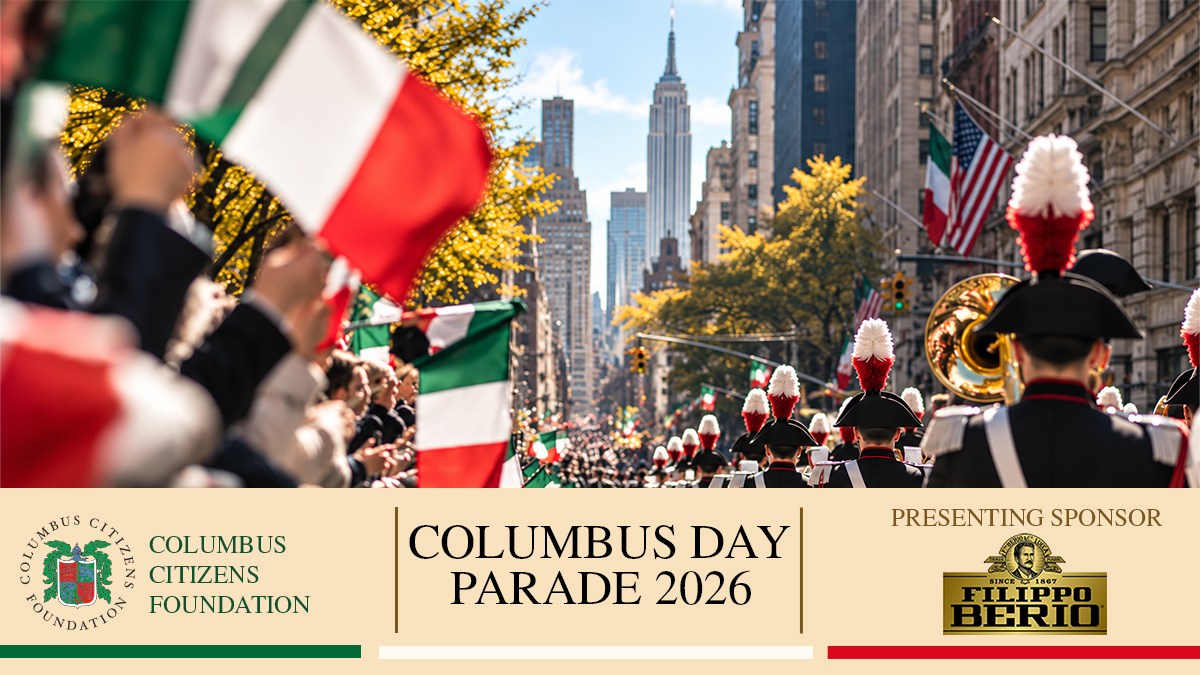
October has arrived and thus begins Italian-American Heritage and Culture Month. The highlight of the month for most Italian-Americans is Columbus Day. For some non-Italian Americans, though, Columbus Day and Columbus himself (or Columbus anything) are not to be celebrated.
The reasoning is that Christoper Columbus, the Italian explorer from the 15th century, wrought misery upon the indigenous peoples of what would become the Americas; therefore, everything bearing the name Columbus, including the holiday, should be changed, eliminated or taken down. This is a mistake.
Columbus’ impact on the indigenous people of the Americas is debated by scholars on both sides of the argument: the anti-Columbus contingent accuses him of being a cruel conqueror; others, in the opposing camp, go as far to portray him as some sort of savior. The primary bit of evidence cited against Columbus is the diary he apparently kept and subsequently presented to his benefactor, Queen Isabella of Spain. The diary, in an oft-cited passage, contains reference to his impressions of the indigenous people he encountered on the Caribbean islands as being unintelligent and ideal for slavery. Those inclined to defend Columbus question the authenticity of the diary or if the words were perhaps written by someone else (as was common at the time).
An objective assessment, by this non-scholar, is that the arrival of Columbus and his crew did not serve the best interests of the indigenous people with whom they encountered. But it’s also important to recognize that this was well over 500 years ago and the man was an explorer after all. Columbus’ four transatlantic journeys are remarkable accomplishments that helped change the course of human history. Regardless, this is not what anything “Columbus” in the United States of America is really about.
Italian immigrants faced harsh discrimination upon their arrival in America. A community of Italians in New York established a holiday in 1792 celebrating their status in America. They chose the name for their holiday from an Italian well-known to Americans (Joe DiMaggio had yet to be born). The holiday was adopted up and down the eastern seaboard in Italian communities. Then, in 1891, there was the mass lynching of 11 Sicilian men in New Orleans. In response to this act of brutal discrimination, President Benjamin Harrison recognized Columbus Day as a holiday the following year. FDR made it an annual holiday in 1934.
The reasoning behind these presidential decisions was clear: Italians in America were major contributors to the country. The expertise brought from the old country was crucial in the building of this new country’s bridges, buildings and transportation systems. The influences of Italians are evident in every sector and every corner of America. This tribute to the accomplishments and contributions of Italian-Americans is what is celebrated on Columbus Day and recognized every day in each municipality, organization, institution, structure and statue that bears the name or resemblance.
It is not about a singular man and what he may or may not have done six centuries ago; it is about celebrating the accomplishments, past and present, of those of Italian descent in the United States of America.