

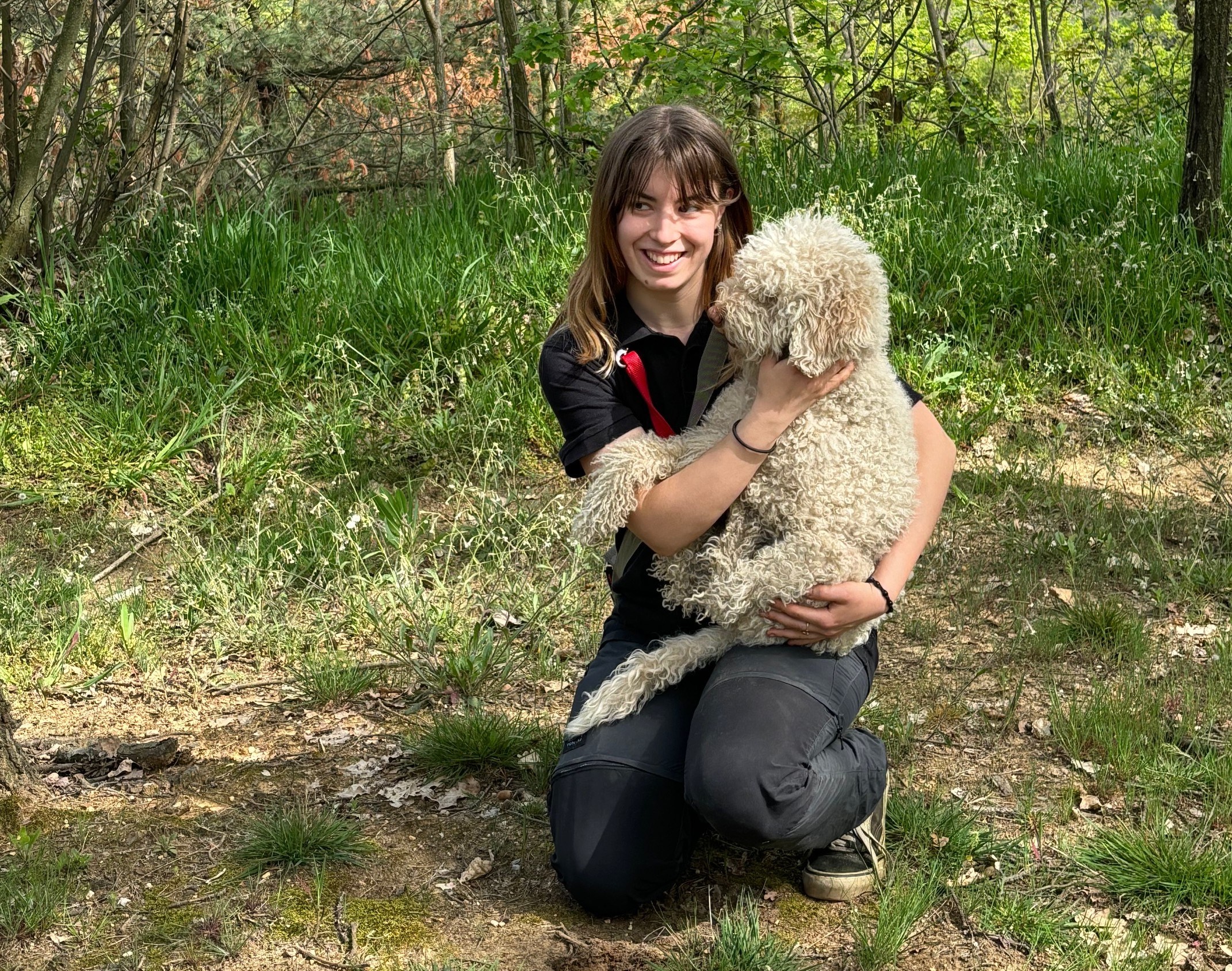
High in the hills above Alba, it felt like we were on a hunt for buried treasure. We had been told stories of "secret locations" and "finding small fortunes," but there is no X to mark the spot. Instead, our little group was hurrying to keep up with an eager little dog who was zigzagging through the forest, nose to the ground and tail in the air. The dog, a white curly-haired pup also called Alba, is being trained to unearth truffles, and we’ve come along on a practice run.
The air is soft and fresh after an earlier shower of rain, fragrant with the smell of the earth and the rough-barked trees around us. We’re distracted by the views over the distant hills, the occasional clump of purple irises peeking through the undergrowth, and watching our footing on the uneven path, but the young water dog is keen to keep hunting.
Vittoria, Alba’s handler, is a third-generation truffle hunter. She explains that it has been a longtime family tradition to train and build relationships with their dogs, and they start young, rubbing truffle oil on the mother’s nipples as the puppies suckle.
Vittoria also tells us that using pigs to hunt truffles has been banned in Italy since 1985 due to the environmental damage they can cause. Dogs are much less likely to eat the expensive truffle than a pig!
So important are these oral traditions, handed down through generations, and practices which respect the soil and the ecological balance of the forest, that UNESCO recognized Italian truffle hunting on the Intangible Cultural Heritageby adding it to the list in 2021.
While Vittoria talks, Alba keeps moving, trotting among the trees and sniffing around the roots of oak trees. When he starts circling and pawing at the ground, Vittoria breaks off and runs to join him. It’s the most promising indication yet. A moment late, both dog and handler are on all fours, scrabbling at the ground. Vittoria carries a special small silver spade for the purpose, and digs carefully and patiently to remove the fungus without damage, allowing new growth for future harvests.
Finally, Vittoria’s smile beams, and she holds out her prize. It’s not the season for the most valuable white truffle, but this small, black, unprepossessing lump can still fetch hundreds of euros per kilogram. We sniff deeply as she hands it around, inhaling the earthy, mushroomy aroma of this underground treasure.
We pass the truffle carefully from hand to hand. It is the size and shape of a dark brown squash ball and no one wants to be the person to lose it in the leaf litter. Vittoria wraps it carefully and places it in her backpack, and we head further into the woods.
Having warned us at the start that we could come back empty-handed, the afternoon’s hunt yields two more truffles, and Vittoria is delighted with Alba’s efforts. We trek back down the hill to the family restaurant, where her parents, Nonna and great-uncle are waiting to greet us, and the red-checked tables on the terrace hold charcuterie boards laden with regional produce. We sip local wines, taste hazelnut spreads, sample cheeses drizzled with saffron honey, homemade cured meats and of course the earthy, garlicky flavour of truffle oil and shavings.
Alba seemed perfectly content with his plain dog biscuits.
Love discovering Italy one bite at a time? Subscribe to the free Appetito newsletter for the latest restaurant openings and Italian travel news.