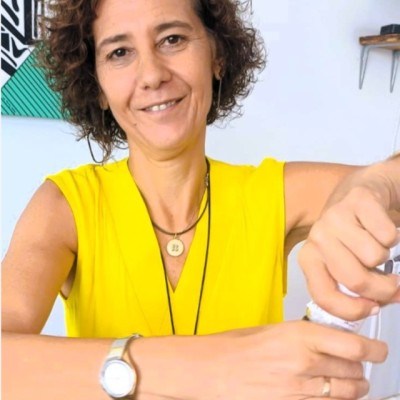


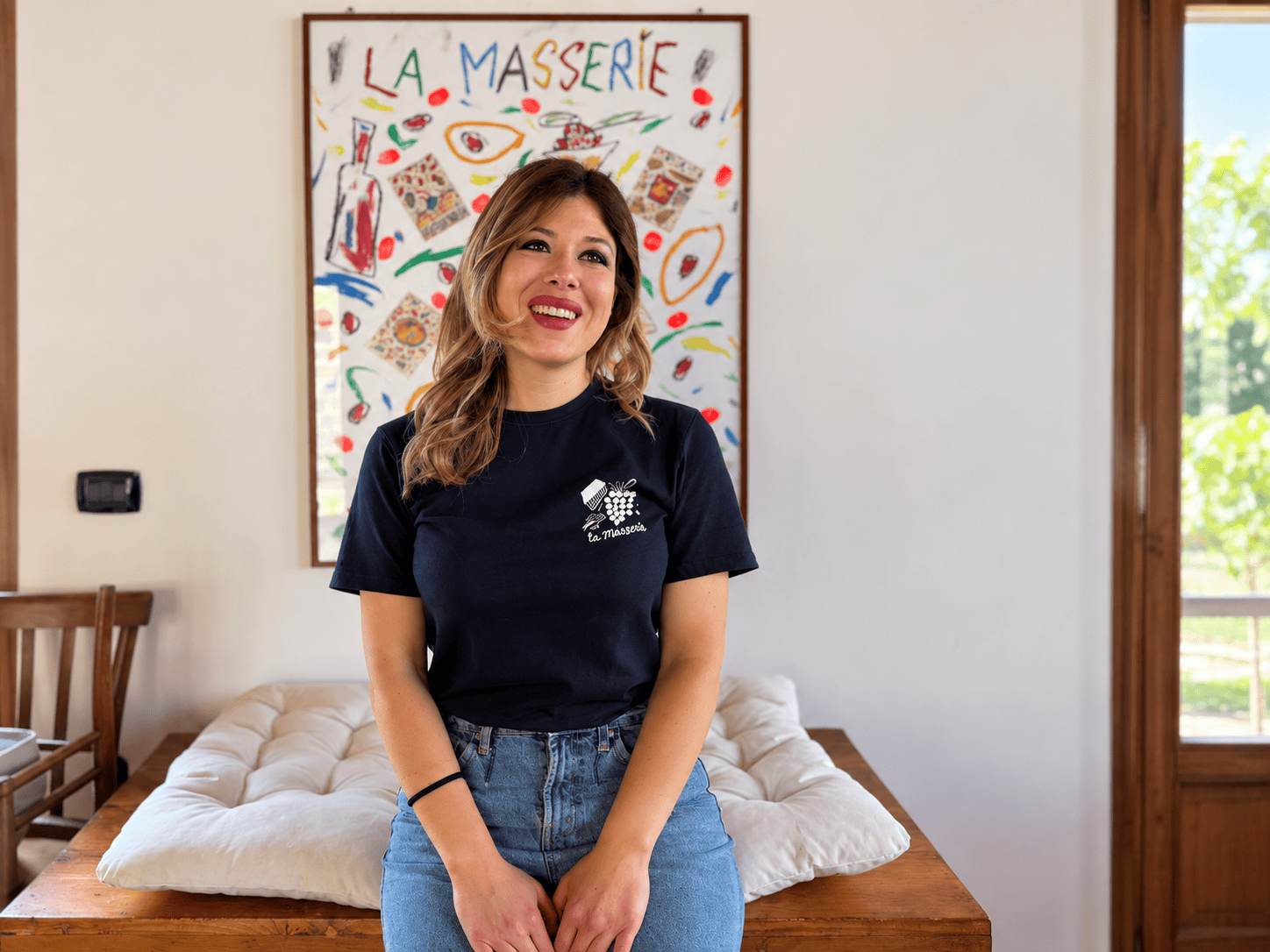
Sara Carusone did not fall in love with wine through tasting it. Nor did she enter the family business simply because it was expected of her. Her journey into wine began somewhere rather different, in the pages of history.
“I became passionate about the world of wine in a somewhat unusual way,” she says. “Not because I loved it, not because my family had this business, but because I fell in love with the history of Pallagrello.”
At the time, Carusone was studying modern philology, with little indication that wine would eventually become central to her professional life. Then she encountered the story of Pallagrello, one of Campania’s historic native grape varieties, and became fascinated by its connection to her territory and to the Bourbon period.
Her interest became the subject of her university thesis, through which she explored the wines and grape varieties of her homeland and their historical development. Particularly captivating was the story of Ferdinand IV and the viticultural heritage associated with the Bourbon court. Pallagrello, historically associated with Piedimonte (in Campania), forms part of the story of the celebrated Vigna del Ventaglio at the royal estate of San Leucio, where different grape varieties cultivated within the kingdom were brought together.
For Sara, however, the significance of this history was more than academic. It connected wine to landscape, identity and the agricultural heritage she had grown up around.
“His madness has become my madness,” she says of her fascination with Ferdinand and Pallagrello. “An uncontrollable passion that has led me over time to learn more and more.”
Three generations, one territory
The Carusone family's connection to viticulture stretches back through generations. Sara's grandfather, Antonio, cultivated the traditional crops of the area and produced bulk wine for local restaurateurs. Caring for the land was not presented as a fashionable lifestyle or business strategy; it was simply part of everyday family life.
A significant change came with the next generation. In 2005, Sara's father, Giuseppe, transformed the family's activity into the branded winery La Masserie.
There was nothing ostentatious about the transformation. The family's old farmhouse was repurposed with characteristic practicality as an old stable became the winemaking room, while a former chicken coop found a new life as a tasting room.
Then came Sara, representing the third generation.
Today she is involved directly in production as well as hospitality and communication. Her role reflects the changing nature of the family winery itself, deeply attached to its agricultural roots, but increasingly required to communicate, welcome visitors, embrace technology and respond to a rapidly changing wine market.
At the center of it all remain the native grapes that first captured her imagination: pallagrello bianco, pallagrello nero and casavecchia.
Want to be the first to know about Italian food events, restaurant openings and culinary travel? Subscribe to the Appetito weekly newsletter.
Preserving tradition by allowing it to evolve
For a small winery such as La Masserie, protecting tradition does not mean refusing change.
“Learning, training and keeping up to date are fundamental in a rapidly evolving sector such as wine,” she says. That learning comes from many places, including customers and winery visitors, reviews and questions, digital resources, other producers and industry professionals. Listening becomes part of running the business.
The COVID-19 pandemic provided a particularly challenging test. La Masserie had historically depended heavily on the restaurant sector, leaving the business exposed when hospitality suddenly closed down. The family's response included developing e-commerce, experimenting with online tastings and changing the ways it maintained relationships with customers. Investment in vineyards also looked beyond the immediate crisis toward the longer-term future of the business.
“We responded to the emergency by transforming the crisis into an opportunity for evolution,” Sara says.
Digitalization has continued, although for a small producer the process inevitably comes with financial and organizational constraints. La Masserie has introduced new equipment, e-commerce and digital systems for booking winery visits, events and tastings. Technology, though, is not intended to replace the artisanal character of the winery.
“Within our means, we have embarked upon a targeted process of modernisation,” she explains.
It is an important distinction. At La Masserie, modernisation sits alongside indigenous grapes, organic practices, respect for the soil and a strong sense of territorial identity. Innovation becomes a means of sustaining tradition rather than abandoning it.
Stronger together
Sara is equally clear about the importance of relationships between producers, particularly for small wineries that do not have the resources of larger companies.
“Networking is an exceptional driver of growth because it allows people to share expertise, stimulate innovation and tackle market challenges together.”
For her, collaboration can provide access to knowledge, technology and sustainable practices, while also creating opportunities for joint participation in trade fairs and the development of wine tourism. It can be particularly powerful when promoting lesser-known native varieties. One small winery may struggle to build international recognition for an unfamiliar grape; a territory working collectively has a much stronger voice.
“Together, they can transform a local rarity into a unique strength that cannot be replicated elsewhere,” she says.
It is an idea that brings Sara's story back to where it started. Pallagrello initially fascinated her because of its past. Today, its value also lies in what it can offer the future: a wine that belongs unmistakably to a particular place.
A woman's place in the winery
That future is also changing for women.
Sara speaks openly about the prejudices that can remain in a historically male-dominated industry, but she sees women's roles expanding. Hospitality, marketing and communication have provided important spaces for female participation, but she expects women to increasingly occupy positions across vineyard management, winemaking and production itself.
“Women's role in the wine sector will extend beyond hospitality and marketing,” she says, “consolidating their leadership and direct management of production.”
Her own trajectory already illustrates that change.
The student of modern philology who became captivated by the history of an almost forgotten grape is now directly involved in making wine from the varieties she once studied.
At La Masserie, past and future therefore sit unusually close together. Antonio's agricultural traditions, Giuseppe's decision to create a winery and Sara's fascination with Pallagrello represent three different stages in the same family story.
And perhaps that is the real power of indigenous wine grapes. They do more than produce distinctive wines. They carry stories of families, landscapes and generations forward.
For Sara Carusone, one of those stories was powerful enough to change the course of her life.