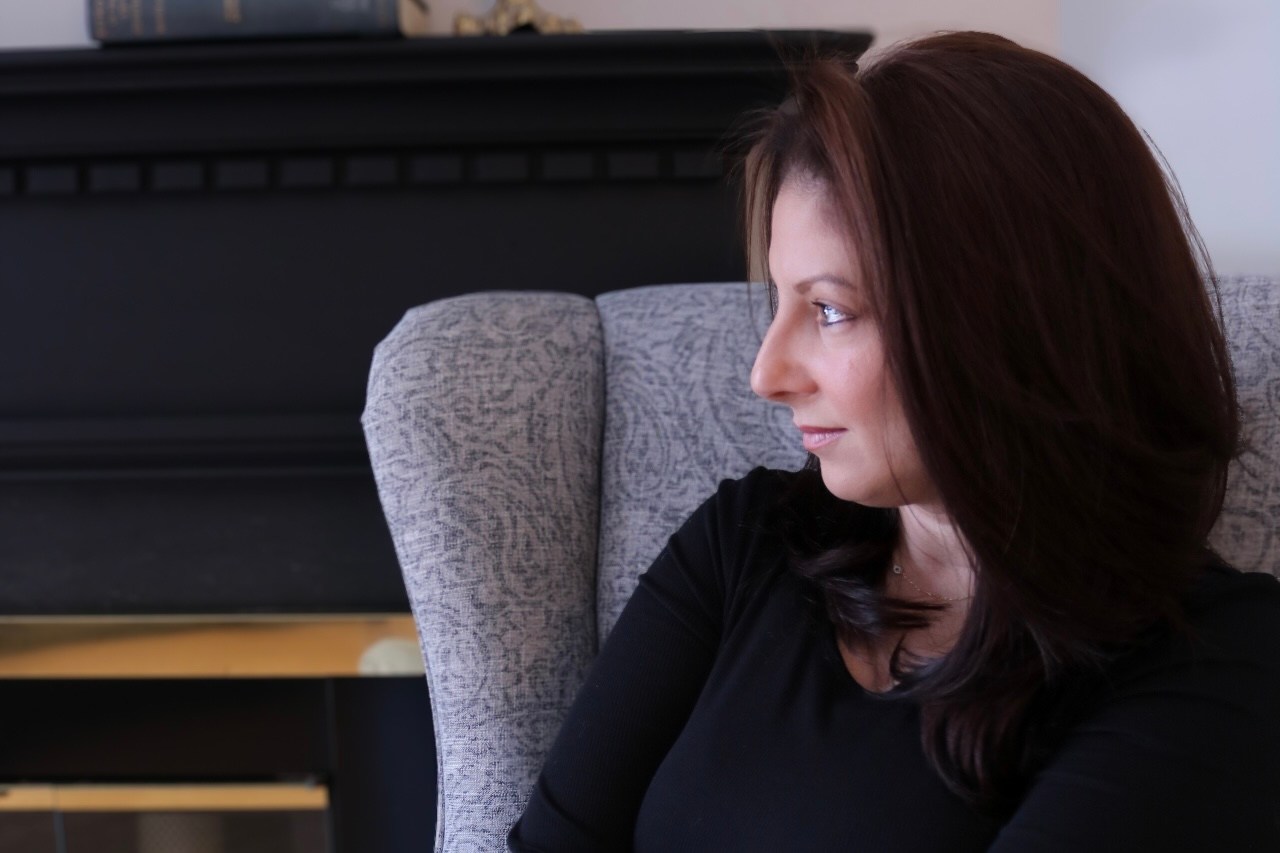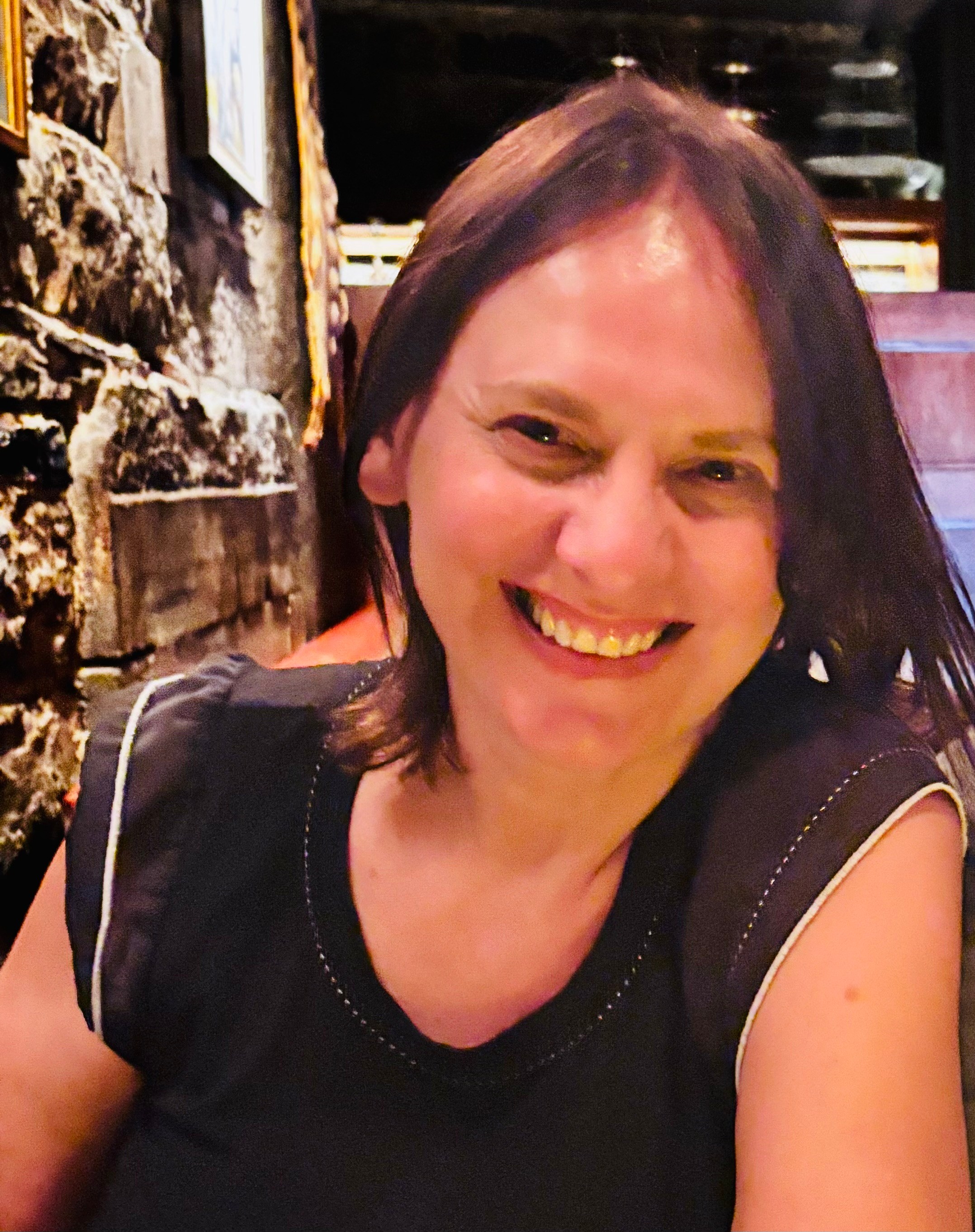


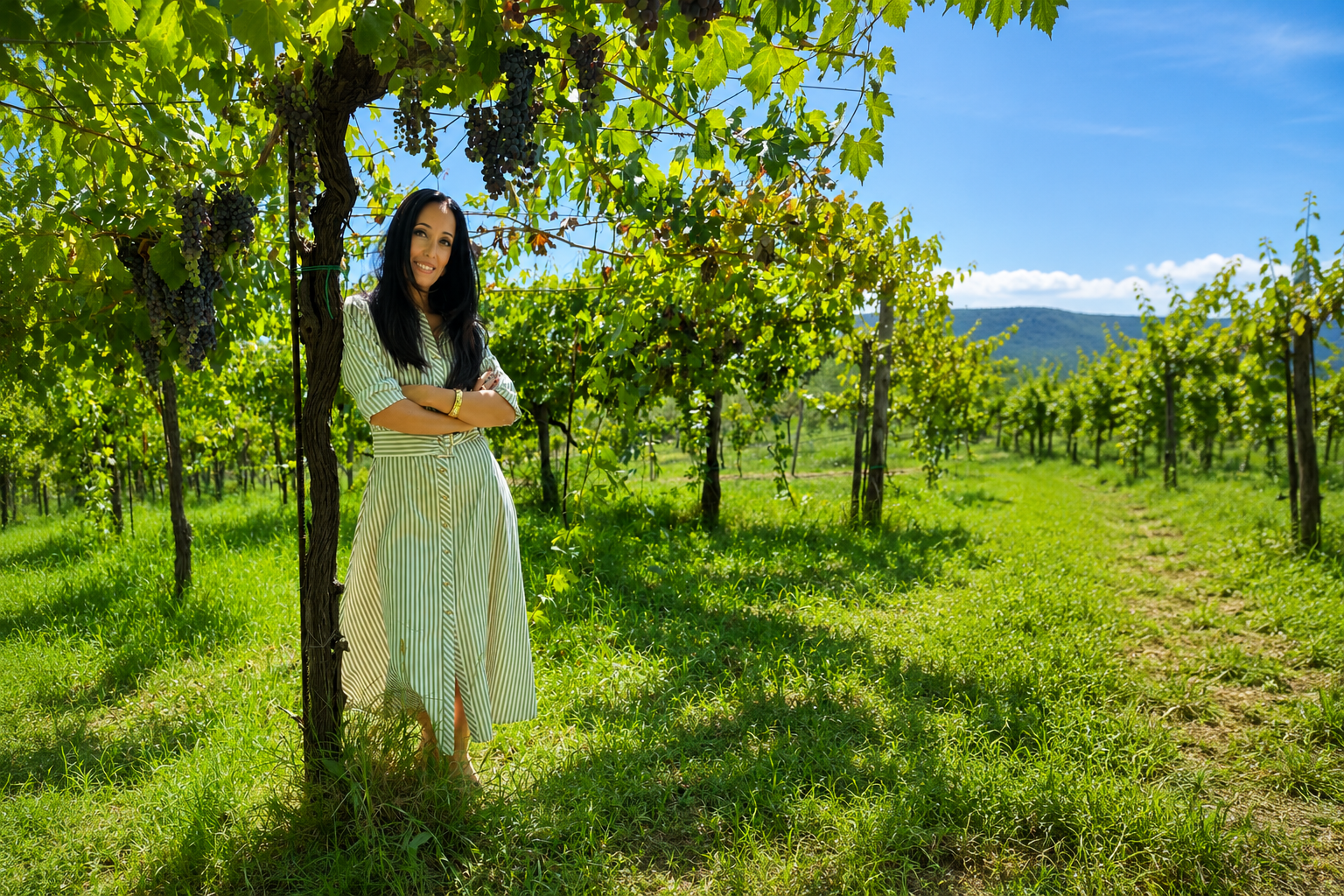
Teresa Mincione's story begins far from the vineyard. For many years, her professional life unfolded in courtrooms, where she worked as a criminal lawyer in a career defined by discipline, responsibility, and intensity. Alongside this demanding profession, however, she nurtured a passion that gradually became impossible to ignore — wine.
Writing for the Slow Wine guide and wine journalist Luciano Pignataro allowed Teresa to immerse herself in Italy's wine regions without stepping away from her legal career. Every assignment became an opportunity to meet producers, explore vineyards, and discover the people and traditions behind each bottle. Yet the more she travelled, the more she realised that tasting wine was only part of the experience.
Eventually, observation was no longer enough.
Determined to deepen her understanding, Teresa enrolled at Bibenda, completing the Executive Wine Master in Wine Communication before undertaking advanced courses dedicated to Burgundy, Bordeaux and Champagne. Although these qualifications strengthened her technical knowledge, she believes her greatest education came elsewhere, in vineyards, cellars and conversations. Every journey became another lesson in understanding wine not simply as a product, but as an expression of culture, history and place.
Every winery she visited became a lived experience rather than simply another assignment. Then, almost on impulse, Teresa bought a small vineyard in Caiazzo, in the province of Caserta, Campania. At first, she imagined it as a retirement project, a place where one day she might slow down and reconnect with nature.
Love Italian wine? Explore more Italian wine stories from Appetito.
Life, however, had other plans.
When the Covid-19 pandemic brought the world to a standstill, Teresa found herself reflecting on what truly mattered. Like many people, she began questioning not only how she wanted to live, but who she wanted to become. Looking back, she describes that period as a profound turning point, realising that "we are made of the same substance as dreams" and that whatever path we choose, we must embrace it wholeheartedly.
As restrictions eased, a series of seemingly ordinary events began to feel unexpectedly significant. Then came the meeting that changed everything.
While attending a conference of wine producers in Caserta as a journalist, Teresa met the respected wine writer and producer Manuela Piancastelli. During their conversation, Manuela learned that Teresa had recently purchased a vineyard and encouraged her to consider another opportunity: Vigna Monticelli, in the small village of Castel Campagnano.
A new world opened before her.
Watching over the vineyards is Monte Dormiente, the ‘Sleeping Woman’, whose unmistakable profile, resembling a reclining woman, has become an enduring symbol of the landscape and a source of inspiration for Teresa's wines and their labels. The landscape of olive groves and ancient villages, with its cooling breezes and sandy-loam soils create ideal conditions for indigenous grape varieties that have been cultivated for centuries. It is a place where history is woven into everyday life and where wine remains inseparable from family, culture and tradition.
Among these vineyards Teresa encountered two native varieties that would redefine her future: Casavecchia and Pallagrello.
Casavecchia, in particular, caught her attention. She believed the grape had long been underestimated, often vinified in ways that emphasised power and rusticity rather than the elegance she sensed within it. Instead of asking how to change the grape, Teresa asked a different question: How can I allow it to express itself?
The answer was amphora.
From the outset, her vision was clear: authenticity, elegance and respect for place. Rather than relying on oak, Teresa chose amphorae, believing they allowed the wines to express their true identity without imposing another voice. For her, an amphora is not simply a vessel but a partner that requires patience, understanding and dialogue.
Discover more of Campania with Appetito, from its native wines to the food and traditions that define the region.
Gradually, imagination became conviction. Teresa came to see wine as her oltre la siepe. Inspired by Giacomo Leopardi's L'Infinito, the phrase evokes the moment of looking beyond the hedge that limits our view and imagining the infinite possibilities that lie beyond. For Teresa, leaving law was not simply a career change but a step beyond that hedge, a journey towards the life she had quietly imagined for years. With the support of her partner, Angelo, she made the extraordinary decision to leave both law and wine journalism behind. After years spent telling other people's stories, she was finally ready to write one of her own.
Today she produces three wines from native Campanian grape varieties, each vinified in purity and aged in amphora. Yet for Teresa, making the wines was only the beginning.
She knew every bottle would eventually leave the cellar and travel somewhere she could not. It might be opened around a family table in Naples, poured in a restaurant in London, or discovered by someone visiting Campania for the first time. Long before the cork was pulled, the bottle itself needed to tell a story.
That story would begin with the label.
Rather than commissioning a conventional wine design, Teresa turned to Tuscan painter Luca Bellandi, whose expressive figures had long fascinated her. She wrote to him describing not only the wines but the journey that had brought her there. She spoke of leaving the courtroom, discovering her vineyard, the constant wind that moved through Castel Campagnano and the quiet certainty that followed the pandemic. She even sent him videos so he could experience the landscape before putting brush to canvas.
The result became far more than artwork. It became a visual autobiography.
The first wine, Nulla è per Caso (Nothing Happens by Chance), is made entirely from Casavecchia. Its label depicts a petticoat surrounded by thirty-two polka dots. In numerology, thirty-two is associated with good fortune, but for Teresa each dot represents one chapter of her own life without which she would never have arrived in the vineyard.
Three colours complete the story. Black recalls the lawyer's robe. Pink represents the years spent writing about wine. Gold celebrates the life she finally chose as a winegrower.
Even Casavecchia mirrors Teresa's own journey. Once almost forgotten, the grape has experienced its own renaissance. Teresa recognised something of herself in its story: both had waited patiently for the opportunity to reveal their true identity. Her aim was not to change the variety but to free it from the heaviness of the past, revealing a wine that is elegant, feminine and authentic.
‘Nothing happens by chance’ is more than the wine's name. It has become Teresa's philosophy.
The second label, La Luna e il Ventaglio, celebrates Pallagrello Bianco. A flowing white dress recalls both the refined nature of the wine and the women who have shaped Teresa's own life. The green bodice echoes the surrounding vineyards, while delicate English roses pay tribute to flowers she has always loved.
Its symbolism reaches further into history.
The moon reflects the small, rounded shape of the Pallagrello grapes, while the fan honours both the women in Teresa's family and the historic Vigna del Ventaglio, created during the Bourbon period when Pallagrello became one of the preferred wines of the royal court.
The third wine, Sabbie al Vento, tells a different story.
Produced from Pallagrello Nero, its deep-coloured polka dots immediately recall the grape berries at harvest. Behind them stands the silhouette of the Dormiente mountain overlooking the vineyards, together with the old pergola-trained vines that have shaped this landscape for generations. The name itself captures the sandy soils and constant breezes that preserve the health of the grapes while defining the wine's character.
Standing in Teresa's cellar, it becomes clear that every bottle tells two stories.
The first is written by the vineyard, by the wind, the soils, the native vines and the passing seasons.
The second belongs to Teresa herself.
It is the story of a lawyer who became a journalist, a journalist who became a winegrower, and a woman who discovered that the most important journeys often begin when we have the courage to leave behind the life we thought we were meant to live.
Perhaps that is why Nulla è per Caso feels less like the title of a wine than the conclusion to Teresa's own story.
Sometimes, nothing really does happen by chance.
Planning a trip to Italy? Discover Appetito’s latest stories on Italian food, wine and travel.