

The first truth I tell people about my relationship with Italian food is also the one that surprises them: I am not Italian. There is no nonna standing behind my stove, no family village waiting in the margins of my passport, and no inherited recipe box granting me permission to speak for a culture that is not mine.
That absence has never pushed me away from Italian cooking. It has made me more responsible for how I approach it. Loving another culture’s food is easy. Studying its history, respecting its regional identity, and resisting the urge to turn it into whatever gets the most attention takes discipline.
I have built my work as a private chef, culinary educator, and television host around that discipline. Recipes are only the beginning. Food carries geography, labor, memory, economics, and family. When those pieces disappear, a dish may still taste good, but it stops telling the truth about where it came from.
My recent travels through Tuscany and Sicily sharpened that lesson. I did not go to collect dishes like souvenirs. I went to pay attention—to the businesses that have outlived generations, the vineyards shaped by their land, the farms feeding nearby tables, and the people who preserve tradition without freezing it in time.
The Difference Between Seeing and Studying
In Florence, I visited Procacci 1885 on Via de’ Tornabuoni. Founded in 1885, the historic wine and food boutique remains known for its truffle specialties and its sense of ritual. The scale is intimate. The flavors are focused. Nothing needs a speech, a tower of garnish, or a dozen competing ingredients. The place makes its argument through confidence.
Walking through Florence reinforces the same idea beyond a single address. Food is connected to the rhythm of the city: a quick panino, an aperitivo, a market ingredient, a recipe associated with a particular season or neighborhood. These are not isolated products waiting to be copied. They belong to a living system. Once I began looking at Italian cooking that way, I stopped asking only, “How is this made?” The more useful questions became, “Why is it made here, and what would be lost by removing it from that context?”
That kind of restraint can be difficult for American cooks. We are trained to add, enlarge, reinvent, and announce. Italy repeatedly reminds me that refinement often means knowing what to leave alone. A recipe does not become more authentic because it contains more Italian-sounding ingredients. Sometimes the most respectful decision is to stop before the dish loses its center.
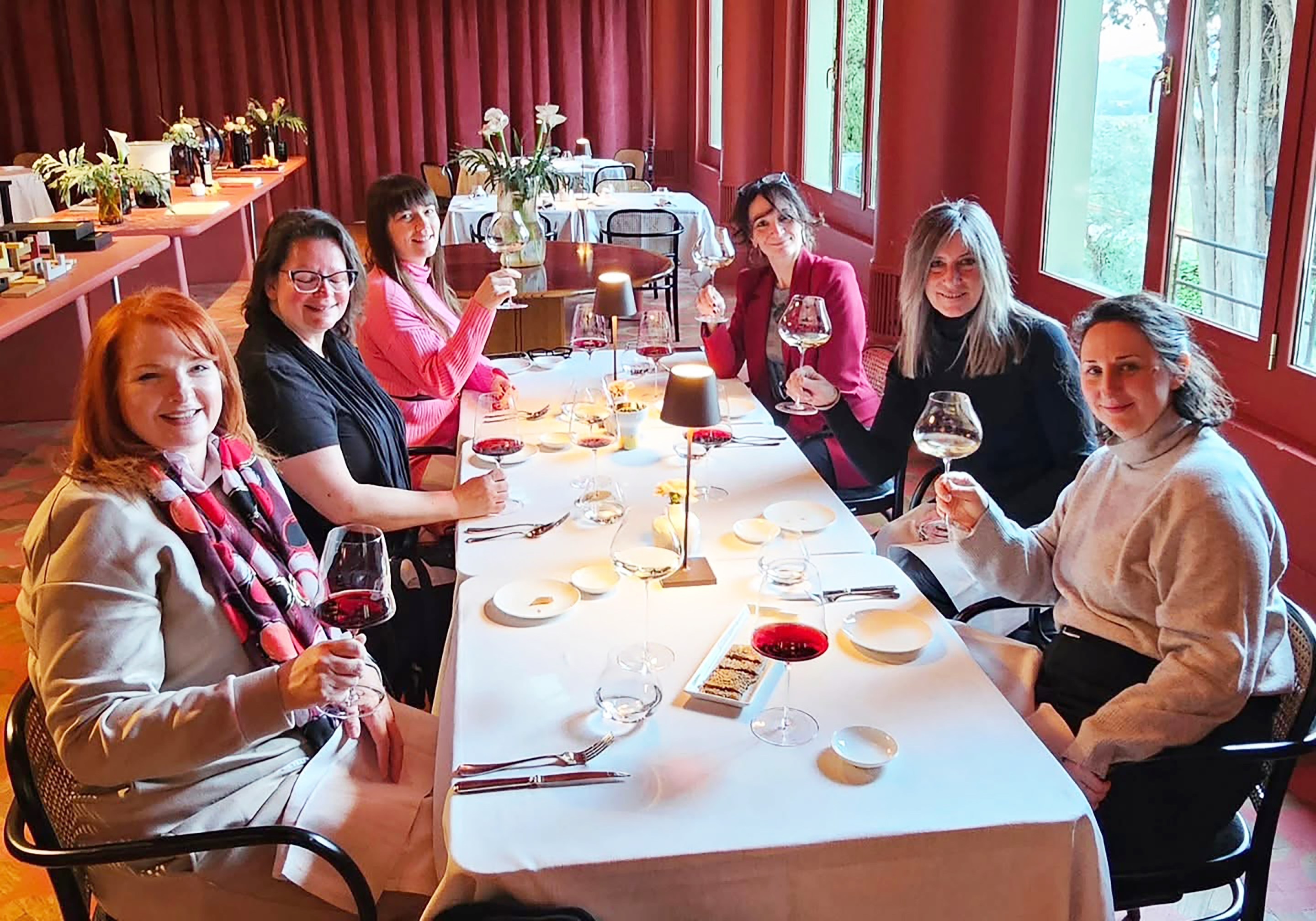
Time at Ruffino in Tuscany deepened the connection between food and place. Learning about the vineyard’s history while tasting its wines made the region feel less like scenery and more like an active ingredient. Wine is not an accessory dropped beside dinner. It reflects climate, soil, agriculture, patience, and the choices of the people who work that land.
That perspective changes how I cook. It makes me ask better questions: What grows here? Why did this technique develop in this region? Was the dish born from abundance, preservation, poverty, celebration, or necessity? Which ingredient is carrying the story, and am I helping it speak or burying it under my own ego?
Sicily Made the Lesson Personal
Sicily made the lesson even more personal. I traveled there to expand my knowledge of the island’s history, culture, and cuisine. The architecture and farms were unforgettable, but the people stayed with me most. Hospitality was not a performance. It was direct, generous, and woven into the way food moved from the land to the kitchen and then to the table.
Sicilian cuisine also destroys the lazy idea that there is one unified version of Italian food. The island carries layers of Mediterranean influence alongside fiercely local ingredients and traditions. That complexity deserves more than borrowing a recognizable name and improvising the rest. It demands context.
That regional specificity matters in an American kitchen, where “Italian” is often treated as one giant pantry. Northern and southern traditions get blended, every sauce turns red, and more cheese is expected to solve every problem. Travel exposes how blunt that approach can be. Italy’s cuisines are plural. Their differences are not inconveniences to smooth away; they are the point. Learning those distinctions has made me a more careful teacher and a more confident cook because precision creates freedom. The deeper the foundation, the less I need gimmicks.
Context does not forbid creativity. It gives creativity a foundation. I adapt dishes for private clients, nutritional needs, and seasonal availability every day. Flexibility is part of being a working chef. The difference is whether a change begins with understanding or convenience. Respect does not mean culinary paralysis. It means knowing what you are changing, why it matters, and when the new creation should carry a new name.
Continue exploring the stories, flavors, and traditions of Sicily.
Bringing the Journey Home
Back in Dallas, I translated the trip into a Tuscan wine dinner. The goal was not to recreate Italy as a theme park. I wanted guests to experience the relationship between regional flavors, thoughtful pairings, and the stories that gave the menu its shape. Travel had changed the way I explained the food before anyone lifted a fork.
Those journeys are also helping shape the next chapter of my television series, Getting Saucy. Season 4, My Italy Travels, will retrace the places and recipes that altered my perspective. The show is built around curiosity: what I learned, what I misunderstood, and why returning to a place can change the way a chef cooks it.
You do not need Italian blood to cook Italian food well. You need humility, research, repetition, and the willingness to listen when tradition challenges your instincts. Italy did not hand me a certificate of authenticity. It gave me something more valuable: a responsibility to keep learning before I teach.
Learn more about Jennifer Bajsel.
Love discovering Italy one bite at a time? Subscribe to the free Appetito newsletter for the latest in food, travel, recipes, and Italian culture stories.