
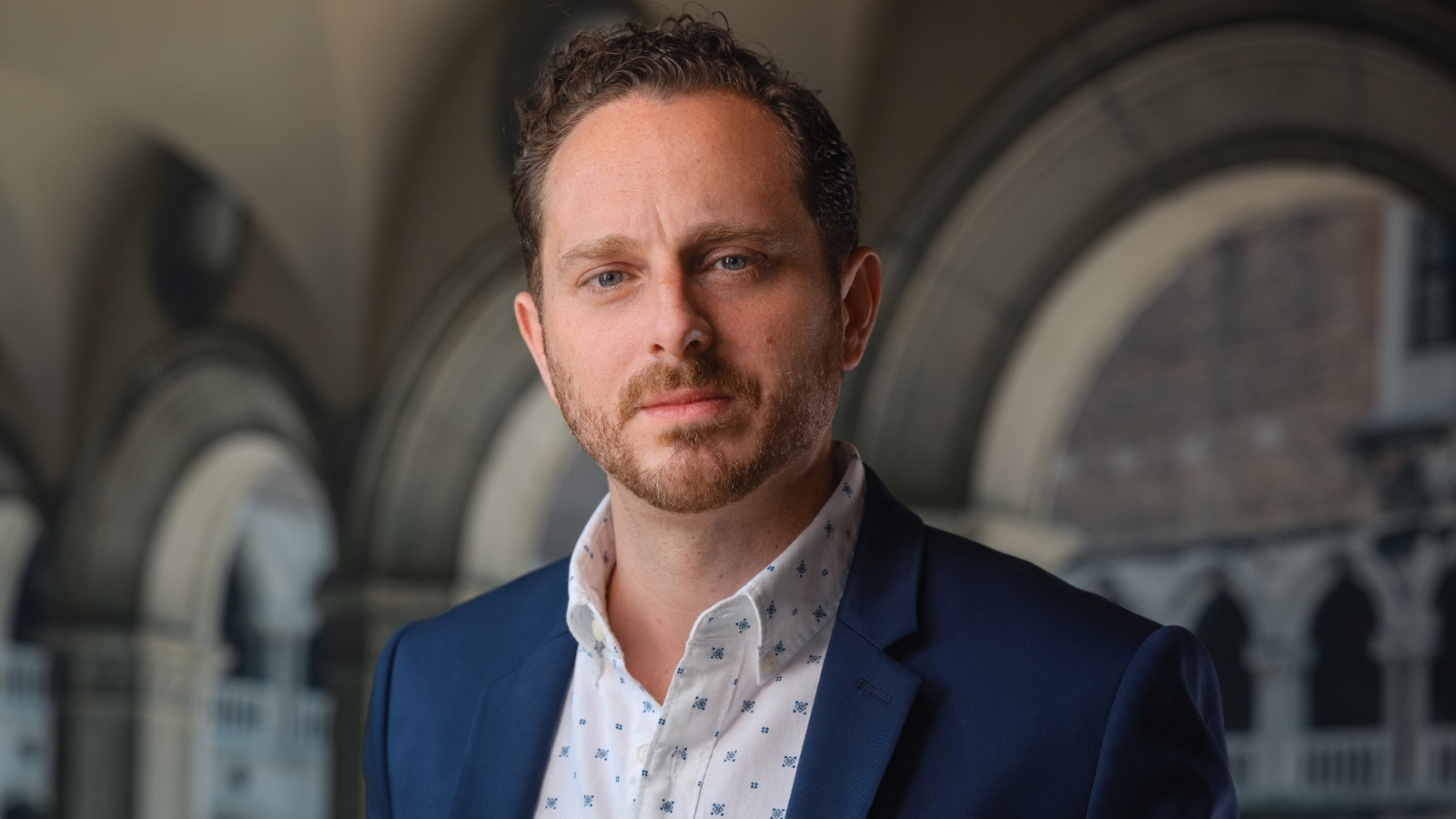
Popular culture has made the mafia and The Godfather shorthand for Sicily, leaving much of the island's story untold. Carlo Treviso has spent years challenging that perception. The Chicago-based author and publisher of The Regno on Substack explores the island through its layered history, arguing that Sicily can't be understood through a single culture or era.
Treviso's historical thriller Siciliana, inspired by the Sicilian Vespers of 1282, introduces readers to a very different Sicily, one shaped by centuries of conquest and cultural exchange. In his conversation with Appetito, Treviso discusses the history behind the novel and why some of the island's most compelling stories are still waiting to be told.
What surprised you most during your research for Siciliana?
What surprised me most was how little of Sicily’s history belonged to any single civilization. I went looking for the story of a rebellion and discovered an island that had been sampled, layered and remixed for thousands of years.
By 1282, Palermo still carried the imprint of its Arab past in its streets, markets, agriculture, language and food. Norman churches blended Latin Christianity with Byzantine mosaics and Arabic craftsmanship. Greek, Arab, Jewish, Norman, and Swabian (German) influences were all playing at once.
That realization changed the way I approached the novel. Sicily became the setting and a living character with a very long memory. By the end of my research, I understood it as the Mediterranean’s original remix.
Continue exploring the stories, flavors, and traditions of Sicily.
What first inspired you to tell this story?
I wrote Siciliana for people who feel that strange pull toward something older, deeper and half-remembered.
Growing up first-generation Sicilian American, I felt connected to Sicily, but the version presented in popular culture was usually filtered through The Godfather’s Corleone, the Cosa Nostra world of La Piovra, or the poor, depopulating village of Cinema Paradiso. A Sicily of bosses, blood feuds, silence, hardship, and escape.
Then I discovered the Sicilian Vespers, when Sicilians rose against French Angevin rule in 1282, and I thought, “How has nobody made our Braveheart?”
Here was a Sicily of rebellion, political intrigue, ancestral pride and people fighting to reclaim themselves. Through Aetna Vespiri, I could turn that history into something living, emotional and cinematic. Sometimes the road back to who we are begins with a story.
Tell us about your family’s journey from Sicily to Milwaukee, and how that heritage shaped you.
My family comes from Porticello, a small fishing village near Palermo. My grandfather, Carlo Treviso, was a Sicilian shipwright, and that Old World craftsmanship became the foundation of one of my family’s most unique American chapters.
After immigrating to Milwaukee, my grandfather and his sons, including my dad, Gaetano, spent roughly seven months building three Venetian-style gondolas by hand in a Wisconsin garage. In 1991, they launched a family business called American Gondola, Inc., offering authentic gondola rides along the Milwaukee River.
The sight must have been wonderfully strange. My dad standing at the stern in the traditional striped shirt, guiding a sleek black gondola past warehouses, office buildings and the Usinger’s sausage factory. They brought the boats to Milwaukee’s RiverSplash festival and later to Festa Italiana, where people took rides, heard Italian songs and even proposed marriage beneath the city bridges.
I love that story because it captures my family perfectly.
A Sicilian immigrant, a carpenter’s garage in Wisconsin and a dream bold enough to sound slightly improbable until it worked. They carried the craftsmanship and romance of the Mediterranean into the American Midwest and created something entirely new from it. That same instinct, to preserve where we came from while remaking it for a new world, runs through everything I write.
Which scene in the book was the most meaningful for you to write?
I feel the most meaningful scene I wrote in Siciliana is the childhood moment when Aetna’s father, Don Vespiri, gives her a Gorgoneion Trinacria and tells her the story of Medusa.
The Gorgoneion Trinacria is one of Sicily’s most recognizable ancient symbols. It consists of the head of Medusa surrounded by three bent legs representing the island’s three points.
In the ancient world, Medusa’s face was often used as a protective symbol, meant to ward off danger and evil. In the novel, the pendant becomes both a symbol of Sicily and a roadmap for Aetna’s life. That scene establishes the entire thematic architecture of the book: the maiden, the monster, and the myth.
Don Vespiri teaches Aetna that Medusa began as a victim of assault, was transformed into a monster in the eyes of the world and ultimately became a protector. That journey foreshadows Aetna’s own. She begins as a young woman whose life is shattered by violence, becomes a “monster” in the eyes of the Angevins when she fights back, and eventually grows into a protector of her people.
It was also important that Aetna first learns these ideals from her father. He teaches her that rebellion is more than resistance to a single ruler. It is a rejection of greed, the abuse of power, and the beliefs weak, selfish men use to raise themselves at the expense of others. True strength, he tells her, lies in protecting the helpless and defending those with less power—the values of a true Sicilian knight.
The scene ends with the lesson of the Trinacria’s three legs. No matter where a Sicilian is thrown, a Sicilian will always land standing. That becomes the emotional promise of Aetna’s journey. She will be wounded, misunderstood and remade by history, but she will keep standing.
Food is an integral part of Sicilian life. Was it important to include it in your storytelling?
Absolutely. Food may be Sicily’s most honest historical archive because every civilization left something behind on the table.
Take the cannolo. Its origin tradition leads to medieval Caltanissetta, known in Arabic as Qal‘at al-Nisā’, the “Castle of Women.” Later local tradition associates its creation with women in the emir’s harem, who may have prepared the pastry for celebrations. Even its ingredients tell the larger story: fried dough shaped around reeds, drawing on North African and Middle Eastern pastry traditions; cane sugar transmitted through the Islamic world; ricotta from Sicilian sheep and goats; and pistachios, citrus, and candied fruit carried to the island through the trade networks of the medieval Islamic Mediterranean. You can bite into a cannolo and taste a thousand years of cultural exchange.
Food also makes a historical world feel inhabited. People still have to cook, eat, celebrate and argue over dinner while kingdoms collapse around them. In Sicily, even a revolution has to pause long enough for somebody to ask whether you’ve eaten.
Your Substack explores forgotten stories from Sicily’s past. Why do you think those stories have been overlooked?
My Substack, The Regno (pronounced REHN-yo) explores the crossroads of history, culture and identity, with a special focus on Sicily’s forgotten kingdoms, remixed legacies and the ways the past still shapes us. I use historical deep dives, commentary, and cinematic storytelling to pull stories out of the archives and make them feel alive again.
Many of those stories were overlooked because Sicily complicates every clean historical narrative.
Traditional European history likes firm boundaries. Europe on one side, Africa on the other. Christianity here, Islam there. Italy presented as though it had always existed in its modern form.
Sicily smudges every one of those lines.
Europe meets Africa there. The East meets the West there. Mosques become churches, Viking descendants employ Arab craftsmen, and a Christian king commissions a world map from a Muslim geographer.
After Italian unification in 1861, many of Sicily’s older identities and kingdoms were folded into a simplified national story. Outside Italy, the mafia eventually swallowed almost every other association with Sicily. The deeper history remained available, but much of it was buried in academic books, untranslated chronicles and footnotes.
I like dragging those stories back into the sunlight.
History and food are both passed from one generation to the next. Do you see your Substack as another way of preserving Sicilian heritage?
Yes, although I believe that preservation should never feel like taxidermy. I have no interest in embalming Sicily inside nostalgia and putting it behind glass.
Heritage stays alive when people cook it, speak it, question it, argue about it, and reinterpret it. My cultural-remix approach takes legends, myths, storytelling, scholarship, family memory, and modern identity debates and turns them into stories people will actually read, share and discuss.
I think of myself as working in the tradition of the Sicilian cantastorie (traveling storytellers who preserved history, legends, and cultural memory through vivid public performances).
The platform is digital, but the job is ancient: gather the crowd in a public forum, tell them where they came from, and make sure they remember the story.
Is there a Sicilian tradition you hope never changes?
The seafood feast on Christmas Eve.
Growing up, the table would be covered with octopus, mussels, fish, shrimp, calamari and sfincione (spongy Sicilian pizza). It was less a meal than an event, with course after course arriving while everyone talked (loudly!) over one another.
What I love most is the way the table seemed to gather the whole island around it. Family packed shoulder to shoulder, voices rising over one another, and the sea arriving course by course. And by the time the sfincione appeared, Christmas Eve felt inseparable from Sicily itself.
I hope that never changes. The recipes may vary from family to family, but the ritual remains the same. Cook too much, stay up too late, and make sure everyone leaves full.
What’s one misconception people have about Sicily?
That Sicilian history is simply a regional chapter of European history.
Sicily is European, but it is also North African history, Muslim history, Levantine history, and Mediterranean history. Phoenician traders, Greek settlers, Roman governors, Byzantine monks, Arab and Amazigh rulers, Norman kings and Jewish scholars all helped shape the island. Its language, food, architecture and even its landscape carry the memory of those encounters.
Sicily is often presented as purely European and Catholic, as though the civilizations that came from across the sea were temporary visitors who left nothing behind. Yet entire eras, such as the Arab-Islamic period, transformed the island’s agriculture, cities, language, science and cuisine, while its ties to North Africa and the Levant stretch back thousands of years.
To understand Sicily honestly, you have to look beyond the modern borders of Italy.
Sicily has always faced the wider Mediterranean, and its identity was born from everything that crossed it.
What’s next? Will Sicily continue to inspire your work?
I’m currently deep into a new historical thriller set in Sicily, although it is not a sequel to Siciliana. I may return to Aetna Vespiri’s journey of revolution and revenge one day, but there are too many other hidden corners of Sicilian history demanding my attention first.
I’m also continuing my Substack and historical blog, along with my advocacy for Cabrini Day as a more meaningful Italian-American alternative to Columbus Day.
Everything I write returns to the belief that culture is never made in isolation. Stories, traditions, languages, and cuisines are carried across borders, reshaped by new hands, and passed forward as something richer than what came before.
Sicily embodies that process better than almost anywhere: layer upon layer of human exchange, each one still audible beneath the next. Its ruins, mountains, recipes, and old chronicles hold countless stories, and I intend to keep bringing them back into the light.
You can purchase Siciliana at Amazon, Barnes & Noble and Target. Find Carlo Treviso on Instagram @TrevisoAuthor and follow his Substack The Regno.
Love discovering Italy one bite at a time? Subscribe to the free Appetito newsletter for the latest in food, travel, recipes, and Italian culture stories.