

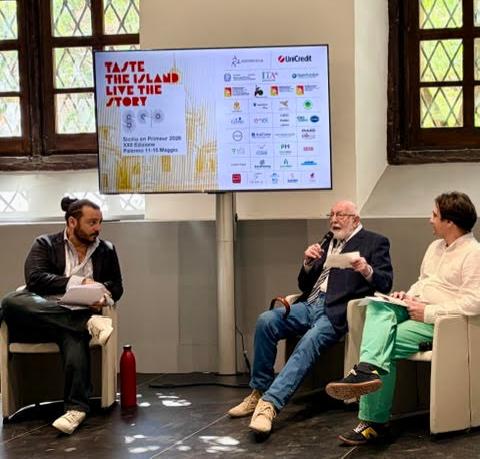
At the latest edition of Sicilia En Primeur, May 11 - 15 in Palermo, conversations about Italian wine extended far beyond tasting notes and vineyard practices. During a panel discussion dedicated to the cultural meaning of wine in Italian society, the discourse explored how wine functions not simply as a beverage, but as a form of communication deeply woven into Italian identity.
Moderated by journalist Francesco Seminara of Il Gusto (La Repubblica), the panel featured journalist and writer Gaetano Basile and Professor Gianfranco Marrone, a leading scholar of cultural semiotics and food and wine language at the University of Palermo. The discussion reflected one of the central themes of Sicilia En Primeur: that Sicilian wine is inseparable from the island’s history, language, rituals, and sense of community.
In Italy, wine has historically occupied a sacred place at the table, not as a luxury item reserved for special occasions, but as an everyday expression of culture and connection. Italian food and wine function together as cultural storytelling, to accompany conversation, enhance food, and reinforce the emotional rhythm of shared meals.
From a rustic Nero d’Avola served alongside pasta alla Norma to a mineral-driven Etna Bianco paired with seafood along the coast, these combinations communicate a profound sense of place.
Throughout the conversation, Basile emphasized the role of wine as a keeper of Sicilian memory and tradition. Drawing from the island’s oral history and culinary customs, he explained how wine has long served as a symbol of welcome and generosity within Sicilian households.
“Wine is a language of memory and hospitality,” Basile said, describing how families traditionally greeted guests with bread and wine before conversation even began. In this sense, wine communicates openness, belonging, and respect for shared rituals that have endured for generations.
Professor Marrone approached the subject through the lens of semiotics — the study of signs, symbols, and meaning. According to Marrone, wine communicates through much more than flavor alone. Labels, regional dialects, serving rituals, food pairings, and even the act of pouring wine at the table all contribute to a larger cultural language. A glass of wine becomes a reflection of territory, history, and identity, carrying messages about the people and places from which it originates.
“Wine is never just consumed,” Marrone said during the panel. “It is interpreted.”
At Sicilia En Primeur, the panel served as a reminder that Italian wine culture cannot be separated from the human experience surrounding it. Every bottle tells a story — not only of terroir and craftsmanship, but of history, family, and the enduring traditions that continue to shape Italian life.