

The culinary arts of Italy can give your palate a real workout. From Sicily's Middle Eastern-tinged specialties to the tomato-rich abundance of the sunny south, the quiet sophistication of the north and the robust alpine specialties of the icy fringe, it’s a lot to take in. Wine, beer and spirits there are equally kaleidoscopic.
Sure, it’s easy enough to be in the moment and just dig into whatever’s in front of you, but Italy's flavors can be appreciated a little more deeply with a better understanding of how our bodies and brains turn food and drink into experiences and even information. Based on six years of digging into the latest science around tasting, I offer here a few of the insights that have helped me better decode and appreciate the Italian food and wines I enjoy so much. I think they may do the same for you.
Tasting can be intimidating, especially when it comes to beverages. Don’t fall for it. Experts are not super-sensitive; they’re just really good at noticing things. They’ve also had a lot of training in what to expect and how to categorize and make meaning out of what they perceive. They can also describe it in words their peers can understand.
Italian wine can be especially daunting, with at least 644 grape varieties—some with multiple names and producing regions. Experts spend years learning them, and they never really finish. But when a wine is set in front of you, it’s just you and what’s in the glass. Don’t worry about anything else. Terroir, history, ratings? Get it all out of your mind, for now.
Focus is key. Tasting requires us to be fully present and give our undivided attention to taste, smell and the texture in the mouth. It’s especially critical to listen to your “inner taster,” which is constantly sending you messages in the form of memories, feelings, images and occasionally even a word. These may seem a bit random at first, but they always contain a kernel of truth. If you can decode them.
Love discovering Italy one bite at a time? Subscribe to the free Appetito newsletter for the latest restaurant openings and Italian travel news.
Your tasting senses, aimed at Italy
Each of us has three distinct senses we use for this: taste, mouthfeel and smell. Each has unique characteristics that are important to understand. But it’s tricky; almost as soon as their signals enter the brain, these distinct senses fuse into something we think of as “flavor.”
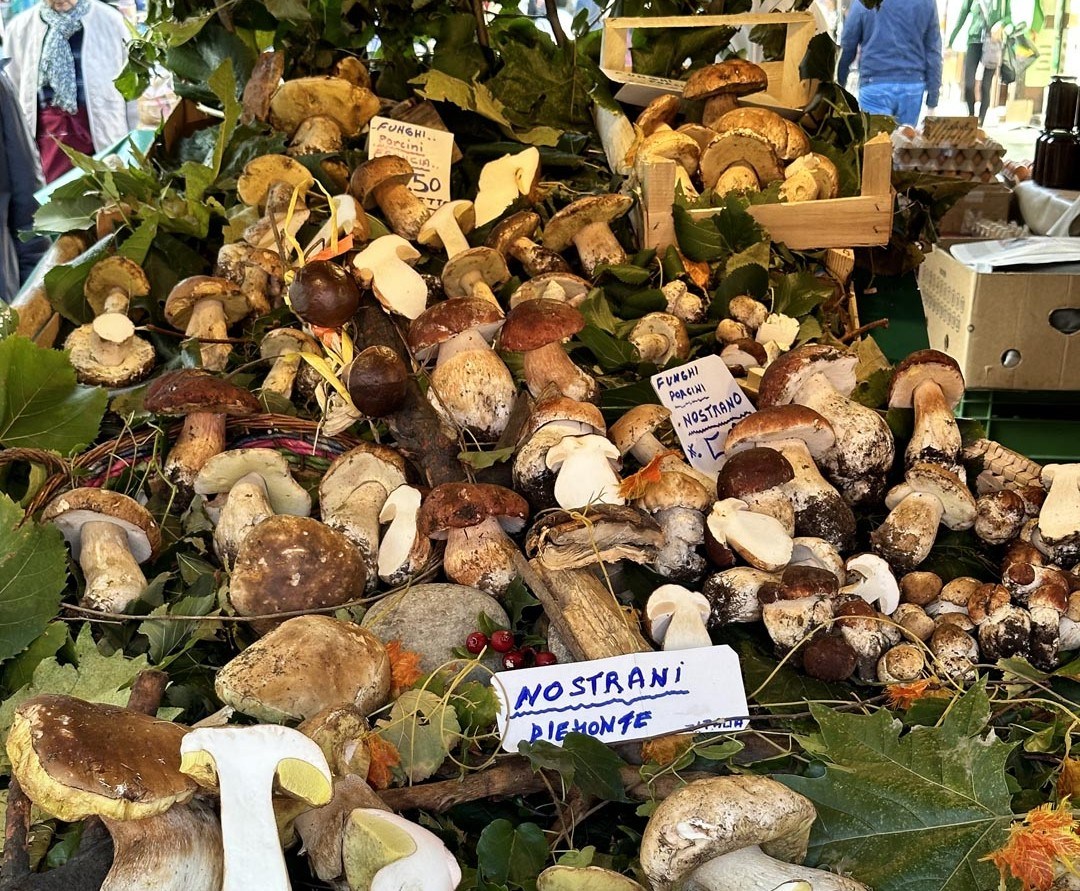
The sense of taste mostly occurs in the mouth, producing just five main sensations: sweet, sour, salty, bitter and umami. The first four can hit you in the face, but umami is much more stealthy. Derived from a Japanese word meaning “delicious,” it really does just that to food. While umami is found in many protein-rich foods, mushrooms are a really fun form. If you can’t get your hands on that staple of autumn Piemontese cuisine, fresh porcini mushrooms (and who can, really?), a bit of porcini powder can add some umami richness to soups and savory dishes even without adding strong mushroomy flavors.
Each taste retains its identity; they don’t blend together like watercolors. But they do interact. As an example, the reason that the acidity of a limoncello or the bitterness of an amaro works is because those intense tastes are made more palatable by the sweetness present. Taste interactions are one of the main keys to creating delicious food and drink and making their pairings work.
Mouthfeel is the term we use to describe sensations from touch cells in the mouth. This includes the creaminess of a Taleggio cheese, the slight graininess of ricotta or the fine tannins of a big red wine. It’s hugely important in wine, beers and virtually all food, so it’s worth paying attention to. Mouthfeel nerves also sense heat and cold, and weirdly, identical sensations can also be created by chemicals present in mint and those flaked chiles you might add to spice up a red sauce. Mouthfeel tends to linger for a minute or more, which is one reason to think of each bite or sip as a little movie rather than a snapshot.
Smell is by far our most capable and strangest sense. The number of different odors we can perceive is so large that scientists really don’t know how to even calculate it. Our nearly 400 odor receptor types create patterns the brain uses to recognize odors and keep them updated with meaning. More than any other sense, smell gushes into the emotional core of our brain, which explains the haunting quality of the memories it conjures up. But those memories, if you can linger on them and make meaning from them, are often our best tool for identifying an odor.
Unlike tastes, odors blend together, often so thoroughly that the identities of their components disappear. This is a challenge for tasters, as we want to retrieve the maximum information from every sip. And because of the way our senses combine, it’s sometimes hard to separate them, too. If you put your nose to a fruity northern red, say, made from Schiava grapes, your first instinct, might be “Aah, sweet,” but that’s impossible. You can’t smell sweet—but you can smell fruity, which we’ve learned to associate with sweetness.
Flavors and where they come from
You don’t have to be a chemist to know that the flavors of food and drink are our body and brain’s responses to certain chemicals. To better appreciate the vast flavor range found in Italian cuisine, it’s helpful to know what families of flavors to expect in any given bite or sip.
In fresh produce, flavors produced by the plants can be fruity, vegetal, herbal, spicy, citrusy or even floral, and each of these tends to be associated with a certain chemical family. Focus on these qualities when you’re tasting the bright, fresh flavors Italy is renowned for.
Once you start cooking, you bring in a whole new set of flavors. Complex chemical reactions involved in frying, baking, roasting and grilling can produce a wide range of tasty flavors from grainy to bready to caramel all the way to roasted and near-charred flavors, all of which make food more delicious.
Milk has its own unique flavor chemistry, which follows the animals and what they’re munching on through various stages of the cheesemaking, fermentation and aging processes. You’ll find creamy, buttery, animal, caramelized and other flavors. If you’ve ever wondered how to tell whether that unlabeled hard cheese you just pulled from the fridge drawer is a Grana Padana or a Pecorino Romano, just give it a quick sniff. The Pecorino will reveal just a bit of sheepy funk from certain organic acids; others are responsible for the mild stinkiness (actual correct cheese term) of a DOP Fontina and other washed-rind cheeses.
Wines are a special case. I was stunned to find that wine grapes are almost completely devoid of the fruity chemicals called esters. Instead, most of wine’s fruitiness is actually created by yeast during fermentation, which fuses many of the grape’s molecules with alcohol into the fresh fruitiness we so admire in whites and young reds. Similar recombination later turns fresh fruit into the more vinous “black fruit” or “bouquet” characteristics of aged reds.
Many unique varietal characteristics of certain grapes can be due to specific chemicals that are not esters: citrus-to-floral notes in Moscato and other aromatic wines and more subtly in Vermentino; fresh, green herbal character of Verdicchio and Lugana; jammy grape notes in Lambruscos; and the legendary violet character of Nebbiolo (Terpenoids, methyl salicylate, beta damascenone and beta ionone, respectivel).
While’ it’s possible to experience a cuisine from afar via its diaspora, you really owe it to yourself to get over to Italy and experience it in all its dazzling diversity. But before you go, get a little practice in tasting and learn to really focus on the flavor. It will make your journey infinitely richer.
Hungry for more? Subscribe for Italian recipes, food news and the latest from Italy’s culinary world.