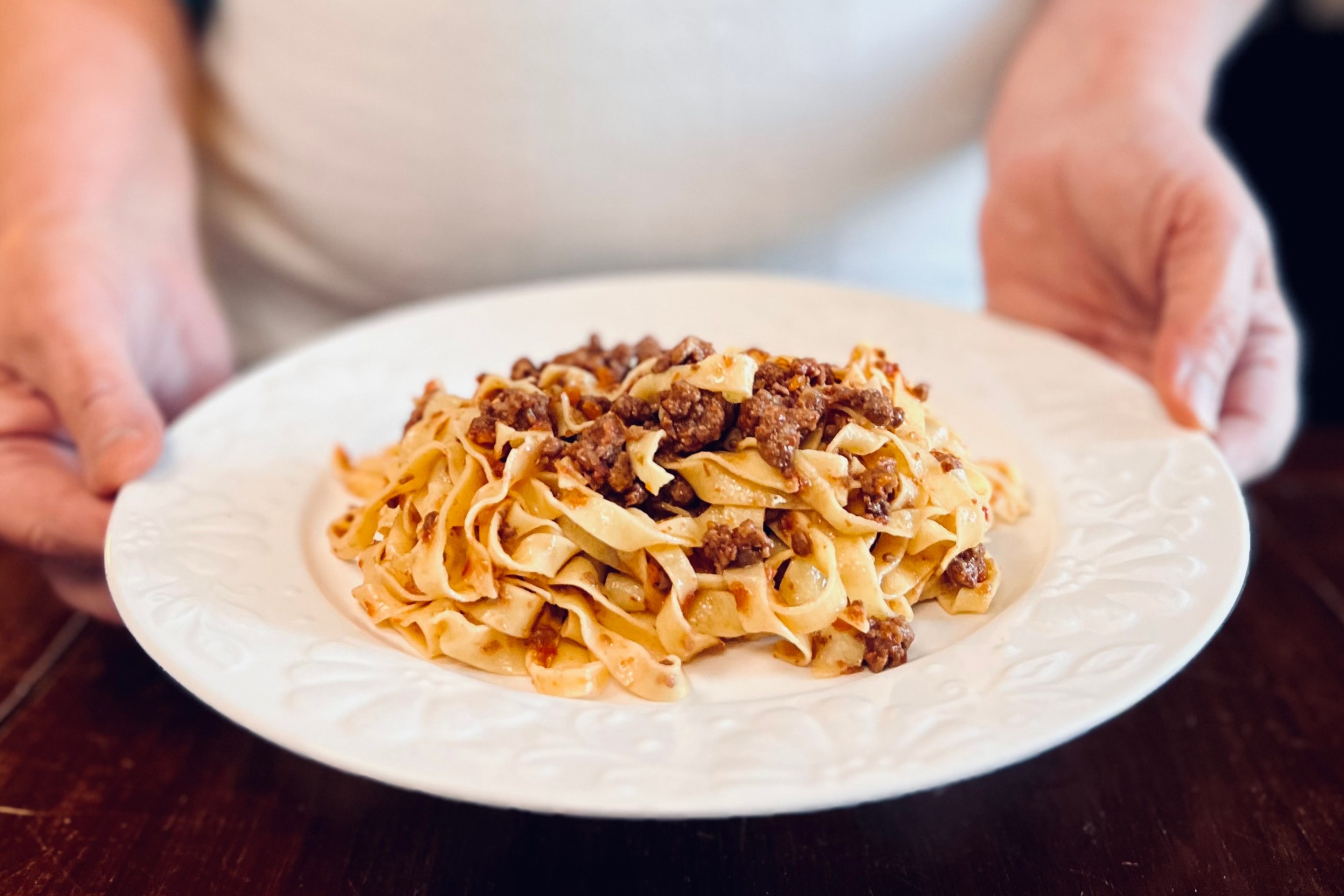


Now that you've mastered our simple fresh egg dough, it's time to transform it into one of Italy's most iconic pastas — fettuccine. Meaning "little ribbons" in Italian, fettuccine has long been a staple of central Italy, particularly in the region of Lazio, where it has graced family tables for generations. Its broad, silky ribbons are the perfect canvas for everything from a simple butter and Parmigiano sauce to hearty ragùs and seasonal vegetables.
One of the things I love most about making fettuccine is that you don't need expensive equipment. A simple hand-crank pasta machine does the hard work for you, gently rolling the dough thinner and thinner before cutting it into beautiful ribbons. There's something wonderfully nostalgic about turning that crank by hand. It slows you down, invites conversation, and reminds us that homemade pasta has always been about gathering in the kitchen with the people we love.
As you roll your dough, don't worry about making every sheet perfectly shaped. Pasta has never been about perfection; it has always been about tradition, practice, and sharing a meal made with your own hands. Each batch becomes a little better than the last. In this lesson, we'll turn the dough we created in Lesson 1 into fresh fettuccine. Once you see just how simple it is, you'll never look at a box of pasta quite the same way.
Using the dough from lesson one, make sure it has rested for at least 30 minutes before you begin making the pasta.
Step 1: Prepare your dough
Lightly dust your work surface with 00 flour or semolina. Cut the dough into four equal pieces. Keep the pieces you're not working with covered under a kitchen towel or plastic wrap so they don't dry out.
Step 2: Flatten the dough
Take one piece of dough and gently flatten it with your hands into a rectangle about ½ inch thick. This makes it easier to feed into the pasta machine.
Step 3: Set the pasta machine
Secure your hand-crank pasta machine to the countertop. Set the rollers to the widest setting, usually #0 or #1, depending on your machine.
Step 4: Begin rolling
Feed the dough through the rollers while turning the crank with one hand and guiding the dough with the other. Fold the dough into thirds, like a letter, rotate it 90 degrees, and pass it through the widest setting two or three more times. This process strengthens the gluten and creates a smooth, even sheet.
Step 5: Thin the dough
Reduce the roller setting one notch at a time, passing the dough through each setting only once. If the dough feels tacky, dust it lightly with flour. Avoid using too much flour, as it can make the pasta dry. For fettuccine, roll the dough to about setting #5 or #6 on most hand-crank machines. The sheet should feel silky and be thin enough that you can faintly see your hand through it.
Step 6: Let the pasta sheet rest
Lay the pasta sheet on a lightly floured surface for 5–10 minutes, or you can hang them on your pasta drying rack. This brief rest allows the surface to dry just enough so the strands separate cleanly when cut.
Step 7: Cut the fettuccine
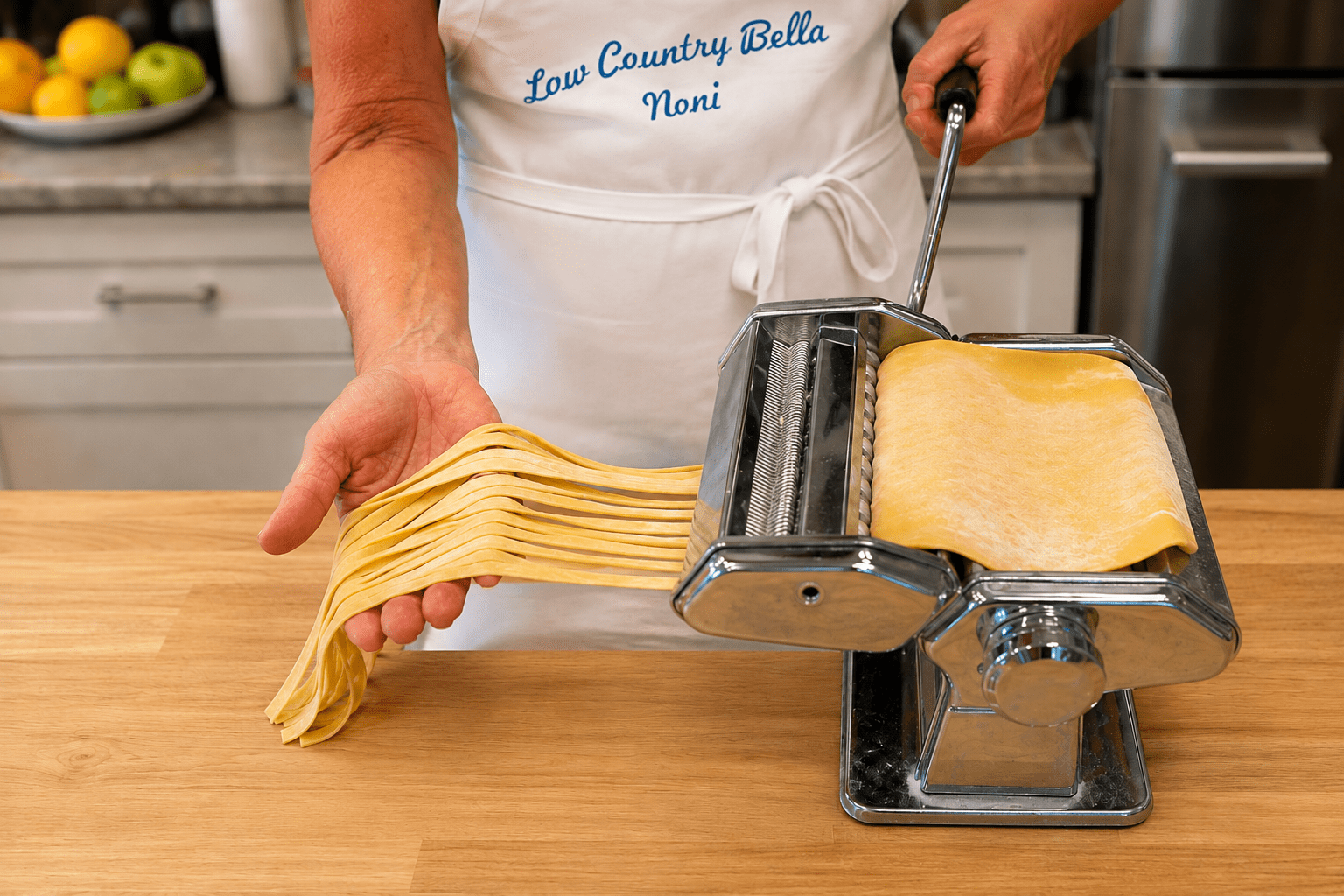
Attach the fettuccine cutter to your machine. Feed the pasta sheet through while turning the crank steadily. As the ribbons emerge, catch them gently with your hand.
Step 8: Nest or hang
Lightly toss the fettuccine with semolina flour to prevent sticking. Form the pasta into loose nests and place them on a floured baking sheet or hang on the pasta drying rack.
Step 9: Cook
Bring a large pot of generously salted water to a rolling boil. Fresh fettuccine cooks quickly, usually 2 to 3 minutes depending on its thickness. It should be tender with just a slight bite.
Bella's Pasta School tip
Never rinse fresh pasta after cooking. Transfer it directly from the boiling water into your sauce, adding a splash of pasta water if needed. That's where the magic happens. I love this pasta with a little garlic, olive oil, red pepper flakes and freshly grated pecorino.
Congratulations! You've now learned how to transform a simple ball of fresh egg dough into beautiful ribbons of homemade pasta. In lesson three, get ready to discover how the very same dough can become something completely different, with just a few simple changes. One recipe with endless possibilities — that's the beauty of Italian pasta making. Until next time — keep your hands in the dough and your heart in Italy.
Do you need equipment to make your own pasta at home? Visit Lowcountry Bella’s Favorite Things list for her favorite supplies.