

In Italian, food is rarely just food. It organizes time, relationships, and expectations. This column explores Italian sayings and proverbs as ways of thinking shaped at the table.
These expressions preserve that knowledge in compact form. Read literally, they speak about eating. Read more closely, they offer insight into how experience, pleasure, and social life are understood.
The aim is simple: to treat language as another ingredient—handled with care, tasted slowly, and shared. No prior appetite required. It tends to arrive along the way.
Rigirare la frittata
Literal translation: To flip the frittata
Meaning: To overturn the terms of a discussion; to recast a situation in one's favor, often by justifying oneself or shifting responsibility onto others.
Few things are more irritating than watching a conversation suddenly change direction. You make a clear point, raise a reasonable objection, or recall what actually happened, only to find your words returned to you in a shape you barely recognize. What began as a straightforward exchange now has to be clarified before it can even continue. Somehow, you are no longer discussing the original issue but defending the fact that you brought it up at all.
In Italy, this familiar maneuver has a vivid name: rigirare la frittata—literally, "to flip the frittata."
The expression describes the attempt to turn a discussion upside down, reshaping it to one's advantage. Yet it is rarely used in a neutral way. Often, it surfaces as a protest: Non rigirare la frittata! The attempt to redirect the discussion on more convenient terms has been recognized—and, more importantly, refused.
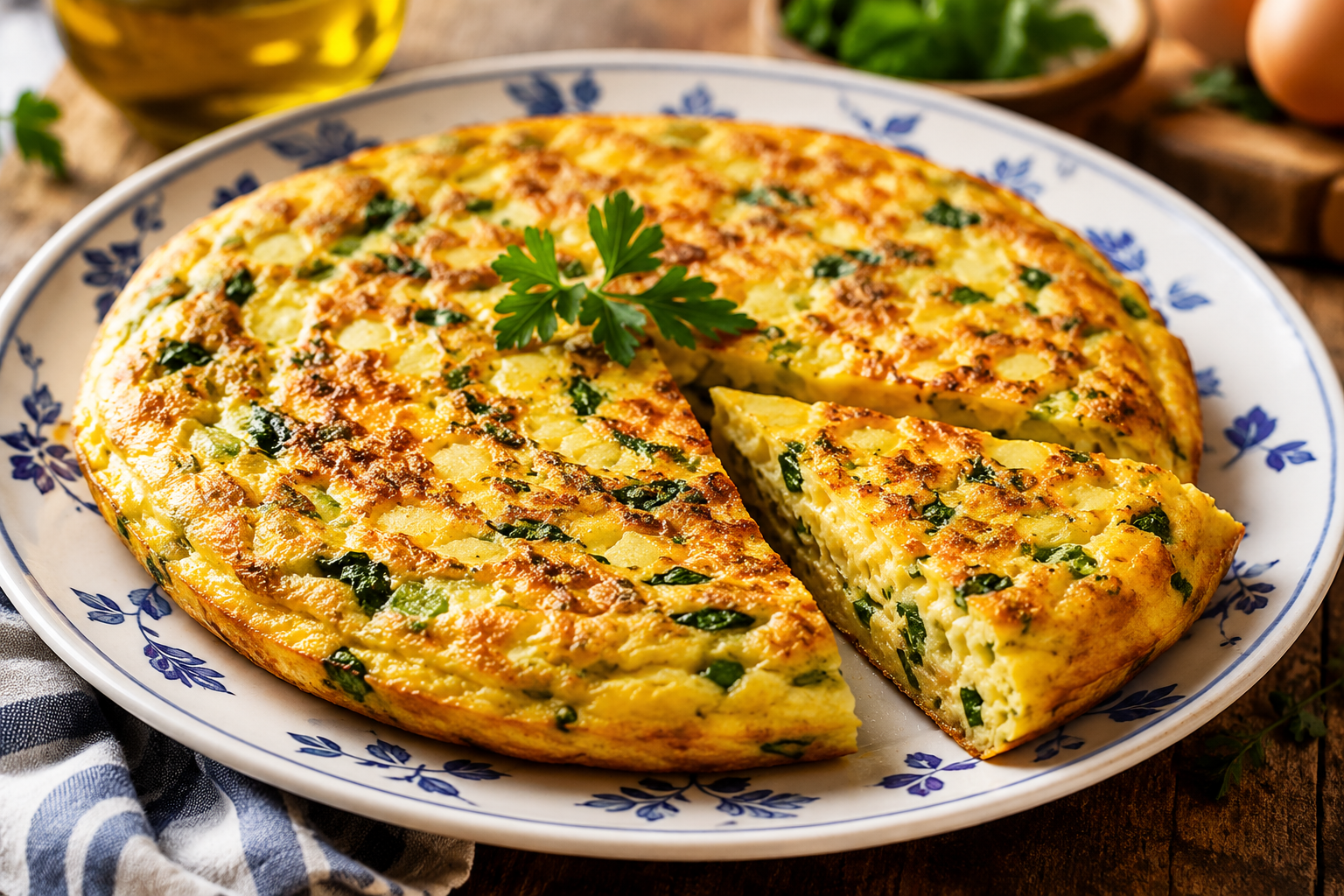
The image behind the expression is strikingly domestic: a pan, a half-set mixture of eggs, and that decisive moment when everything is turned upside down. In conversation, the effect is much the same. The facts themselves may not change, but their arrangement does—or at least that is the intention.
Anyone who has survived a family lunch, a long marriage, or a disagreement between siblings knows exactly how this works.
What makes the expression particularly intriguing is that its figurative meaning may preserve a trace of older culinary wisdom—one that many Italians themselves have long forgotten.
For centuries, Italian culinary tradition was remarkably consistent on one point: a proper frittata was not to be flipped during cooking. Writing around 1460 in his Libro de Arte Coquinaria, Maestro Martino advised cooking it on one side only. More than four hundred years later, Pellegrino Artusi echoed the same instruction in Science in the Kitchen and the Art of Eating Well, the foundational text of modern Italian home cooking.
Whether or not this practice represents the actual origin of the idiom cannot be established with certainty. Yet it offers an illuminating way of understanding the expression's negative overtones. Traditional wisdom suggested that a frittata cooking properly should simply be left alone, without unnecessary intervention. Before modern cookware made the maneuver easier, flipping it at the wrong moment could undo everything. Why interfere with something that was already setting as it should?
Like many Italian idioms, the expression transforms an everyday kitchen gesture into a small lesson about human behavior. Elsewhere, people may "change the narrative," "move the goalposts," or "rewrite history." Italians, of course, can do all of this too—but they prefer to describe it through one of the humblest and most familiar dishes imaginable.
Modern cookware may have made flipping a frittata safer and easier. The conversational version, unfortunately, still has a tendency to spoil perfectly good discussions—no pan required.
Want to be the first to know about Italian food events, restaurant openings and culinary travel? Subscribe to the Appetito weekly newsletter.