

In Italian, food is rarely just food. It organizes time, relationships, and expectations. This column explores Italian sayings and proverbs as ways of thinking shaped at the table.
These expressions preserve that knowledge in compact form. Read literally, they speak about eating. Read more closely, they offer insight into how experience, pleasure, and social life are understood.
The aim is simple: to treat language as another ingredient—handled with care, tasted slowly, and shared. No prior appetite required. It tends to arrive along the way.
Cercare il pelo nell’uovo: When Perfection Fails Inspection
Literal translation: “To look for a hair in the egg.”
Meaning: To scrutinize something in search of insignificant or nonexistent faults.
Some people notice problems. Others feel cheated if they cannot find one.
Italian reserves a particularly unappetizing image for the second group. Someone who cerca il pelo nell’uovo—“looks for a hair in the egg”—examines something so obsessively that even excellence must eventually confess to a defect. This is precision stripped of its virtues. The searcher is not merely attentive but pedantic, hypercritical, and constitutionally unable to leave well enough alone.
A homebuyer may reject an otherwise ideal apartment because one bathroom tile seems slightly paler than the others. A traveler may return from a memorable vacation with a detailed account of the morning when the bus arrived five minutes late. The complaint may be justified, microscopic, or entirely imaginary. What matters is the magnificent disproportion between what is being judged and the determination to find something wrong with it.
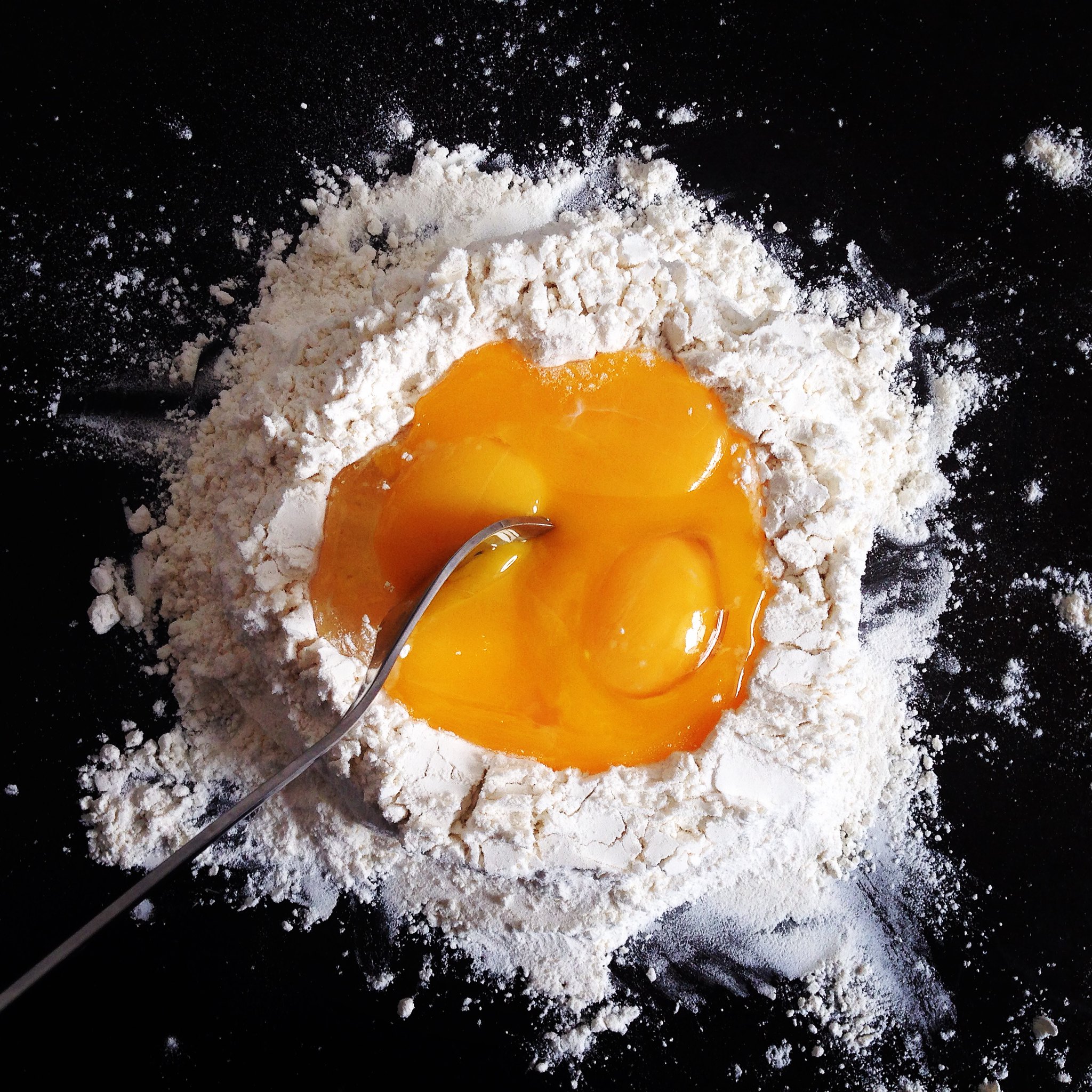
The egg gives that disproportion an almost perfect form. Geometrically balanced and as smooth as porcelain, it appears complete and self-contained. Its contents should, needless to say, contain no hair. Looking for one therefore means distrusting an object precisely because it appears beyond reproach. A glance will not do. The shell must be cracked and the evidence examined until the contamination is finally exposed, even if nature has inconsiderately failed to put it there.
The choice of a hair matters. A scratch on the shell would merely disturb the egg’s symmetry; a hair inside changes the nature of what is being judged. Once noticed, the smallest and most improbable detail is enough to spoil the otherwise perfect whole.
This impossible inspection predates modern food-safety standards by several centuries, yet it did not always imply criticism. In the fifteenth-century Novella del Grasso legnaiuolo, Filippo Brunelleschi, best known for the dome of Florence Cathedral, is described as someone who vedeva el pelo ne l’uovo: “could see a hair in an egg.” In this context, the impossible vision is a compliment. Even a hair concealed inside an egg was apparently not beyond his powers of detection.
The later shift is subtle but revealing. To see the nearly invisible suggests extraordinary perception; to search for it suggests determination. Over time, sharp eyesight became excessive scrutiny. The eye remained exceptional, but admiration for its owner disappeared.
English speakers may respond with to nitpick, which produces an unexpected linguistic reversal. Italian searches for a hair in an egg, while English searches through the hair for louse eggs. The two languages construct excessive fault-finding by rearranging the same elements.
The ingredients are the same; only the recipe for dissatisfaction changes. Both are equally disgusting.