


In Italian, food is rarely just food. It organizes time, relationships, and expectations. This column explores Italian sayings and proverbs as ways of thinking shaped at the table.
These expressions preserve that knowledge in compact form. Read literally, they speak about eating. Read more closely, they offer insight into how experience, pleasure, and social life are understood.
The aim is simple: to treat language as another ingredient—handled with care, tasted slowly, and shared. No prior appetite required. It tends to arrive along the way.
Chi non beve in compagnia, o è un ladro o è una spia
Literal translation: “Whoever does not drink in company is either a thief or a spy”
Meaning: Someone unwilling to join communal drinking may appear guarded, distrustful, or strangely reluctant to enter fully into the group.
The proverb treats hesitation not as moderation, but as a small but revealing social anomaly.
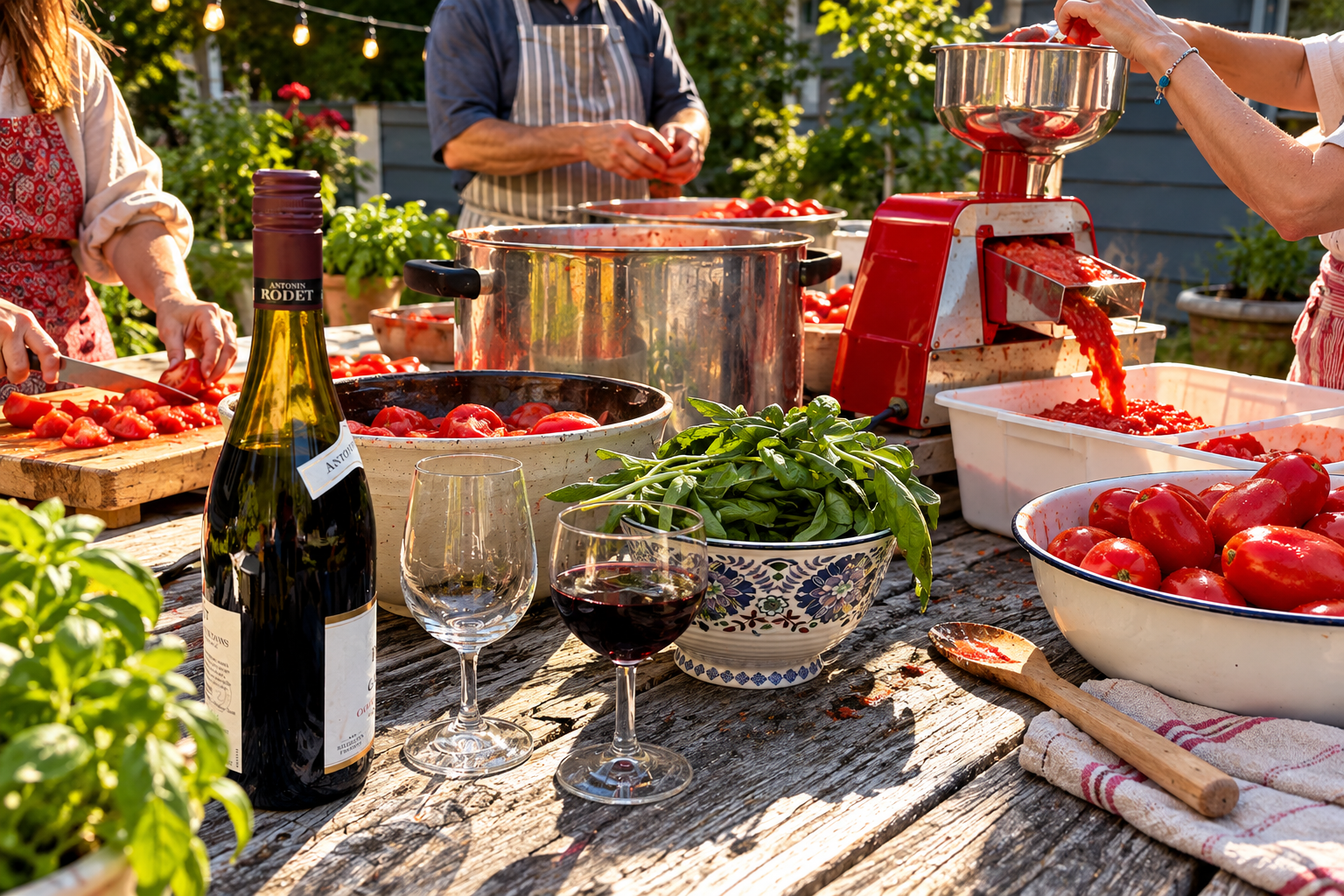
Someone turns down a glass of wine — or simply shows little enthusiasm for joining in — and Italian popular culture reacts with comic distrust: chi non beve in compagnia o è un ladro o è una spia. The escalation is absurd — but telling. Refusing the shared drink is not seen as a harmless personal preference. It raises eyebrows: a thief hides intentions; a spy listens carefully while giving away as little as possible. Neither fits easily into relaxed convivial company.
At the heart of the proverb lies a simple imbalance. Drinking together means lowering one’s guard, if only slightly. Conversation loosens. Gestures soften. Stories slip out more easily than intended. Everyone gives up a little control. The person who abstains does not — and the asymmetry shows.
Want to be the first to know about Italian food events, restaurant openings and culinary travel? Subscribe to the Appetito weekly newsletter.
What is really at stake is not the wine itself, but reciprocity. While the group drifts into conviviality, one individual remains composed, quietly observing while everyone else relaxes into the atmosphere of the table. Within the comic logic of the proverb, that stillness begins to seem strategic. The reluctant drinker appears less restrained than wary, less sober than careful.
Italian humor turns this tiny social imbalance into theatrical paranoia. If everyone else accepts a small degree of shared exposure, the person who hangs back must surely know something, conceal something — or perhaps simply trust the group a little less than it trusts them.
The proverb also reveals something broader about the cultural role of wine. The important point is not intoxication, but participation. Wine matters because it creates a brief state of reciprocity in which everyone accepts the same minor social risk. What counts is less the alcohol itself than the visible act of stepping into a shared moment.
Want more wine stories? Explore Appetito's collection of wine features, Italian drinking traditions and vineyard visits.
It is hardly surprising that so many cultures have treated communal drinking as something more than consumption. Drinking together synchronizes behavior. It creates brief alliances. It brings people closer. Even in its simplest forms, conviviality carries an implicit idea of mutual trust. Someone who refuses to join in does not merely decline a drink; they preserve a certain distance even as everyone else is trying to reduce it.
Other Italian sayings reinforce the same intuition. Ogni vino fa allegria se si beve in compagnia — “every wine brings joy if drunk in company” — suggests that the quality of the wine matters less than the people sharing it. Even mediocre wine improves when accompanied by conversation, laughter, and friendship. The social experience transforms the drink itself.
And yet the proverb remains comic far more than moralistic. Of course, no one really believes that every reluctant drinker is a criminal or an undercover informant. The saying belongs to a long Italian tradition of convivial exaggeration, where minor refusals are readily inflated into signs of hidden intentions. But the joke works because it touches something culturally recognizable. What matters, in the end, is not what you drink, but whether you join the shared moment — or remain just outside it.