
What does a family recipe really preserve? Along with the ingredients and instructions, a recipe can preserve the voice of the person who cooked it, the kitchen where it was made and the people who gathered around the table. For my mother, Carla Fiorentini, recipes also became a way of keeping an entire world alive.
My mother grew up in Torniella, a small village in the Tuscan countryside, at a time when everyday life was closely connected to the seasons, the land and the rhythms of rural communities. Food was never simply about eating. It was about making the most of what was available, respecting ingredients, avoiding waste and bringing people together. Recipes were passed down through generations, often without precise measurements or written instructions. You learned by
watching, helping and remembering.
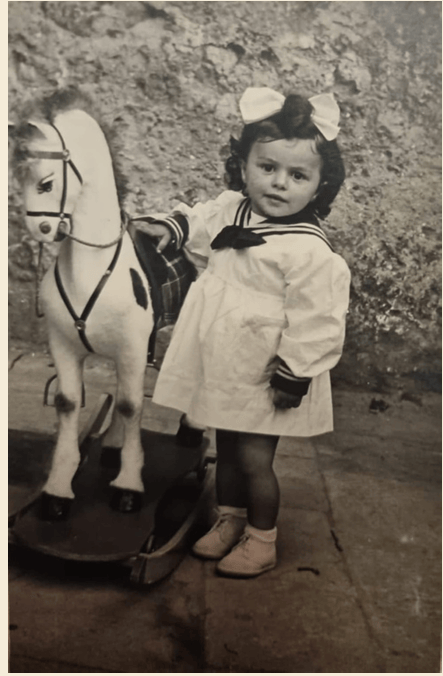
Years later, my mother began writing down those memories and recipes in five notebooks. She wrote them for me, her daughter. They were not intended to become a book. They were a personal collection of flavors, stories, traditions and little details from a life that was gradually disappearing. Alongside the recipes were memories of people, places and family moments that might otherwise have been lost with time.
Carla Fiorentini as a child. Courtesy of Giulia Rabissi
When I discovered those notebooks, I realized they were much more than a collection of family recipes. They were a part of our history and a gift my mother had unknowingly left for me. I decided to bring them out of the drawer and publish them so people outside our family could read what she had written.
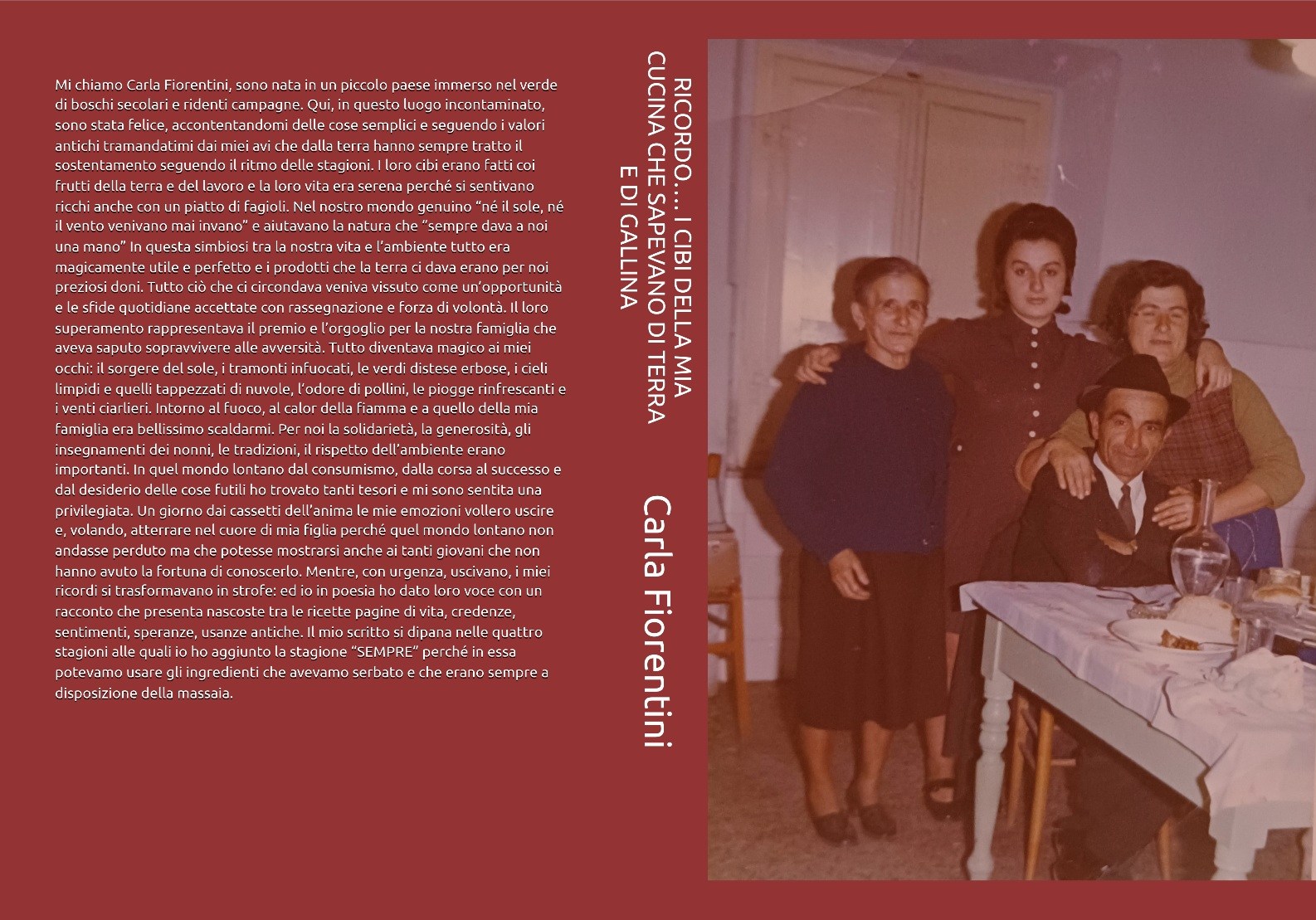
The result is "Ricordo… I cibi della mia cucina che sapevano di terra e di gallina," a book whose title evokes the flavors of a kitchen rooted in the earth and in an older way of life. It is not a conventional cookbook. The recipes are written in rhyme, with a playful and poetic voice that reflects my mother’s personality and the way food was part of everyday life. The book follows the seasons, recalling a time when cooking depended on what the garden, the fields and the surrounding countryside could offer. Its pages bring together food, family memories and the traditions of rural Tuscany.
For an American reader, some of these dishes and customs may feel unfamiliar. But I believe the emotions behind them are universal. Almost everyone has a food memory connected to someone they love: a grandmother’s kitchen, a Sunday lunch, a particular smell or a recipe that no one ever thought to write down. These memories are part of our identity. They tell us where we come from and they keep people close even when time and distance separate us.
I hope my mother's book gives readers ideas for what to cook and a reason to slow down and remember the people and traditions that have shaped us. It is also a tribute to the generations of women whose knowledge and work have so often remained within the family and rarely received recognition.
The story has already found its way beyond our family. My mother and I were invited to share it on "Geo," an Italian television program on Rai 3. The book was also featured in La Cucina Italiana in its “Goloso chi legge” section of its July–August 2025 issue, and Sala&Cucina reviewed it.
For me, however, its most important meaning remains the one with which it began: a mother writing for her daughter. Publishing those notebooks was my way of answering her gift, and of making sure that the flavors, words and memories she entrusted to me could reach other families too.
Sometimes a recipe asks us to remember where we come from, think of the people who came before us and keep a place for them at our table.
Want to be the first to know about Italian food events, restaurant openings and culinary travel? Subscribe to the Appetito weekly newsletter.