

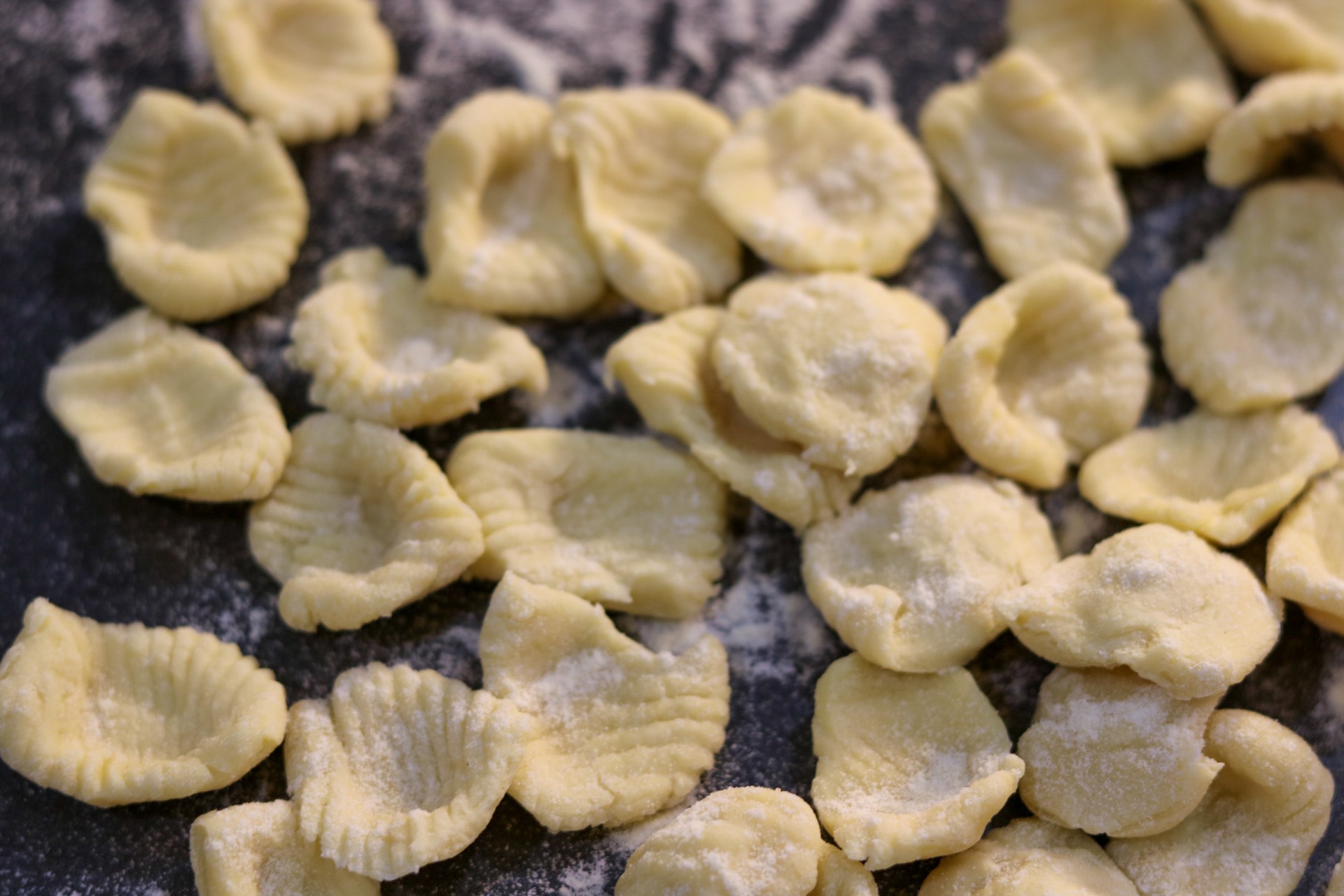
In our new series, Story Behind the Pasta, Jamie Spinato travels across Italy one pasta shape at a time, sharing the stories people tell about each one and showing you how to make it at home. First up is orecchiette, the little ears of Puglia.
I cook dinner for one like I'm feeding my family's ancestors in Naples and Sicily. Over centuries, hundreds of nonnas passed down pasta-making traditions. One day, those traditions finally reached me.
Welcome to Story Behind the Pasta, where we will learn the stories nonnas passed down, one pasta at a time. We'll travel across Italy, meet the pasta that made the region famous, and learn how to make it. Some stories are true. Others are fables. Either way, we’ll share both.
We start in southern Puglia, so grab your semolina flour. It’s time for the easiest dough recipe: semolina and water. No eggs to crack in this recipe. It's the dough for Puglia's most famous pasta: orecchiette. Little ears, as they’re called. And the ear is where the story starts, although nobody actually knows for sure where orecchiette came from.
Orecchie di Aman
During the 12th and 13th centuries in Bari, under Norman and Swabian rule, the city's Jewish community cooked alongside its neighbors. Their dessert was the Ears of Aman: little pockets of fried pastry, shaped unmistakably like ears. Some say orecchiette borrowed its shape from those desserts.
The Trulli of Alberobello
If you’re undecided on what to eat for dinner in Alberobello, look up for inspiration. The trulli, the dry-stone limestone houses with grey, cone-shaped roofs, look just like those little pasta ears. Who knew a cone-shaped roof could have so much in common with a pasta shape?
Provence, via the Angevins
One theory traces the origins of orecchiette back to medieval Provence. Oui! In 13th-century Provence, cooks made crosets, a thick durum wheat pasta. The hollow center helped the dry quickly so it could be stored for months. The Angevins carried it to Puglia when they conquered the region—which means Puglia's most famous pasta might actually be French.
Making the dough
Whatever the origins of orecchiette, cooks in Puglia have made the same dough for centuries.
- Pour 100 grams of semolina flour onto a surface. Shape the flour into a mound with a wide well in the center.
- Add 50 milliliters of water, a little at a time, in the middle of the flour well. Use a fork to pull the semolina in from the inside edges. It'll look shaggy and wrong before it looks right.
- Once the flour and water are incorporated, gather it into a rough ball.
- Knead the dough until it is smooth. This takes roughly 10 minutes. The dough should spring back when you press your finger into it.
- Cover the dough with plastic wrap or a towel and let it rest for 30 minutes. This allows the gluten to relax, making shaping easier later.
Making the ears
- Take your rested dough and divide it into sections. Roll it into ropes about as thick as your finger.
- Cut the ropes into little pieces, about the size of a chickpea. Keep the rest of the dough covered while you work so the dough doesn’t dry out.
- Here's my spin on orecchiette: I use a gnocchi board to create more ridges in the pasta dough, giving it extra texture and helping it grip the sauce I dress it with. Set a piece on the ridges, press down with your thumb or a butter knife, and drag it toward you.
- Flip the pasta inside out with the tip of your thumb. This curls the dough into the ear shape. Rough and ridged on both sides, ready to catch sauce.
- Lay the orecchiette on a floured tray to dry a little while the salted water comes to a boil. Fresh orecchiette cooks fast! It only takes a few minutes for them to float and be ready to marry into a sauce.
Love discovering Italy one bite at a time? Subscribe to the free Appetito newsletter for the latest in food, travel, recipes, and Italian culture stories.