

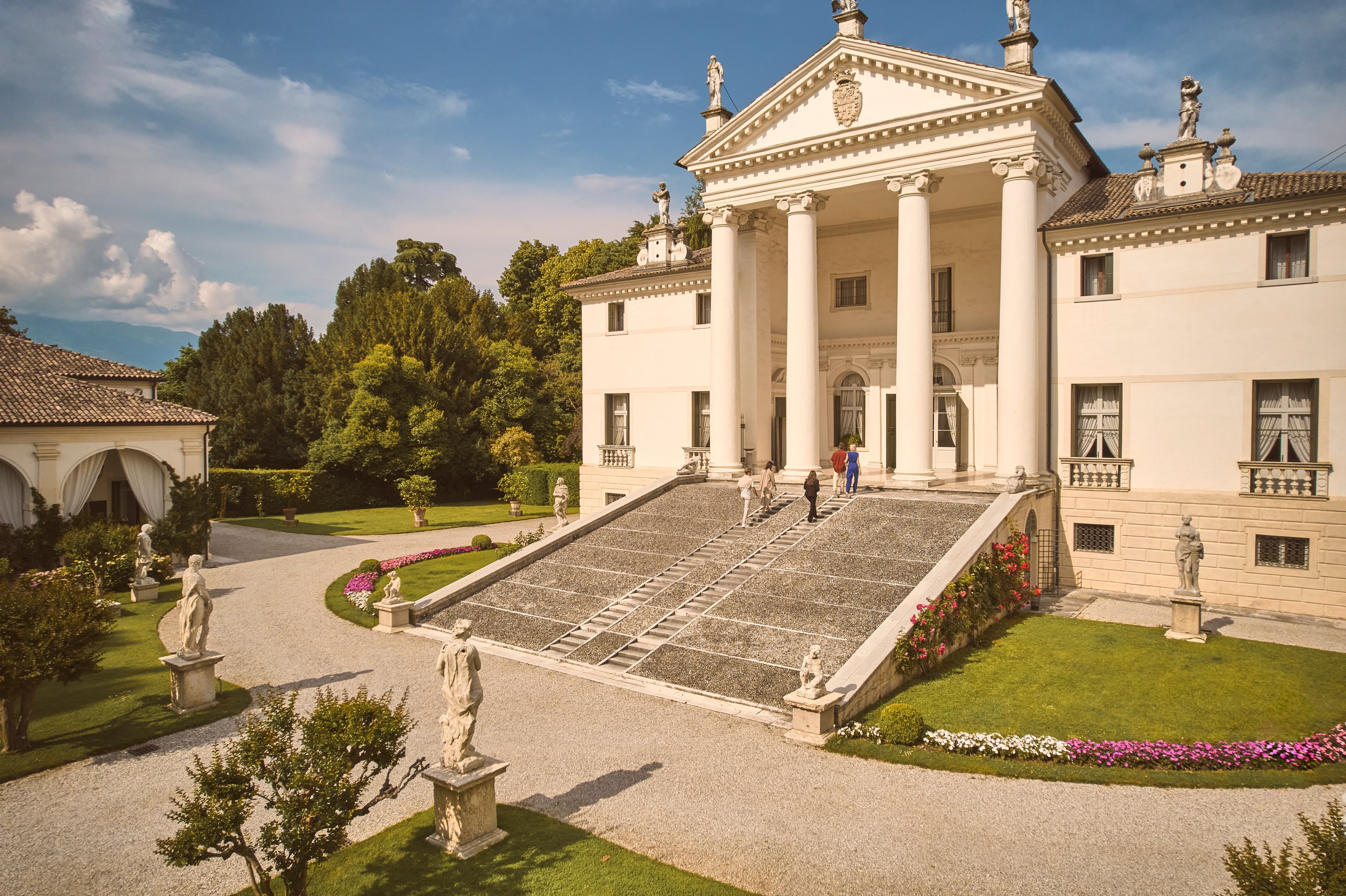
There is an alternative to the quaffable Prosecco that has made Italy’s sparkling white wine famous around the world. If you’re ready to move on to a more elegant expression of Prosecco, the wines of Villa Sandi are worth discovering.
And should you find yourself in the Treviso region of the Veneto, Villa Sandi offers guided tours and wine tastings for visitors who want to experience the history, architecture and vineyards behind the wines.
Wine is serious business at Villa Sandi
Villa Sandi is an important Prosecco producer headquartered in a 17th-century Palladian villa in the Veneto. Its wines span the Prosecco quality pyramid, from Prosecco DOC to the elite Asolo Prosecco Superiore DOCG and the prestigious Valdobbiadene Superiore di Cartizze DOCG.
Villa Sandi’s sparkling wines are clean, delicately fruit-driven and notably restrained in their effervescence. Most are made using the Charmat, or tank, method, which is particularly well suited to preserving the fresh floral and fruity aromas of glera, the principal grape used to make Prosecco.
Love discovering Italy one bite at a time? Subscribe to the free Appetito newsletter for the latest restaurant openings and Italian travel news.
Family life is business at Villa Sandi
The Palladian-style estate, dating from 1622, became the headquarters of the Moretti Polegato winemaking family in the 1970s. For architecture buffs, Andrea Palladio (1508–1580) was one of the most influential Italian architects of the 16th century. His palaces and villas throughout the Veneto remain recognizable around the world and gave rise to the architectural style known as Palladian.
The family has been producing distinctive sparkling wines, including classic-method expressions, since the 1920s. Today, glera grapes are sourced from seven estates located throughout the Marca Trevigiana foothills in the province of Treviso.
Brothers Mario and Giancarlo acquired the historic Palladian villa in the 1970s and restored it as the winery’s headquarters. Tours are available by reservation.
In the 1990s, Mario took charge of Geox shoes, while Giancarlo assumed full control of Villa Sandi with the help of his children, Diva and Leonardo. In 2019, the family expanded its wine holdings with the purchase of Tenuta Borgo Conventi in Friuli Venezia Giulia, where mostly white wines, including Luna di Ponca, are produced.
The Prosecco process at Villa Sandi
Beneath the villa is an elaborate 18th-century underground cellar complex stretching for approximately 1.5 kilometers beneath the property and vineyards. The historic cellar provides an evocative setting for the winery’s wines, but it also connects Villa Sandi’s architectural heritage with its modern winemaking operation.
So, how does Villa Sandi make its Prosecco?
After the glera grapes are harvested, Villa Sandi can preserve a portion of the clarified, unfermented grape must at approximately 32 degrees Fahrenheit (0 degrees Celsius) in large stainless-steel tanks. Keeping the must unfermented and chilled slows microbial activity and helps preserve the primary fruit and floral aromas of the glera grape.
When fresh wine is needed, the temperature of the must is gradually raised to approximately 58 to 61 degrees Fahrenheit (14 to 16 degrees Celsius). Yeast is then added, and the second fermentation takes place in a tank. Over the following two to three weeks, the fermentation produces the characteristic bubbles of Prosecco.
The result is a sparkling wine designed to reach the bottle with the freshness, fruit character and vibrancy associated with well-made Prosecco.
Villa Sandi Prosecco standouts
Asolo Prosecco Superiore DOCG
Asolo Prosecco Superiore DOCG comes from the rolling hills southwest of the Piave River around the historic town of Asolo. The soils have ancient marine origins, contributing to the wine’s distinctive minerality, freshness and subtle salinity.
With the first sip, you’ll notice crisp stone-fruit notes followed by a clean, mineral-driven finish. It is an elegant expression of Prosecco that demonstrates how much character can come from the hillsides of the Veneto.
Valdobbiadene Superiore di Cartizze Brut DOCG “La Rivetta”
For many Prosecco lovers, Cartizze represents the pinnacle of the denomination. The tiny, steep Cartizze hill covers roughly 107 hectares, where vineyards benefit from abundant daytime sunlight and cool evening breezes descending from the Dolomites.
This pronounced diurnal temperature variation helps the grapes develop both ripeness and aromatic complexity. Because of the steep terrain, the vineyards must be harvested by hand.
All of this attention to site and vineyard work comes through in Villa Sandi’s Valdobbiadene Superiore di Cartizze Brut DOCG “La Rivetta,” with its elegant, silky texture, delicate citrus nuances and ripe pear and golden-apple notes.
After tasting it, you might just imagine yourself living in Villa Sandi!