

In Italian, food is rarely just food. It organizes time, relationships, and expectations. This column explores Italian sayings and proverbs as ways of thinking shaped at the table.
These expressions preserve that knowledge in compact form. Read literally, they speak about eating. Read more closely, they offer insight into how experience, pleasure, and social life are understood.
The aim is simple: to treat language as another ingredient—handled with care, tasted slowly, and shared. No prior appetite required. It tends to arrive along the way.
Fare fiasco
Literal translation: “To make a wine flask.”
Meaning: To fail conspicuously, suffer a serious setback, or experience a humiliating lack of success.
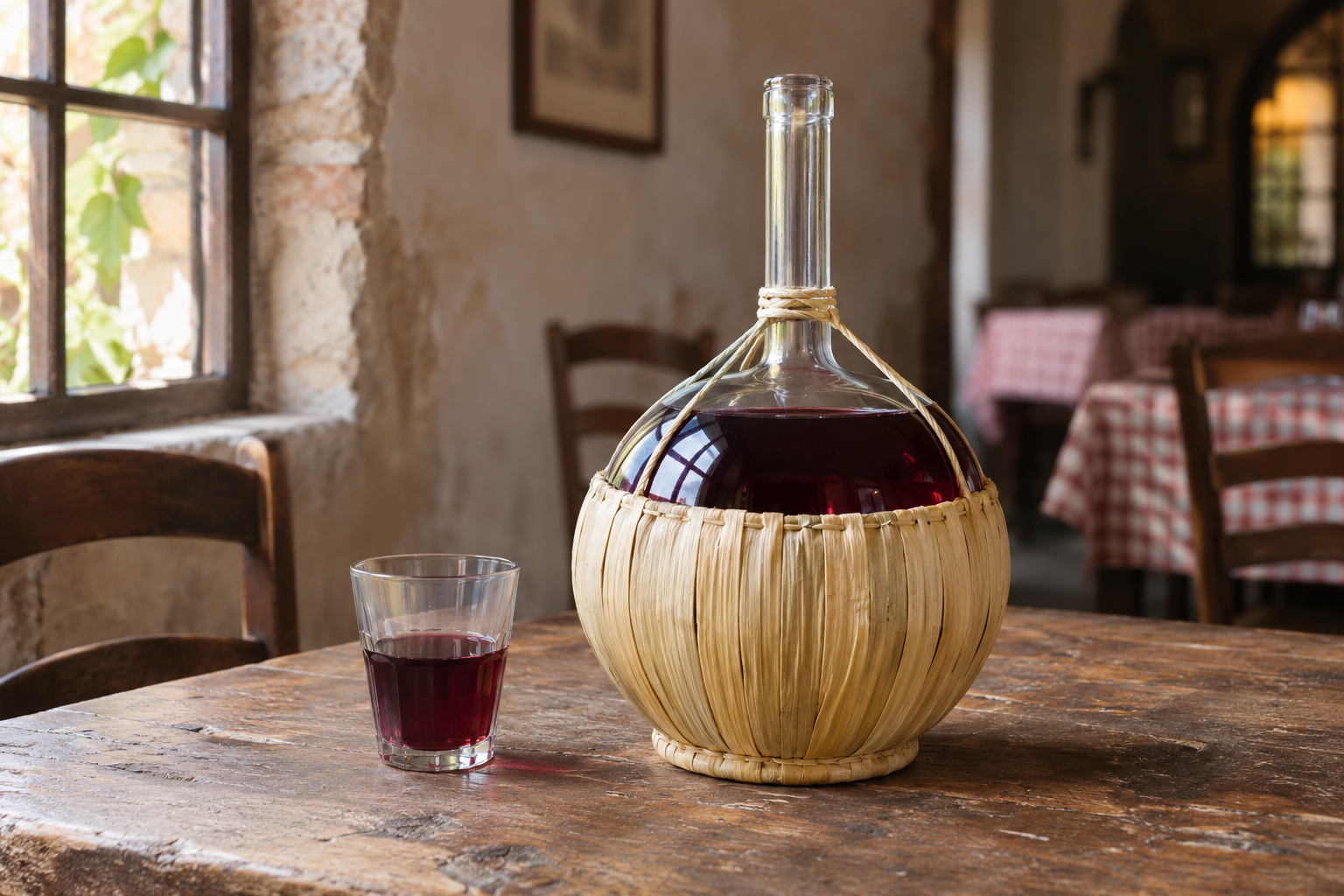
Round-bellied, long-necked, and dressed in straw, the Italian fiasco looks ready for a party in the countryside. Documented since the 13th century, this traditional wine bottle became a familiar part of everyday meals, especially in the sun-drenched hills of Tuscany.
Place one in the middle of the table, and dinner is off to a promising start. Use the same word to describe that dinner, however, and something has gone terribly wrong.
How did a bottle meant to make an evening more enjoyable become a symbol of disaster?
One explanation comes from Italian glassblowing workshops, where a craftsman attempting to create an elegant object supposedly ended up with an ordinary fiasco instead. A perfectly respectable wine bottle, but a bitter disappointment for a man who had a very different kind of masterpiece in mind.
A more plausible, though unverified, story concerns the 17th century actor Domenico Biancolelli, famous for playing Arlecchino. According to the tale, he improvised a comic monologue while holding a fiasco. Nobody laughed. Rather than blame his jokes, he blamed the bottle and threw it away. When the comedy fails, fire the prop.
But the bottle's bad reputation may be older still. In medieval Italy and elsewhere in Europe, disgraced individuals could be made to carry an empty flask, sometimes hung around their necks, as a public mark of shame. As early as the 14th century, the Italian expression appiccare il fiasco a qualcuno meant to deceive or discredit someone. Perhaps the poor bottle was already in trouble long before Arlecchino stepped onto the stage.
The question remains open. Apparently, even after centuries of investigation, nobody can agree on who first made a fiasco.
Meanwhile, the word enjoyed an international success that the unfortunate bottle could hardly have anticipated. During the 19th century, it traveled across Europe, finding a home in French, German, and English. It built a remarkably successful career out of other people's failures. Unfortunately for those outside Italy, it arrived without the wine: they inherited the disaster, but not the pleasure of drinking its contents.
Today, a fiasco can happen almost anywhere: a disastrous business venture, a failed political campaign, a romantic evening gone terribly wrong, or a wedding remembered for all the wrong reasons. Not every failure deserves the name. A fiasco requires a certain degree of spectacle, preferably with witnesses. It no longer needs a stage, but it still draws an audience.
Ironically, while the word continues to flourish, the humble straw-covered bottle, once passed around without ceremony, has become a less familiar sight on Italian tables. Wine now comes with sommeliers, prestigious labels, elaborate tasting notes, and sometimes prices suggesting that every grape was individually picked, inspected, and approved before being allowed into the bottle.
The fiasco may no longer command the table as it once did, but the word has secured a permanent place in languages around the world. Perhaps the most successful failure Italy ever exported.
Love discovering Italy one bite at a time? Subscribe to the free Appetito newsletter for the latest in Italian food, travel and favorite recipes.