

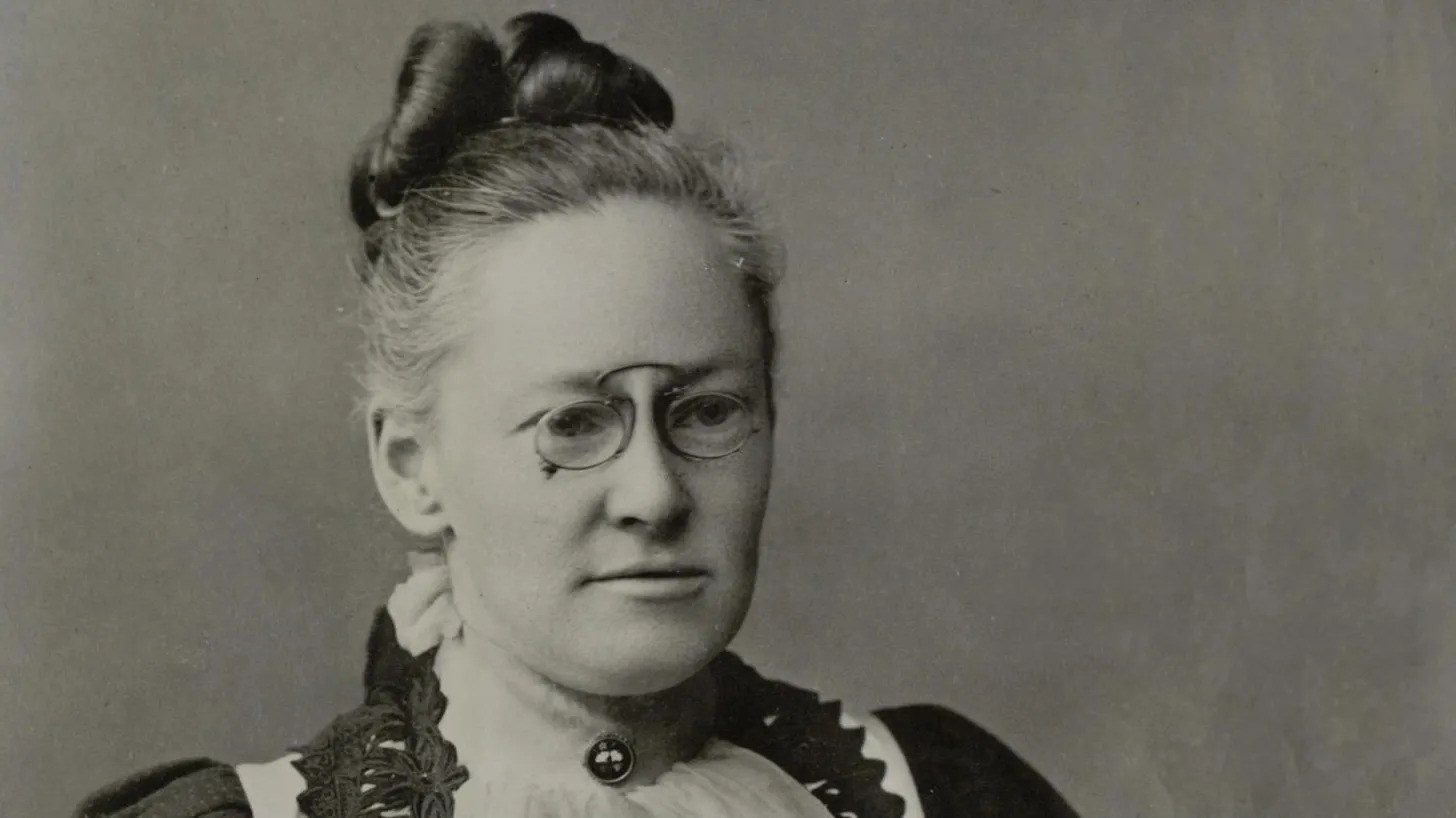
Fannie Merritt Farmer, born in 1857, was a hugely influential cookery writer at the turn of the 20th century. Training originally at the Boston Cooking School, she went on to join the teaching staff and later become its principal. Today, though, Fannie Farmer is remembered more as a pioneering food writer with a fastidious reputation; an incredibly precise and detailed recipe writing style that meant anyone, regardless of whether they came from a cooking background or not, could learn to cook from her books. She was known as the "mother of level measurements"—always insisting that dry ingredients should be put into a measuring cup and levelled with a knife, rather than measured by eye.
Which I suppose makes the astonishing quantities of ingredients in her spaghetti carbonara (1965) especially flabbergasting. Equal quantities of pasta and bacon! But this was Fannie Farmer, so we knew she meant it.
Except she probably didn’t.
In 1965, Fannie Farmer had already been dead for 50 years. But her cookbook had, in the meantime, enjoyed a remarkable life of its own. First published in 1896 as "The Boston Cooking-School Cook Book," by the time the 1965 carbonara appeared, the book was in its eleventh edition and now known as "The Fannie Farmer Cookbook."
The woman responsible for this particular incarnation was Wilma Lord Perkins (1897–1976), Farmer’s niece by marriage, who had spent decades updating the book for successive generations of American home cooks. But Perkins wasn’t simply preserving her aunt’s famous recipes—she was continually introducing new dishes, adapting old ones and keeping the book in step with changing American tastes.
Although we can’t be certain that Wilma Perkins was the author of the 1965 carbonara, we can be reasonably confident that Fannie Farmer herself had nothing to do with it—even though the recipe carries some of the reassuring authority of America’s most famously meticulous food writer.
And if a pound of bacon for a pound of spaghetti sounds a little extreme today, it’s worth remembering that in 1965 carbonara was still a recipe that few had heard of and even fewer had agreed what should go in it. In Italy, published recipes included butter, cream, garlic and onion. British versions had already embraced everything from ham to olive oil, and while green pepper does seem to be a brave choice, but maybe not quite as outrageous as it first appears.
You do, however, really need to like bacon.
Editor's note: This article is part of Mark Gowen’s current series on the history of carbonara. Discover more early recipes and the stories behind them at www.pastaphilia.com.
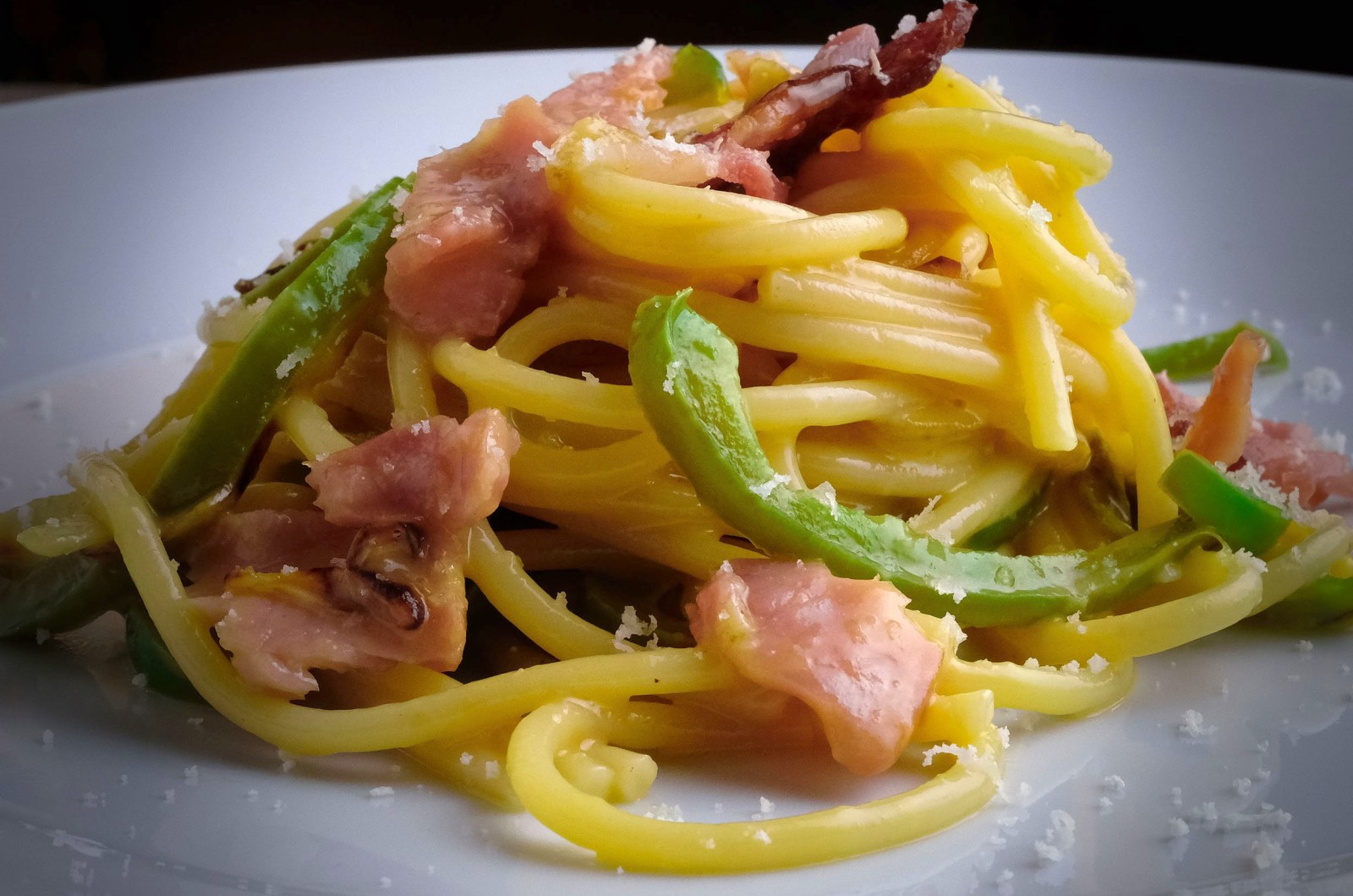
Fannie Farmer’s Carbonara
4
servings15
minutes20
minutesOriginal ingredients
1 lb. 1 spaghetti
1 lb. 1 bacon, diced
1/2 cup 1/2 chopped green pepper
1/2 cup 1/2 chopped onion
2 2 eggs
1/4 cup 1/4 freshly grated parmesan cheese
3 tbsp. 3 bacon fat
additional grated parmesan, for serving
Directions
- Cook the spaghetti in boiling salted water until tender.
- Meanwhile, fry the bacon until crisp. Remove the bacon and set it aside, reserving 3 tbsp. of the rendered bacon fat in the pan.
- Cook the green pepper and onion in the reserved bacon fat until tender.
- Drain the spaghetti and rinse it. Return it to the cooking pot.
- Beat the eggs and mix them into the hot spaghetti with the ¼ cup Parmesan.
- Add the bacon, green pepper and onion mixture and toss everything together.
- Return the pot to low heat and cook briefly, stirring, until the egg mixture has heated through and coated the spaghetti.
- Serve immediately with additional grated parmesan cheese.
Did you make this recipe?
Tag @appetitomagazine on Instagram and hashtag it with #italianfoodanddrink
Like this recipe?
Follow @Appetitomagazine on Pinterest
Follow us on Facebook!
Follow us on Facebook
Hungry for more? Find your next favorite dish in our collection of Italian recipes.