

Easter has a way of returning certain dishes to the table—some out of tradition, others out of habit. Pizza rustica, for me, is something I’ve grown into over time.
As a kid, it felt dense, almost too rich—something you took a small slice of because it was there. But now, I understand it differently. I crave it. The structure. The intention. it’s a savory pie in the truest sense, and when it’s done thoughtfully, it’s one of the most satisfying things you can make.
At its core, pizza rustica is about abundance. It marks the end of Lent, the return of indulgence, the kind of dish meant to be sliced into and shared. But what makes it memorable isn’t just what goes into it—it’s how each element is handled.
For me, it starts with the cheese.
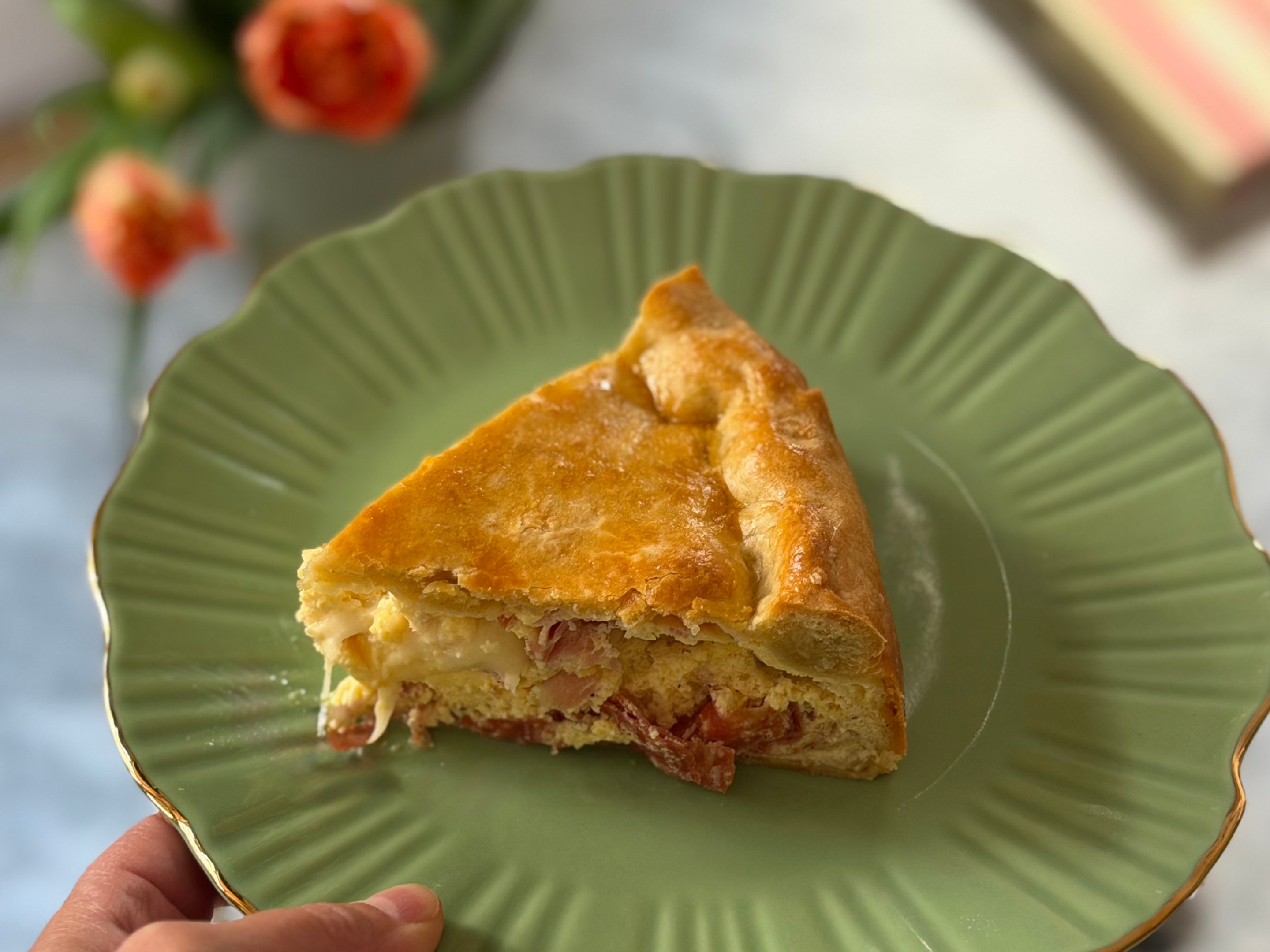
The quality and balance of the cheeses are what elevate this from a traditional Easter pie to something truly exceptional. Using Lioni Latticini, you get a full spectrum of texture and flavor. The ricotta is soft and creamy, almost airy, forming that rich, custardy base. The basket cheese brings structure and a gentle tang that cuts through the richness. And the scamorza—similar to a firmer, slightly aged mozzarella—melts seamlessly into the filling, lending that signature pull and a more cohesive, unified texture.
I tend to lean more heavily on the cheese than most, intentionally. I want the filling to feel integrated and luxurious, not overly dense or dominated by meat.
And when it comes to the meat, I take a slightly different approach. Traditionally, you’ll see thicker cubes folded into the filling. Instead, I prefer using sliced meats, cut into thin ribbons. It’s a subtle shift, but it changes the texture entirely. The meat melts more fluidly into the filling, distributing flavor without creating dense pockets. Each bite stays balanced—nothing too firm, nothing too chewy—just layers that work together.
Then there’s the dough.
In the past, I’ve leaned toward a more pastry-style crust—something closer to a traditional pie dough, tender and slightly crumbly. This year, I wanted to explore something with a bit more structure. The dough sits somewhere between a pastry and a pizza dough: enriched with butter for tenderness, but balanced with olive oil and eggs, which give it elasticity and strength.
The result is a crust that holds its shape cleanly, bakes up deeply golden, and slices beautifully. It’s sturdy without feeling heavy—structured enough to support the filling, but still delicate enough to remind you that this is, at its heart, a pie.
That balance is what makes pizza rustica so compelling.
It’s rich, but it shouldn’t feel overwhelming. It should feel deliberate. Every component—the cheeses, the meats, the dough—should contribute to a filling that’s cohesive rather than crowded.
When it all comes together—the creamy ricotta, the melt of the scamorza, the subtle saltiness of the meats, all encased in that golden crust—it becomes more than just a traditional dish.
It becomes something you look forward to making. And for me, that’s what Easter cooking is really about.
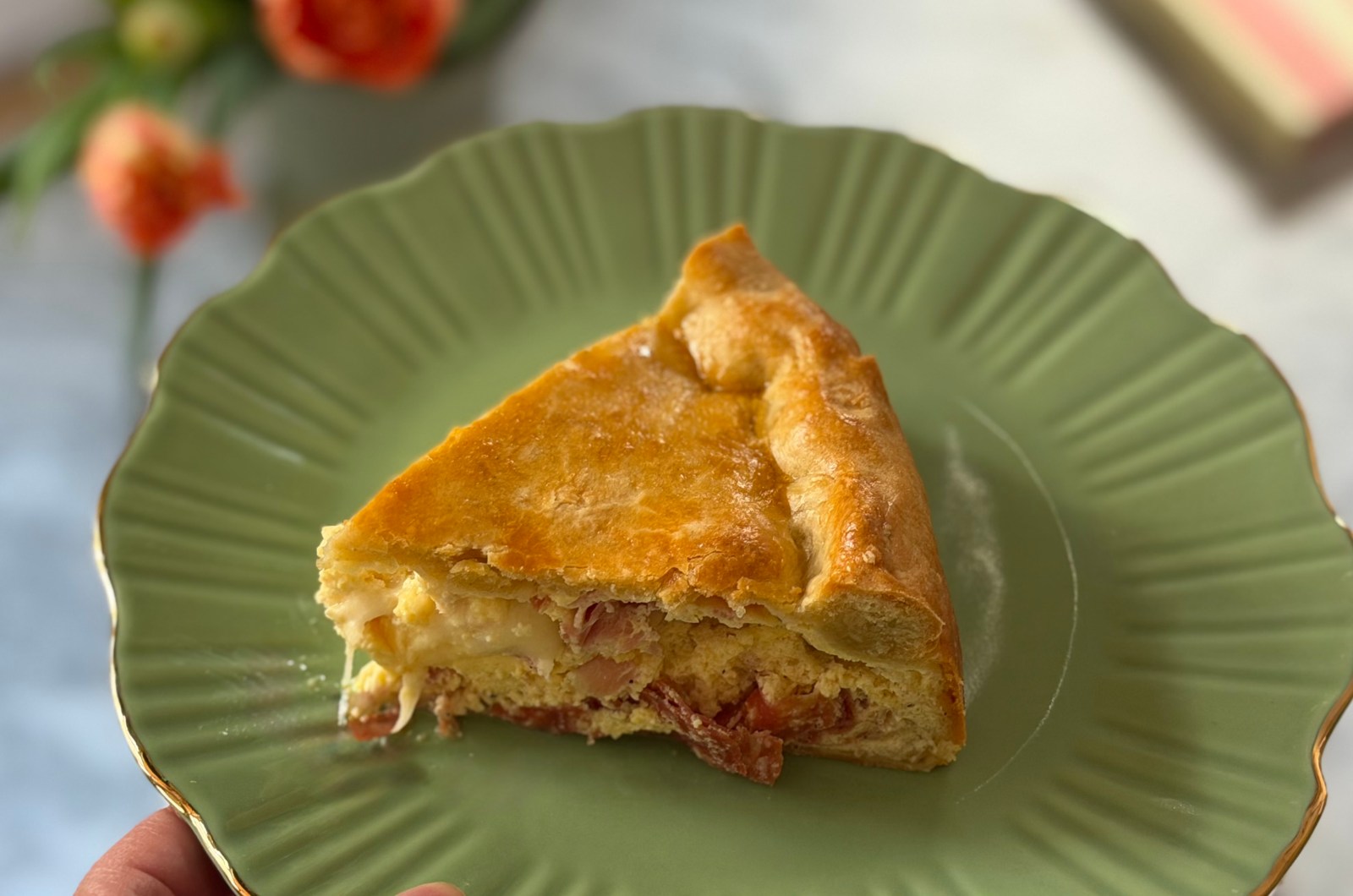
Rustic Easter Pie
6-8
servings30
minutes1
hour30
minutesIngredients
- For the Dough
3 cups 3 all-purpose flour
1 teaspoon 1 salt
Pinch sugar
1 1 stick sea-salted butter, cold and cubed
1/4 tablespoon 1/4 extra virgin olive oil
2 2 eggs
2 2 to 4 tablespoons ice water
- For the Filling
1 cup 1 whole milk Ricotta
1/2 cup 1/2 Basket Cheese, diced
3/4 cup 3/4 Scamorza or Caciocavallo, diced
1/2 cup 1/2 grated Pecorino Romano
1/2 cup 1/2 grated Parmigiano Reggiano
5 5 eggs
1/2 cup 1/2 sliced soppressata or salami, cut into thin ribbons
1/2 cup 1/2 sliced prosciutto cotto, cut into thin ribbons
freshly cracked black pepper (to taste)
Directions
- In a food processor, combine the flour, salt, and sugar and pulse briefly to aerate.
- Add the cold butter and pulse until the mixture resembles coarse crumbs with small pea-sized pieces remaining.
- Add the olive oil and eggs, pulsing again until the dough begins to come together.
- With the machine running, drizzle in the ice water a tablespoon at a time, just until the dough forms—being careful not to overwork it.
- Turn the dough out onto a lightly floured surface and gently bring it together into a cohesive mass.
- Wrap tightly and refrigerate for at least one hour to allow the gluten to relax and the butter to firm up.
- Once chilled, divide the dough into two discs.
- In a large bowl, add the eggs and whisk until smooth.
- Add the Ricotta and mix until fully incorporated, then fold in the Basket Cheese, Scamorza, Pecorino Romano, and Parmigiano Reggiano until evenly combined.
- Fold in the sliced soppressata and prosciutto cotto, then season with freshly cracked black pepper.
- Roll out one disc of dough on a lightly floured surface and use it to line a pie dish, allowing the excess to drape slightly over the edges.
- Transfer the filling into the shell, smoothing the top into an even layer.
- Roll out the second disc and place it over the filling.
- Trim any excess dough, then seal and crimp the edges.
- Brush with egg wash and cut a few small slits in the top to allow steam to escape during baking.
- Bake at 375°F for 50 to 60 minutes, until the crust is deeply golden and the filling is set.
- Allow the pie to cool before slicing to insure clean, structured pieces.
Did you make this recipe?
Tag @appetitomagazine on Instagram and hashtag it with #italianfoodanddrink
Like this recipe?
Follow @Appetitomagazine on Pinterest
Follow us on Facebook!
Follow us on Facebook