

In Rome, history doesn’t sit quietly behind glass, cordoned off from the world. It is everywhere: in the worn cobblestones under your feet, the ancient arches lining busy roads and before crumbling façades softened by time. Around nearly every corner, there is another glimpse of the past, yet somehow, the city never feels stuck in history. Life unfolds around it, with scooters weaving through narrow streets, baristas brewing coffee in neighborhood bars and the buzz of conversation spilling into sun-drenched piazzas.
Rome is a city built in layers, where past and present seem to exist simultaneously. Looking closely at the ancient ruins, you can almost imagine the merchants, travelers and artists who passed through centuries ago, carrying ideas, influences and traditions from one place to another. For thousands of years, Rome has been a crossroads where cultures converged and new ideas emerged.
This interplay of history and contemporary culture is precisely what I discovered during a recent stay at art’otel Rome Via Veneto, a five-star boutique hotel tucked into one of the city’s elegant historic neighborhoods, just steps from many of its iconic landmarks.
As a traditionalist, I wasn’t quite sure what to expect from a modern hotel in a city so steeped in history, but from the moment I stepped through the front doors, I was met with the warmth of Italian hospitality and a chilled glass of prosecco, a quintessentially Italian welcome.
Then I looked around.
A hotel as a canvas
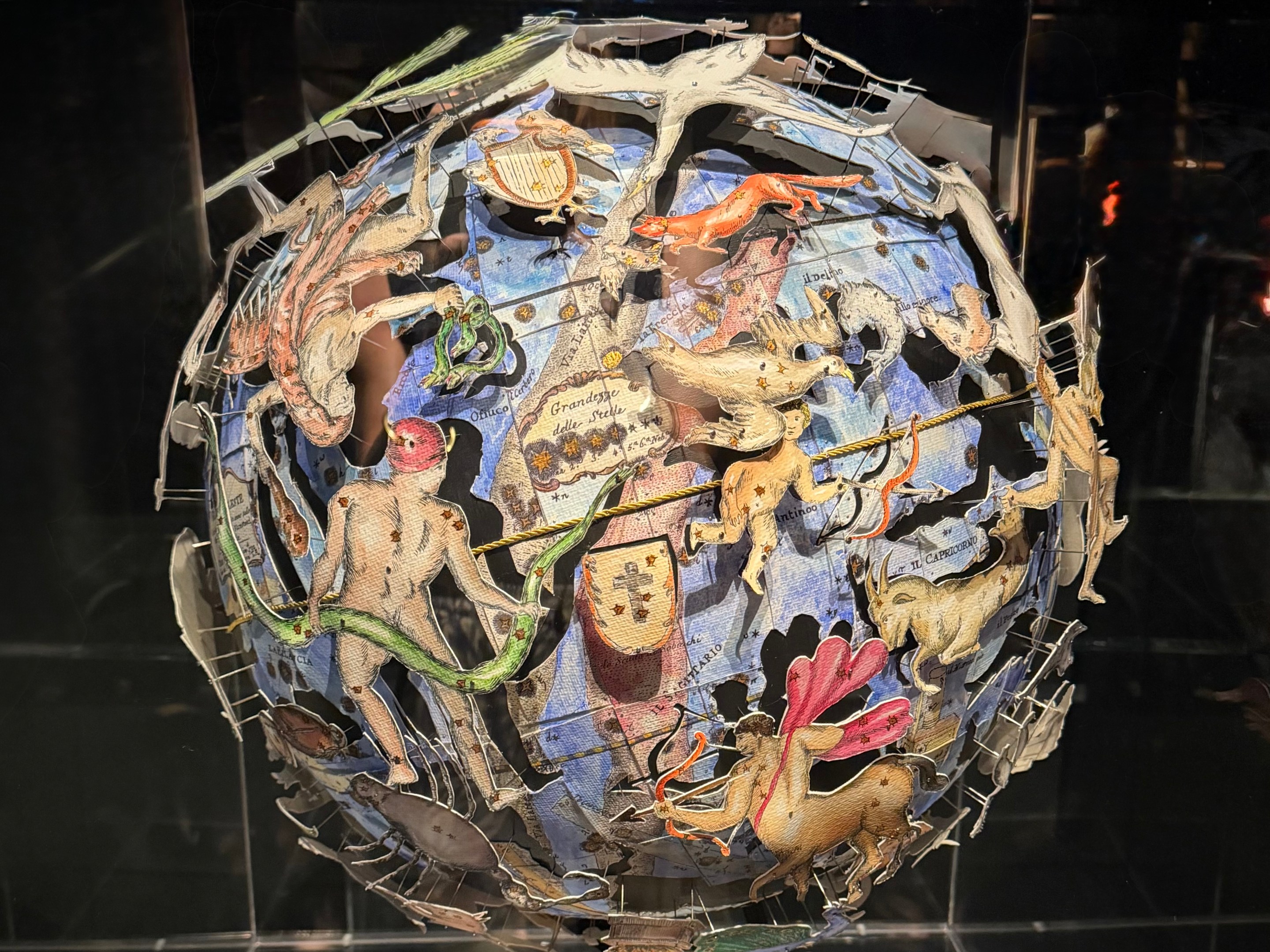
The lobby immediately captivated me with a striking constellation of zodiac signs carved into black granite. It was my first introduction to the work of Roman-born artist Pietro Ruffo, whose artistic vision extends throughout the property. As I moved from room to room, his work revealed itself in different forms, connecting Rome’s past, present and future in layers. What began as a stylish boutique hotel became something more: a place where art is not simply displayed but experienced, inviting you to pause, look a little closer and discover another facet of Rome.
The more I explored, the clearer the connection between Ruffo’s work and the city itself became. His art tells the story of a Rome shaped not only by its own traditions, but by those that arrived from afar through trade, travel and cultural exchange. He captures the spirit of a city that has spent centuries welcoming the world, taking in new influences and ultimately adopting, adapting and making them part of the Roman way of life.
Ruffo’s work is his largest permanent artistic installation which is woven throughout the property, from the guest rooms and corridors to the restaurants, bar, terrace and gallery. Celestial overlays, multilayered maps and delicate cut-outs offer glimpses into Rome’s history, flora and fauna, geography and the many cultures that have left their mark on the city. The closer you look, the more you discover.
Love discovering Italy one bite at a time? Subscribe to the free Appetito newsletter for the latest restaurant openings and Italian travel news.
Trade routes in a glass
That legacy of influence continues at the YEZI Bar, where the signature cocktail menu unfolds as an illustrated map tracing the ancient trade routes that carried exotic spices and ingredients toward the Italian capital. Through creative mixology, each cocktail brings a piece of that journey to life. Spices that once represented distance, discovery and luxury are reinterpreted in the glass, offering a modern taste of the routes that connected East and West.
And then there is YEZI Restaurant.
Led by Roman Chef Giordano Gianforchetti, whose international culinary career includes J.K. Place Rome, the restaurant takes a decidedly global approach. Gianforchetti describes his culinary philosophy as a synthesis of French, Italian and Asian influences, blending techniques, colors, shapes and flavors in unexpected ways. During my dinner, delicate yellowtail sashimi and Balfegó tuna tartare was followed by crisp duck spring rolls and stir-fried black pepper beef, moving from clean and delicate to savory and aromatic. The result is a menu that feels refined yet imaginative, offering a different lens on Asian cuisine through the eyes of a Roman chef.
What I found most compelling about art’otel Rome Via Veneto is that it doesn’t attempt to recreate the Rome of centuries past. Instead, it captures something much more authentic to the city itself—the way Rome continues to embrace the new while remaining deeply connected to its extraordinary past. From Ruffo’s artwork to cocktails inspired by the ancient spice routes and Gianforchetti’s interpretation of Asia, the hotel becomes a reflection of a city that continues to evolve without losing sight of its heritage.
From neighborhood trattorias to luxury hotels, discover more of Appetito's Rome travel and dining coverage.