

Carnevale in Italy is one of the most vibrant festivities of the year, marked
by colorful parades, masquerades, street performances, and, of course,
delicious food.
Celebrated in the weeks leading up to Lent, Carnevale has deep roots in
ancient traditions. The word Carnevale itself comes from the Latin
carnelevarium, meaning "to remove meat," a reference to the period of
abstinence during Lent. This period of festivity historically allowed
people to indulge in rich food and drink before the 40 days of fasting
expected during Lent in preparation of the holy time of Easter.
As every important festivity, Carnevale offers a variety of sweet treats.
While the exact pastries may vary by region, they are almost all fried.
This is because frying is the cheapest and quickest way to prepare large
batches of food, something essential in big celebrations and festivals
such as Carnevale.
Each Italian area has its own version of these treats, often with subtle
differences in names, shapes, and flavors. Let’s take a closer look at
some of the beloved fried sweets that make Carnevale so special across
Italy.
Chiacchiere (Cenci, Frappe, Bugie, Crostoli)
Arguably the most iconic Carnevale treat, chiacchiere are thin, crispy
strips of fried dough dusted with powdered sugar. These delicate
pastries go by different names depending on the region: cenci in
Tuscany, frappe in Lazio, and crostoli in Friuli, Trentino, and parts of
Veneto, bugie in Piemonte. Whether you call them chiacchiere or
another name, they’re loved throughout Italy for their light, crunchy
texture and sweet coating.
Castagnole: Small and Sweet
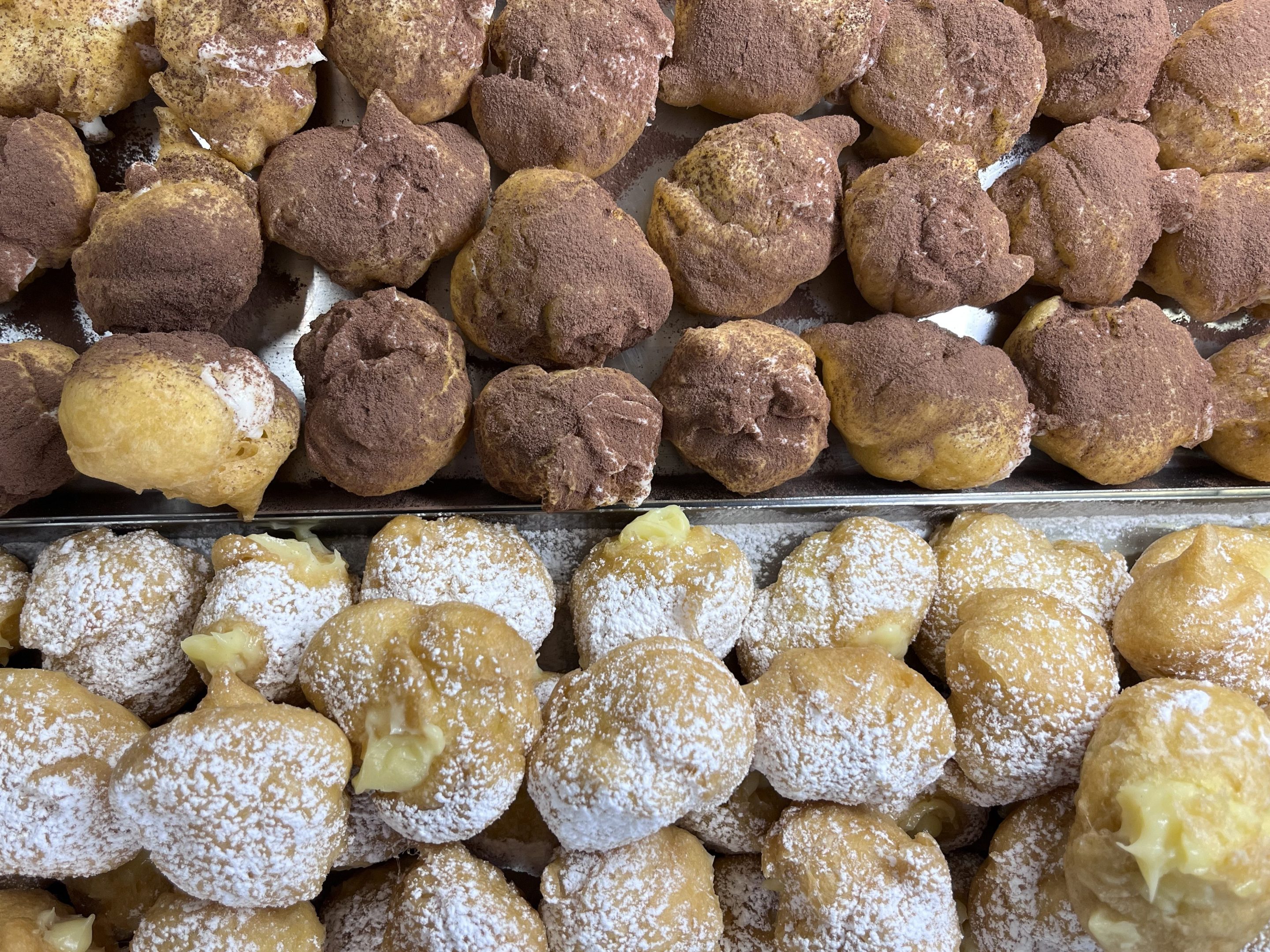
Another popular dessert, castagnole are small and round fried dough balls
with a soft, sweet interior. Originating from northern Italy, they resemble
little chestnuts, which is why they’re called castagnole. These treats are
often dusted with powdered sugar, though some versions are filled with
custard. Variations of castagnole can be found throughout Italy, often
going by different names or filled with local specialties.
Cicerchiata: fried dough balls with a sweet twist
A traditional Carnevale dessert from central and southern Italy,
especially from Abruzzo and Molise, cicerchiata is made by frying small
dough balls, which are then bound together in a pyramid or wreath
shape using hot honey. The honey hardens as it cools, giving the
dessert a sticky, crunchy texture. While it may remind you of struffoli (a
similar Neapolitan Christmas treat), cicerchiata is distinctly flavored with
orange zest and has a different structure, making it a unique treat for
Carnevale.
Zeppole and Graffe: fried donuts of the south
In Naples and Campania, zeppole are made by frying dough and filling
them with custard or ricotta, then topping them with a candied cherry.
Although they’re typically associated with Saint Joseph’s Day in March,
their richness makes them perfect for Carnevale as well. In Naples, another beloved treat is graffe - fried potato doughnuts. Soft and pillowy, they are coated with sugar after frying, making them a favorite during Carnevale for their comfort and sweetness.
Frittelle di Mele: apple fritters of the north
In northern Italy, particularly in Alto Adige, frittelle di mele (apple fritters)
are a beloved Carnevale treat. Thick slices of apple are coated in a
crispy batter, fried until golden, and dusted with powdered sugar.
*Please note: This is not an exhaustive list - there are many other regional treats, and each town (or even family) may have its own unique twist on the tradition.