

Growing up, I was accustomed to my grandma making a pan of tiramisu for holidays. As a kid, I was never the biggest fan, but the idea of eating a dessert containing coffee, a drink I was too young to try, always thrilled me.
Over the years, I grew to appreciate tiramisu when it’s done right. When you eat a heaping spoonful and you’re not met with an overpowering coffee taste. To my taste, tiramisu should be creamy but still have a light cakey structure. Most importantly, cocoa powder should accentuate the espresso, not conquer it. No one wants a chocolate tiramisu.
Given my criteria for the dessert, when Dunkin’ announced its addition of a Tiramisu Shakin’ Espresso, Tiramisu Cloud Latte, and Tiramisu Marshmallow Matcha—a drink you would have to pay me good money to try—to its fall menu, I was shocked but also a bit intrigued.
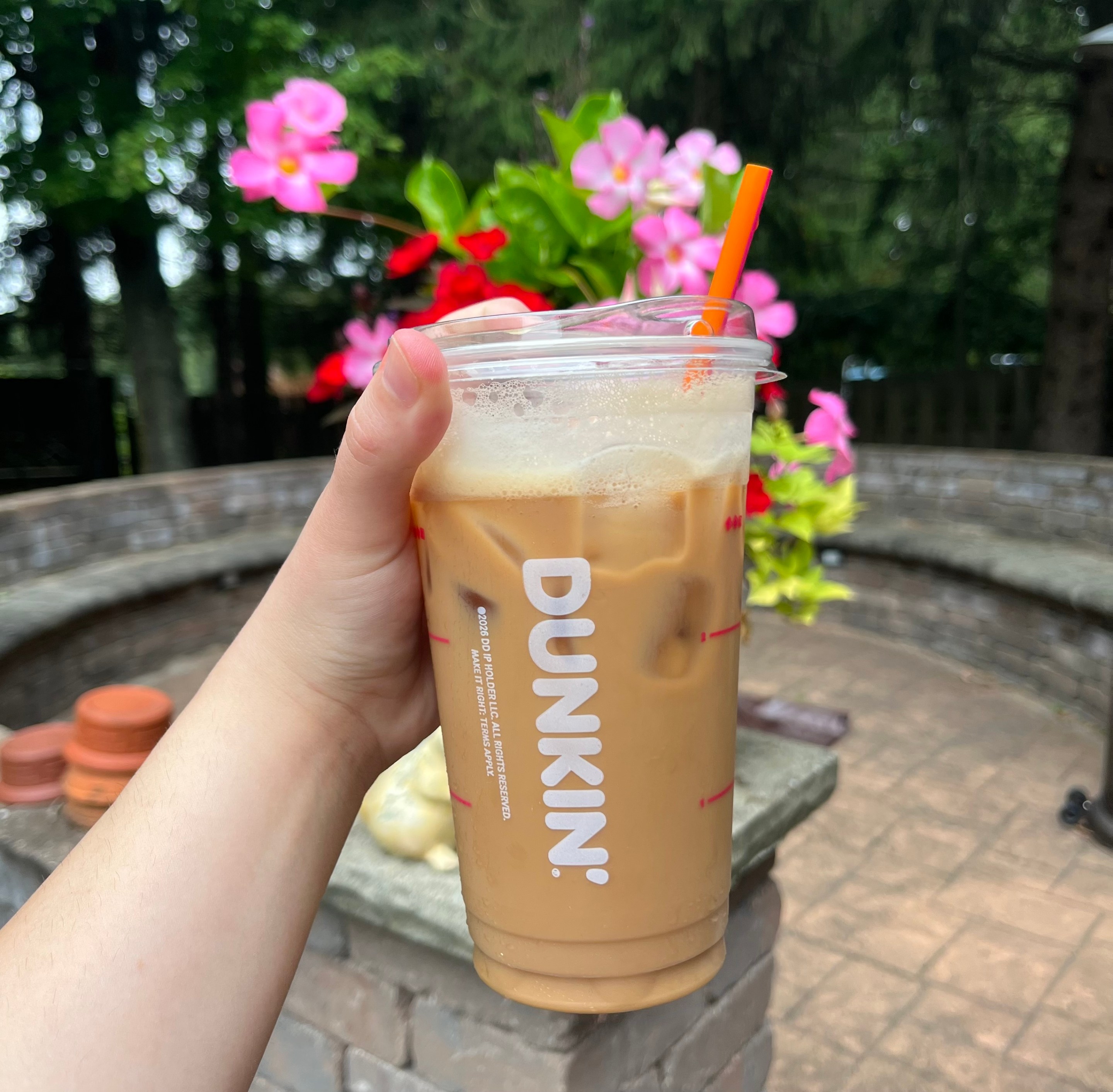
I’m no stranger to Dunkin’s Shakin’ Espressos, so I decided to try the tiramisu. Like all Dunkin’ Shakin’ Espressos, the Tiramisu Shakin’s Espresso comes with oatmilk and two shots of espresso. Depending on what size you order, the number of pumps of tiramisu-flavored syrup will vary.
I initially ordered a small of the Tiramisu Shakin’s Espresso, but due to a register error, I was upgraded to a medium. I have fairly normal caffeine tolerance, but I don’t recommend ordering a medium as I was buzzing for the rest of the day.
When I tried my first sip of the drink, I tasted more coffee with a hint of creamy tiramisu flavor. Once the foam settled into the drink, it tasted like liquified tiramisu. However, I felt the mascarpone element of the tiramisu was missing.
Understanding I can be a bit of a tough critic, I solicited my sister for her opinion, and she thought the Shakin’ Espresso tasted like a typical Dunkin’ iced coffee with cream and sugar.
I don’t necessarily agree with her opinion as I thought the Tiramisu Shakin’ Espresso had a bit more of a coffee flavor than other Dunkin’ coffees.
At first, I assumed I would never order another Dunkin’ tiramisu drink, but I found myself craving one. Because I wanted more of the richness and creaminess of mascarpone, I decided to order a medium iced coffee with the tiramisu flavor and oat milk.
Love discovering Italy one bite at a time? Subscribe to the free Appetito newsletter for the latest restaurant openings and Italian travel news.
This time, within my first sips, I tasted an Italian sweet cream flavor—not quite the same lightness as mascarpone. As I drank more of my coffee, the sweet cream flavor vanished and I was left with a roasted coffee taste.
I have to give Dunkin’ some credit. The idea of a tiramisu drink helps the chain stand out from other brands. It caters to customers who aren’t quite ready for fall, as the drink invokes a “Eurosummer” feel, but it doesn’t have the same effect as eating a piece of tiramisu.
The criteria for a good tiramisu has become more lenient, most likely a result of the Americanization of the dessert.
According to Accademia del Tiramisu, the dessert originated in Treviso in 1800. Its ingredients consisted of eggs, sugars, lady fingers biscuits, mascarpone, coffee, and cocoa. It was referred to as “Tireme su,” which would later change to the Italianized tiramisu in the 20th century, and given to brothel customers to pick them up. Because of its brothel origins, the history of the dish remained hidden until the 1980s.
Other regions of Italy have disputed these origins, claiming the delicacy was served at Treviso-based Le Beccherie in the early 1970s and others saying a female chef served the “mascarpone slices” to travelers in the Alpine town of Tolmezzo. Tiramisu gained popularity in the United States in the 1980s with a 1985 edition of The New York Times containing a half page dedicated to the “newest Italian dessert,” including 200 variations, according to National Geographic.
The variations are the result of adding and substituting ingredients. Substitutioning ingredients, like egg whites for heavy whipping cream, have led to the dish becoming Americanized, which creates differing ideas of how tiramisu should taste.
Knowing the history behind the dish, the Dunkin’ drinks taste like the Americanized version, lacking the creamy lightness of the Italian version. With all of this in mind, I’ll just stick to my local Italian bakery’s take on a tiramisu latte.
Love discovering Italy one bite at a time? Subscribe to the free Appetito newsletter for the latest restaurant openings and Italian travel news.