
Unbeknownst to many, the region of Calabria, ancestral homeland to an estimated 1.2 million Italian Americans, traces its roots to the indigenous Itali people who lent their name to what would later become the great nation of Italia. In addition to its ubiquitous salumi, cavatelli, fileja,‘nduja, pepperoncino, and bergamot, Calabria’s three thousand years of history includes the languages, culture, and cuisine of three distinct groups: the Arbëreshë (originating in Albania), Calabrian Greeks, and the Occitans (Occitani) who originated in Piemonte and speak a language called Gardiol.
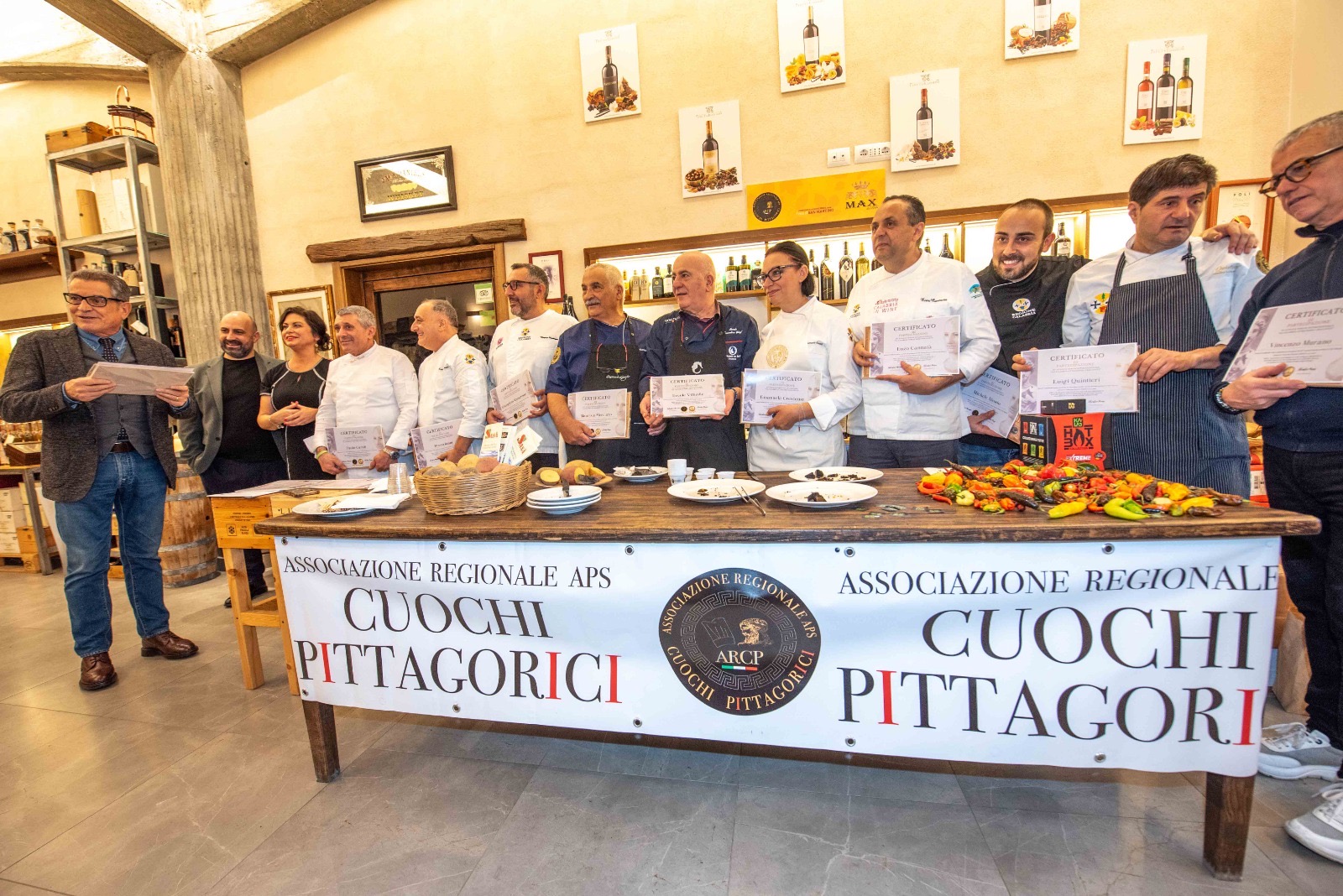
Today, the Arbëreshë (Italo-Albanian) language is protected in Italy under the constitution and national law. There is also an association called the Associazione Regionale Cuochi Pittagorici APS that’s working to preserve and honor the region’s ethnic minorities’ cultures and cuisines.
The association holds several annual events, including an international forum that combines the region’s most emblematic chefs with archeologists, global experts, journalists, and scholars to demonstrate Calabria’s rich cultural patrimony. Founded by Archeo-Chef Salvatore Murano, owner of Max Trattoria Enoteca, there are 23 other chef members and three honorary members, of which I'm proud to be included.
Love Italian culture? Subscribe to the Appetito newsletter for weekly recipes, travel inspiration and stories from across Italy.
Can you imagine that just a few centuries before Calabrians left Italy to find fortune in America, there was a large Albanian community that fled to Calabria to seek asylum and build new lives? The Arbëreshë community arrived in Calabria between the 15th and 18th centuries and has meticulously preserved their own identity through language, Eastern Catholic religion, costumes, rights, and traditional food while at the same time integrating completely into Calabrian culture at large.
Two of these foods are the furizishka, a vegetable soup made with a mixture of zucchini flowers, potatoes, tender string beans, bread cubes, and olive oil. The shëtridhlat is a type of fresh pasta which is among the Slow Food Foundation for Biodiversity’s Ark of Taste. Made skillfully by hand, this pasta is created from ancient local carosella flour semolina, hot water and extra virgin olive oil. It is traditionally served with the local poverelli beans, cooked in a traditional terra cotta pot, and enjoyed on Sundays.
By continuing to study, research, create meals, and host events with members of each of Calabria’s ethnic minority groups, the Associazione Regionale Cuochi Pittagorici APS offers a “taste” of history that, just like minority languages and culture, deserve to be protected. As a result, travelers to Calabria can explore not only its pristine beaches and majestic mountains but a cultural patrimony as rich and varied as its celebrated biodiversity. On behalf of the association’s members, I would like to bid you a buon appetito!, or as they say in Arbëreshë - T'boftë mirë!
Planning summer travel? Explore more of Appetito's travel coverage.
Appetito Travels: A 3-Day Trip to Newport, Rhode Island
For a Taste of Italy Without Your Passport, Visit Boston’s North End