

In Italian, food is rarely just food. It organizes time, relationships, and expectations. This column explores Italian sayings and proverbs as ways of thinking shaped at the table.
These expressions preserve that knowledge in compact form. Read literally, they speak about eating. Read more closely, they offer insight into how experience, pleasure, and social life are understood.
The aim is simple: to treat language as another ingredient—handled with care, tasted slowly, and shared. No prior appetite required. It tends to arrive along the way.
Se non è zuppa è pan bagnato
Literal translation: “If it’s not soup, it’s wet bread”
Meaning: Two options may appear different but ultimately lead to the same result.
Sayings often function as small cultural maps. They preserve habits, humor, social attitudes, and practical forms of intelligence long after the historical conditions that produced them have faded away. In Italy especially, and particularly when food enters the picture, popular expressions often serve as miniature lessons in everyday life.
Se non è zuppa è pan bagnato belongs precisely to this tradition.
The expression is used to indicate that two things presented as different are ultimately equivalent. One proposal replaces another without changing the outcome. A politician introduces a “new direction” that looks suspiciously familiar. Someone reformulates an argument but arrives at the same conclusion. At that point, the proverb quietly enters the conversation, and food turns into a language for describing disappointment and the uneasy awareness that reality does not always offer as many alternatives as people would like to imagine.
Want to be the first to know about Italian food events, restaurant openings and culinary travel? Subscribe to the Appetito weekly newsletter.
The etymology of zuppa makes the expression even more revealing. The word derives from the Gothic suppa, later absorbed into medieval Italian, and originally referred not to “soup” in the modern sense, but to bread soaked in liquid. Older Italian dictionaries still preserve traces of this meaning. If today “soup” and “wet bread” seem merely similar, historically they may have referred to more or less the same thing. The proverb therefore ends up proving its own point: what appears different at first glance may simply be the same thing served with a different name.
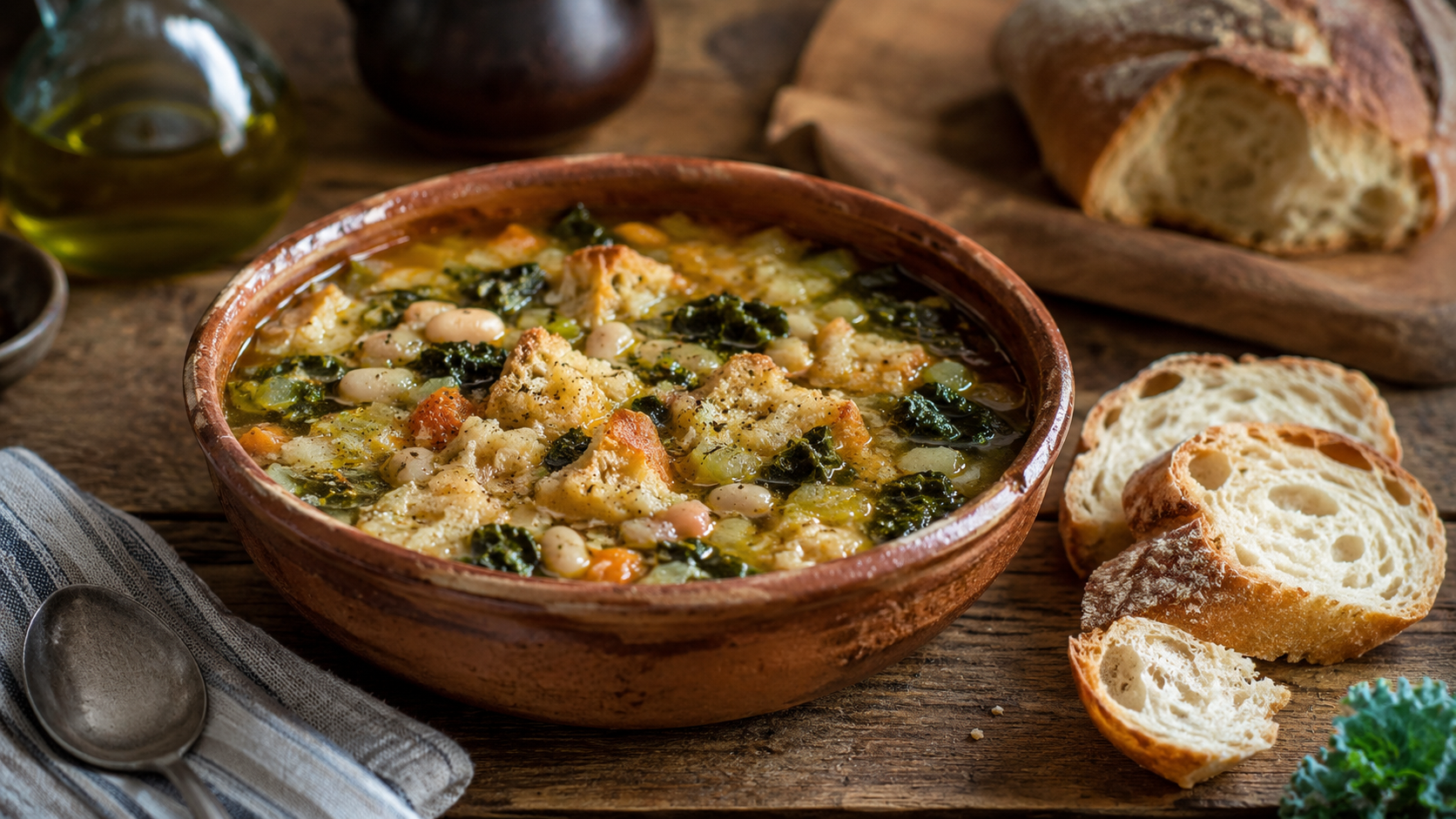
Like many expressions shaped around the Italian table, this saying emerged from a poor culinary world built on repetition, reuse, and limited possibilities. In much of Italy, especially in rural contexts defined by scarcity, stale bread was too valuable to waste. It was softened in water, broth, vegetables, or cooking liquids and transformed into soups and peasant dishes such as ribollita, pancotto, or acquacotta. Meals changed names and ingredients slightly but often revolved around the same humble foundation: bread and broth, again and again.
In peasant kitchens, novelty was rarely the point of dinner. What mattered was stretching ingredients, avoiding waste, and making yesterday’s bread edible once more. A little more water, a few onions instead of cabbage, perhaps some beans if things were going well — but the underlying experience often remained stubbornly familiar. The saying carries traces of that world: not only the recognition that two things are similar, but the slightly weary awareness that, in practice, they may leave you equally full and equally unsurprised.
Looking for dishes worthy of a long Italian meal? Browse Appetito’s Italian recipes.
Once the proverb is returned to the kitchens that produced it, its tone changes slightly. Beneath the humor lies the memory of a world shaped by scarcity, where meals changed names more often than substance, and where people learned early not to expect too much variety from life itself.
Perhaps that is why the expression still survives so easily today. Long after the poverty behind it has disappeared, se non è zuppa è pan bagnato continues to speak to a familiar suspicion: that many of life’s supposed alternatives eventually soften in the same broth.