
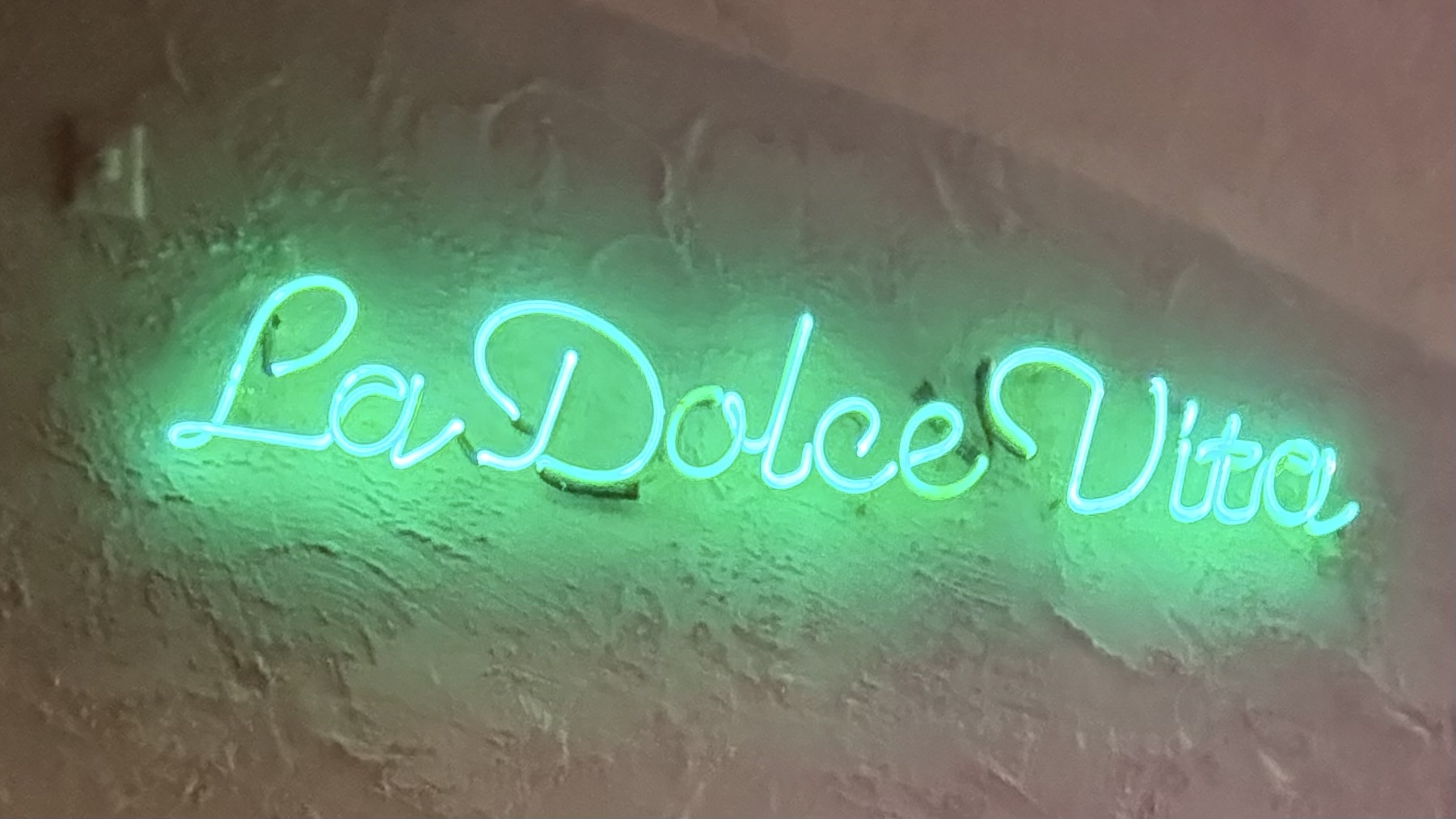
The first thing to know about La Dolce Vita is that it’s right smack in the heart of Beverly Hills. Yes, one can easily buy a purse around the corner that costs as much as the GDP of some small countries. But in spite of its swank surroundings, the iconic Los Angeles Italian red sauce joint stands as an exceedingly rare relic of the quickly disappearing Italian food diaspora across this great nation.
The restaurant actually has ties to Villa Capri, a red sauce hotspot back in the day. It was one of the few Italian eateries in the City of Angels and was a hangout of Sinatra and the Rat Pack. Legend has it that a maître d’ from the Villa branched out in 1966 to open his own place and christened it La Dolce Vita, presumably after the Fellini classic, which came out some years before. In other words, this place has a lot of history.
As I’m about to cross the street, I smell garlic and fish. Suddenly, it’s there: a neon-green sign I’ve seen often before in old pictures.
Inside it is smaller than one would think. It struck me as more of a house or bungalow as opposed to an expansive restaurant. I learned that some of the pieces inside are originals, while some were recreations that came from the mind of the new owners. One motif of the design scheme is cheetah everything, from the carpeting to a portrait of three cheetahs against a lipstick-red background on the wall behind me. Carmela Soprano would be proud.
Then you have your classic touches: the booths are leather (supposedly, they still have the one Sinatra held court in), the tablecloths are white, and the walls are brick. The only lighting comes from wall sconces and seemingly vintage mosaic lamps, casting a soft glow over each table.
Dinner service begins with an overflowing breadbasket: one is a plump focaccia topped with tomato sauce and grated cheese; the other, a crusty slice of Italian bread that is virtually impossible to find in Los Angeles. When the bread is impressive, it’s a great sign for the rest of the meal. Or as Sinatra might put it, “Ring-a-Ding-Ding!”
Then, like a good first act, the table-side Caesar salad was paraded out, tossed in a wooden bowl, and plated right in front of you. You might think, “Well, that’s special enough.” But you’d be wrong, considering our waiter brought out one of the biggest pepper grinders I’ve ever seen, almost as if it was an SNL sketch.
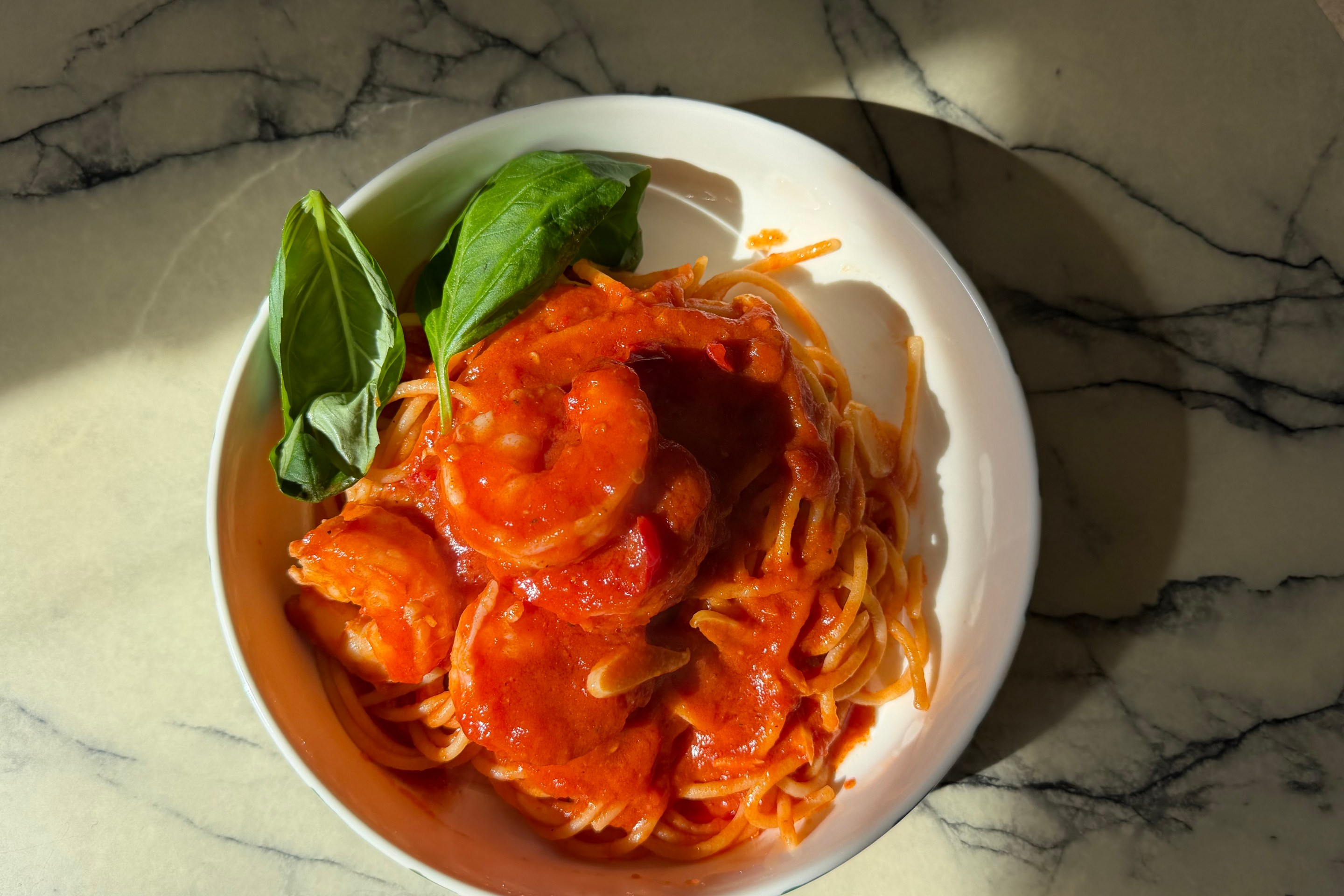
Some dishes here are from the original menu; others are reinvented or brand new. The appetizers came out in quick succession: a platter of baked clams and a stuffed artichoke (topped with a hunk of lemon, like a star upon a Christmas tree). Instead of sliced chicken cutlets or medallions, the chicken marsala came out bone-in and spatchcocked. And since this was a classic red sauce joint, it was a must to order the spaghetti and meatballs (as well as a lemon sorbet at the end of the meal), and both tasted homemade, a compliment if I’ve ever heard one.
And in case you were wondering just how authentic its Sinatra roots are, just take a look at the abstract painting hanging by the bar. Squint closely at the colorful work of art, and read the signature: Frank Sinatra.
While Los Angeles has a dwindling array of old school Italian joints (the LA Rao’s outpost recently announced it was closing, for example), I’ve found that the city excels in modern Italian spots to make up for it. Take, for example, Savoca, located downtown in LA Live. For those who’ve never been to that complex, it’s a hub of activity, from being the place where the Lakers call home to hosting the Grammys (at the quirkily named Crypto.com Arena). A bevy of restaurants also call it home, including Savoca, named after a comune in Sicily.
During a Saturday afternoon lunch at Savoca, I found that the ethos here was simple and fresh, two pillars of Italian cooking (the others include a lot of talking and wine). The focaccia, just as impressive as back at La Dolce, came with a side of oil and balsamic mixed together. Meanwhile, a bowl of olives was tossed with fresh lemon peel and chunks of provolone cheese. Best “salad” ever? Proving its California pedigree, another salad arrived tossed with chunky slices of avocado (it stands to reason that they sell themselves as a “California trattoria”).
It also used to be that Los Angeles wasn’t known for great pizza, but thanks to places like Jon & Vinny’s and Triple Beam, that’s been changing. At Savoca, the trend continues as the pizza was a thing of beauty, as well, topped with whole, fresh basil leaves, with a crispy crust covered in a dusting of cornmeal. Same with the pasta, tossed with soft broccoli and parmesan (reminding me of a dish from the Scorsese Family Cookbook).
All in all, old school or new, the Italian food in Los Angeles has proved its worth again.