

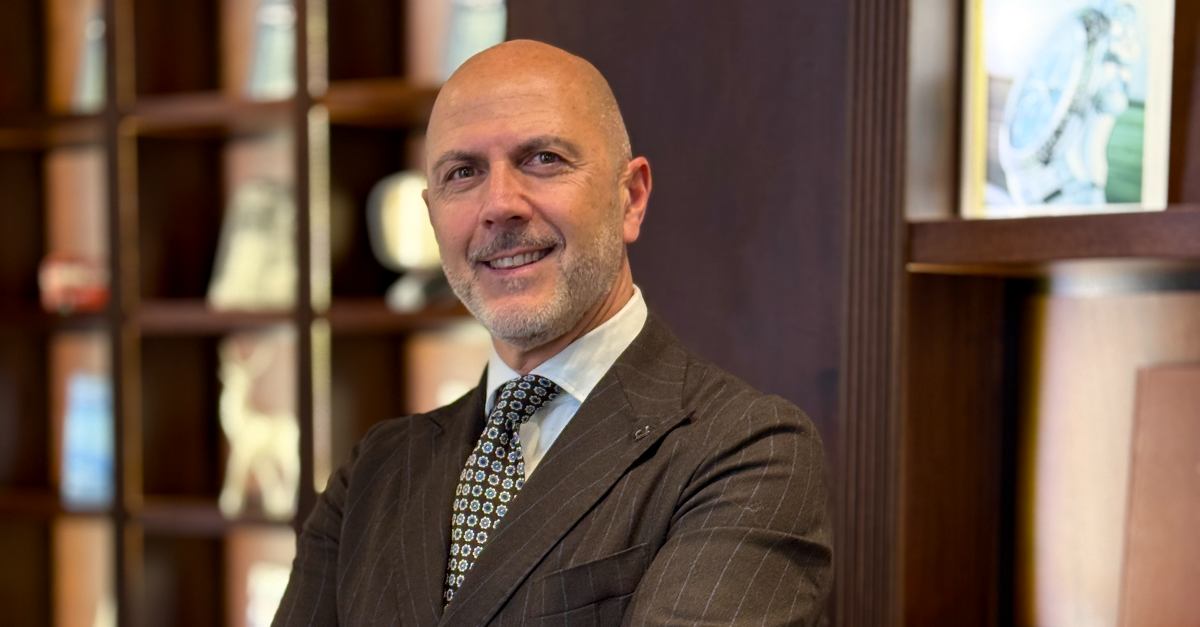
The heart of Rome’s historic center is home to my favorite hotel in the city: Palazzo Navona. This four-star boutique hotel is sophisticated and elegant, yet still feels warm and inviting. The staff here exemplify the spirit of Roman hospitality, which is one of the many reasons I keep visiting (see my review). And behind a hospitable team is strong management. I recently had the pleasure of interviewing the hotel’s newly appointed manager, Danilo Bonifazi.
A native of the province of Rome, Bonifazi brings a unique background and skillset to the role, having previously served as the hotel’s Food and Beverage Manager. Though early in his tenure, it’s clear that he’s not only preserving the hotel’s excellence, but actively expanding it. Despite the beauty of Palazzo Navona, Bonifazi shared that the hotel is set to undergo a restyling; a testament to why the hotel’s competition isn’t other four-star properties, but five-star hotels across the city. If you haven’t already discovered Palazzo Navona, let Bonifazi inspire you to make this a stop on your next itinerary.
Enjoying this article? Sign up for the Appetito newsletter and receive new recipes, stories and Italian inspiration straight to your inbox.
Editor’s Note: This interview has been translated from the original Italian and edited to best reflect the spirit and intent of the interviewee’s responses.
When and how did you become the Hotel Manager of Palazzo Navona?
My decision was a conscious and carefully considered one, shaped from my years at the Fiuggi hospitality school, where I decided to focus my professional path on the world of hospitality. Over time, I strengthened my education by earning a professional sommelier diploma and a master’s degree in Food & Beverage, while simultaneously building solid operational and managerial experience in hotels belonging to international groups, both in Italy and abroad.
I joined Palazzo Navona on February 19, 2024, taking on the role of F&B Manager. Thanks to an internal growth path and the trust placed in me by senior management, I was given the opportunity on December 1, 2025, to become Hotel Manager, taking on a broader and more strategic vision of the overall management of the property.
What changes have been made during your tenure?
During my tenure, I have implemented a series of strategic initiatives aimed at strengthening and enhancing the Food & Beverage area. In the first phase, I led a complete reorganization of the department, focused on optimizing operational flows, redefining key roles, and aligning processes and quality standards with the main international benchmarks in the hospitality sector.
Later, in my role as Hotel Manager and in collaboration with the Sales & Marketing Department, we developed a project focused on creating dedicated guest experiences. This included integrating experiential initiatives designed to enrich the stay and increase the perceived value of the property, while also consolidating the hotel’s reputation in the market.
What are the food and beverage offerings?
Our culinary offerings are distinguished by Mediterranean cuisine with strong ties to Roman tradition, highlighted by the use of local and seasonal ingredients. Each dish reflects the care and attention we dedicate to quality and the authenticity of the dining experience.
On the beverage side, we offer a selection of cocktails and drinks crafted by our bartenders, blending contemporary trends with the preferences of our guests, resulting in unique and distinctive creations that complement the overall hotel experience.
What makes your hotel special?
What truly makes our hotel special and distinctive is, first and foremost, its exclusive location: overlooking Piazza Navona, it allows guests to reach the Pantheon and Rome’s main landmarks in just five minutes on foot.
Yet, the excellence of our offering goes far beyond this unique setting. Authentic hospitality, meticulous attention to detail, and the highest level of professionalism are the values we extend to every guest who walks through our doors. Our goal is to make each stay a unique experience, supported by a dedicated team available around the clock.
Our VIP Concierge service is fully at guests’ disposal to plan their stay, book exclusive services, simplify every aspect of the journey, and provide personalized assistance for the most important decisions. Every wish is transformed into an authentic, tailor-made experience, aligned with individual interests and curiosities, offering an engaging and memorable stay in the heart of the Eternal City.
We are constantly at the service of our guests, ready to meet every need, from the simplest to the most exclusive.
What is the best part of your job?
The most rewarding aspect of my work is the moment of farewell with a guest, when, upon departure, they confirm that their stay was a unique and unforgettable experience.
In a world where everything is easily accessible and nothing can be taken for granted, being able to surprise guests and provide authentic, distinctive experiences represents the true value of what we do—and is my greatest source of professional satisfaction.
What is the hardest part?
The most complex challenge of my role lies in maintaining a constant balance between delivering an excellent guest experience, ensuring financial sustainability, and managing human resources effectively. In a constantly evolving environment, it is essential to uphold high-quality standards, motivate and retain the team, and at the same time adapt quickly to market changes, operational costs, and ever-increasing guest expectations. The ability to coordinate these elements in a coherent and strategic way represents the primary test of the Hotel Manager’s role.
In your opinion, how has tourism in Rome changed in recent years, as the city continues to attract visitors throughout the year rather than seasonally?
In recent years, tourism in Rome has undergone a significant evolution, shifting from a predominantly seasonal phenomenon to a continuous flow throughout the year. This change is the result of several factors: a greater diversification of cultural and experiential offerings, the strengthening of the high-end leisure segment, growth in food and wine tourism, and an increase in events, conferences, and international initiatives spread across multiple months.
At the same time, visitors have become more discerning and demanding: they no longer seek only the major historical attractions but also authentic experiences, personalized services, and a high overall quality of hospitality. This has encouraged hotels and industry operators to invest in professionalism, innovation, and the promotion of local territory.
De-seasonalization therefore represents a strategic opportunity for Rome, allowing for more balanced management of visitor flows, greater economic and operational sustainability, and an overall improvement in the experience for both guests and the city itself.
With reference to the previous question about the changes in tourism in Rome, what do you consider the best time of year to visit the city?
The best time of year to visit Rome is generally in the spring (April–May) and autumn (September–October). During these months, the city enjoys mild weather, ideal for exploring cultural sites and enjoying urban spaces, while avoiding the peak crowds typical of the high summer season.
From a tourism perspective, these periods allow for a more authentic and sustainable experience of the destination, with higher-quality services and a more balanced distribution of visitor flows, benefiting both travelers and industry operators.
Botta e Risposta (AKA Rapid Fire)
After delving into the specifics of Bonifazi’s career path and his insights into the landscape of Roman tourism, I wanted to end our conversation on a lighthearted note. In my opinion, there’s no better way to do this than a quick round of “botta e risposta” – a popular interview format in Italy that allows a guest to share their preferences over two comparable topics. And in the case of my chat with Bonifazi, it comes as no surprise that Rome was the center of our discussion.
Landmarks
The Colosseum or The Pantheon?
Pantheon
Piazza Navona or Piazza di Spagna?
Piazza Navona
Campo de’ Fiori or Testaccio Market?
Testaccio Market
Roman Cuisine
Cacio e pepe or Carbonara?
Cacio e pepe
Amatriciana or Gricia?
Gricia
Carciofi alla romana or Carciofi alla giudia?
Carciofi alla romana
Maritozzo or cornetto?
Maritozzo
Pizza bianca or pizza rossa?
Pizza bianca
Lifestyle
Soccer club: AS Roma or Lazio?
Roma
Weekend trip: Ostia Lido or Castelli Romani?
Castelli Romani