
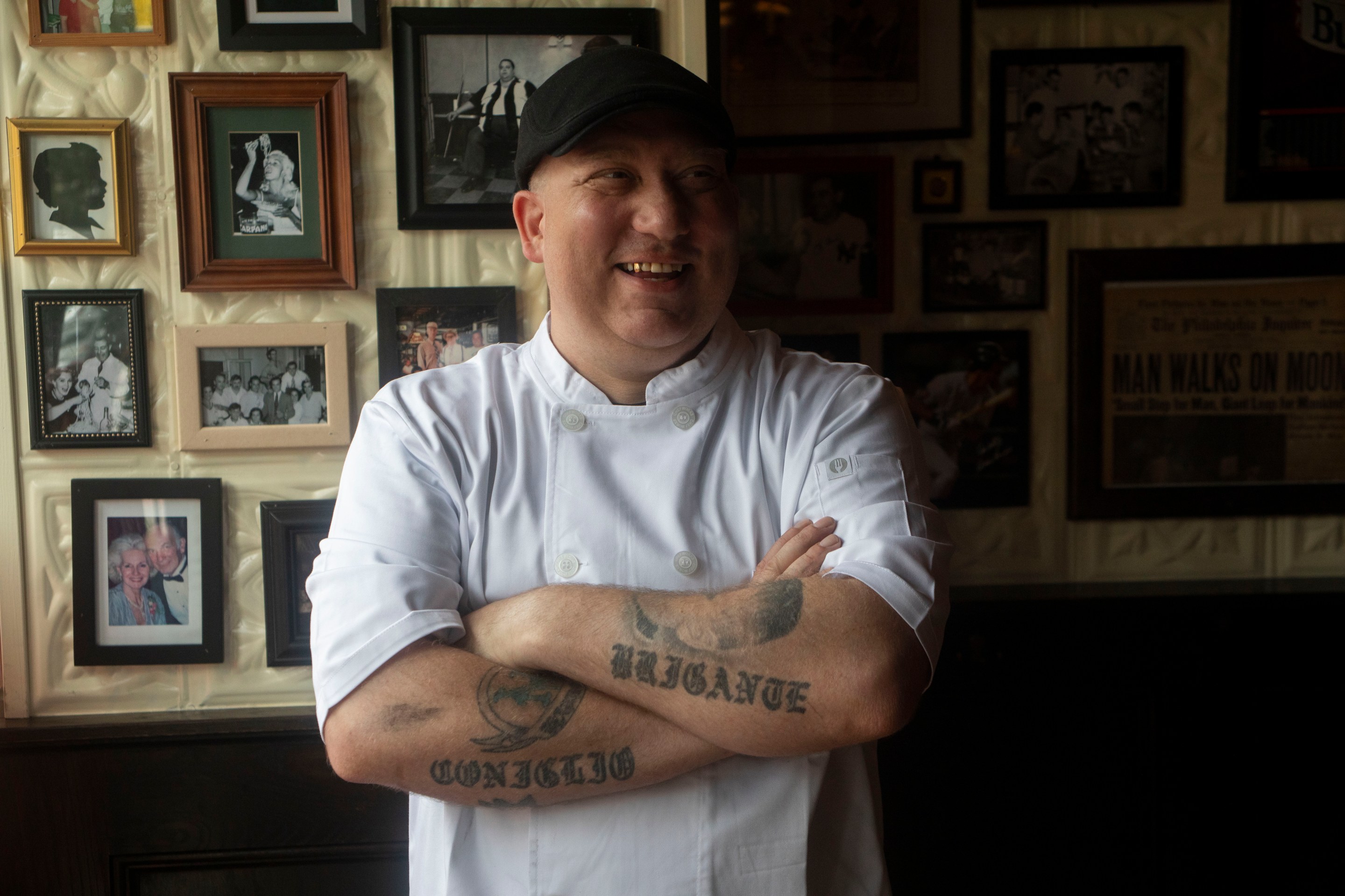
Bushwick’s Lucky Charlie may have opened last summer, but the coal oven pizza spot from award winning pizzaiolo Nino Coniglio is already carving out its place in the neighborhood’s late night dining scene. Located at 254 Irving Avenue, the restaurant brings together New York’s coal oven pizza tradition and Sicilian inspired cooking.
Coniglio is best known as the chef behind Williamsburg Pizza and Coniglio’s Old Fashioned in Morristown, New Jersey. Over the years he has earned recognition across the pizza world, including winning the World Pizza Championship in Salsomaggiore Terme, Italy, Pizza Maker of the Year at the International Pizza Expo and the title of Food Network Chopped Champion. He is also the only pizza chef to have apprenticed with the late Dom DeMarco of the legendary Di Fara Pizza.
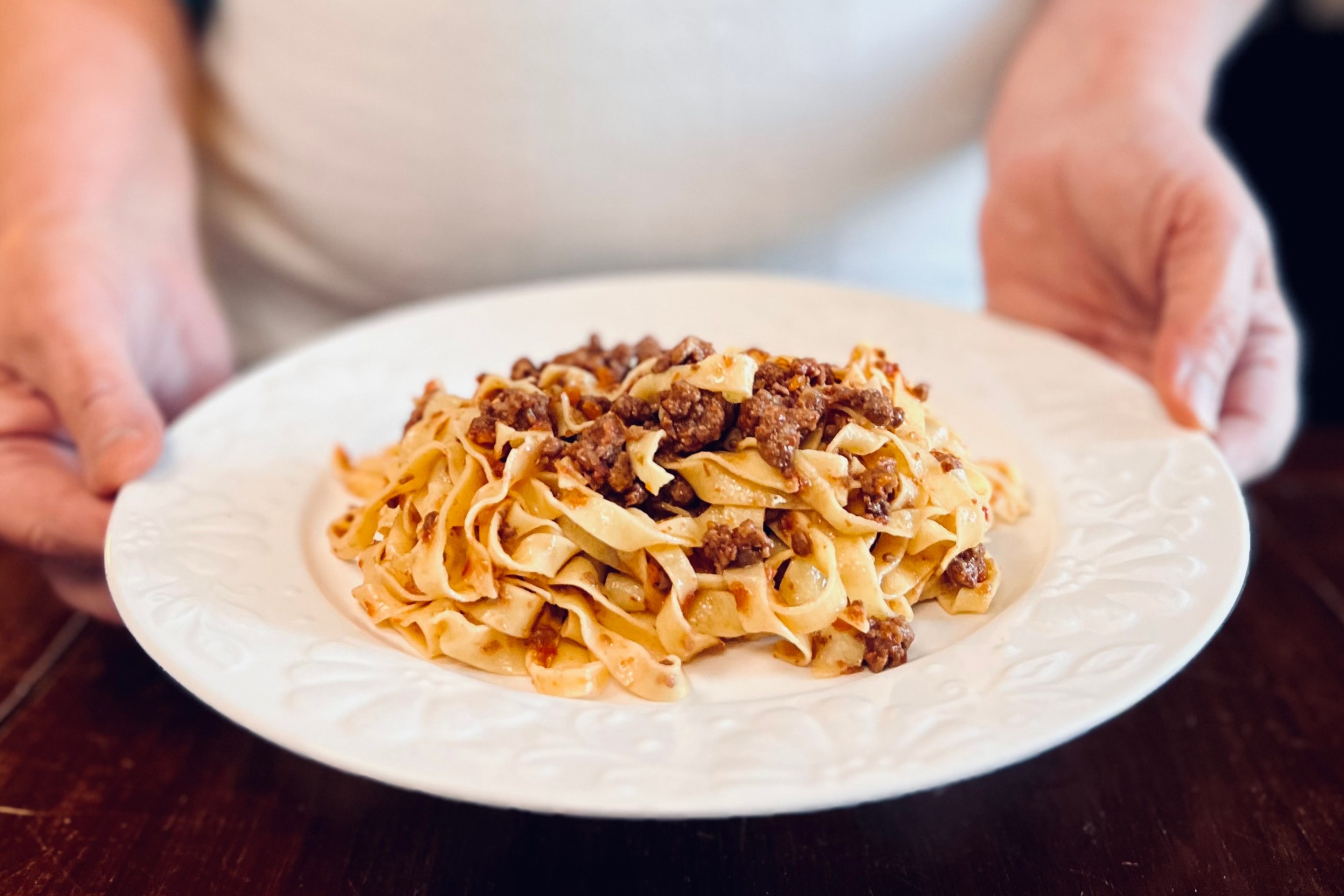
Lucky Charlie marks a new chapter for Coniglio. The Bushwick restaurant centers around what is believed to be the oldest coal oven in America, built in 1890 and discovered in the building by landlord and namesake Charlie Verde. The menu draws inspiration from early twentieth century New York pizzerias, with pizzas made using Italian imported ingredients alongside Sicilian influenced dishes such as baked anelletti, seafood antipasti and oven baked pastas.
The 42 seat space purposely evokes the feel of an old New York neighborhood bar, with exposed brick, vintage photos and posters, and red leather bar stools lining the oak bar.
Appetito connected with Coniglio to talk about his Sicilian roots and the philosophy that guides his approach to Italian American cooking.
How did your Sicilian roots influence the way you learned to make pizza?
My old man is Sicilian, but they don't even make pizza in Sicily. I grew up between Brooklyn and New Jersey and that's where the pizza education came from. New York style as a kid, then the whole wood-fired revolution hit in my 20s, and I got swept up in it.
But what really changed how I think about all of it was this book – Chewing the Fat: An Oral History of Italian Foodways from Fascism to Dolce Vita. A historian went around Italy interviewing grandmothers, all born before 1920. Every chapter is a different woman from a different region, a different economic class. What that tells you is that Italian-American cuisine is this older immigrant thing – and it's ours. People left Italy and built something here.
I also read Tartine Bread where I learned about baker percentages and hydrations before other pizza guys knew. These books really helped shape my pizza education.
How did winning the World Pizza Championship in Italy shape your confidence as a pizzaiolo?
Winning in the International Pizza Challenge was incredible, but I'll be straight with you – these competitions are part skill, part luck. You can execute a perfect pie, and it still comes down to who you pull in the judge draw. That's just the reality. But honestly? Getting to compete, doing the acrobatics back in the day – that was great.
Why was Morristown the right place to open Coniglio’s Old Fashioned?
I had never been to Morristown in my life before I saw that location. Never. But the stars just aligned. I was with my cousin when we went to see the space, and I immediately was on the phone calling investors in New York trying to put something together. My cousin looks at me like, “What are you doing?” I told him I needed to do some research, that it looked cool.And he goes, “I’ll invest.” I thought he was joking. He wasn't. Then he asks me for a business plan and I’m like, “You want me to make numbers up out of thin air?” But he pulled out the computer, we sat down together, went through the whole thing line by line, budgeted it out, and decided to go from there.
And look – Morristown let me do things that would've seemed completely crazy anywhere else. A five-hundred-pound mixer, a four-hundred-pound oven – try pulling that off in a New York City space. Good luck. NYC is the most special place in the world, I mean that, but Morristown has this incredible nightlife, this meld of suburban and urban that just doesn't exist anywhere else in New Jersey.
What defines “old school” Italian American cooking in your kitchen?
Italian American cuisine is simple and hearty – that's the foundation of everything I do. The top cooking schools will teach you emulsifying, flavor layering all that technical stuff – but the real magic is taking that knowledge and applying it to what your grandmother did. What everybody's grandmother did. Those recipes that have been on tables forever. That's the combination nobody can teach you.
What inspired the move into a late night concept like Lucky Charlie in Bushwick?
I've always been a dive bar guy – that's just who I am. I grew up around it, hung out in it, it's my world. The whole neighborhood was JP's and Joe’s Bar, that kind of vibe. And I kept noticing that so many places were just shutting down at 11 p.m. I'm like – we're in New York City, the land of 4 a.m. That makes no sense to me.
For me, if we lose money from 1 a.m. to 4 a.m., it doesn't matter. That's not the point. The point is that's what you do in this city. Industry guys are getting off work late – cooks, bartenders, servers – where the hell do they eat besides fast food? I wanted to create an outlet for those people. Real food, made with real ingredients, at 3 in the morning.
How do you decide when a new restaurant concept is ready to expand?
Once the team is solid and the place can run without me, that's when you know. But I'm not trying to clone anything – I'd rather open something completely different. You see these sandwich shops, two locations with lines out the door, then they open eighteen stores and nobody's in them. There's an art to staying cool.
The concept has to come from the space. You walk in, see what's there, and build around it. At Lucky Charlie we found a coal oven – that told us everything. Bushwick is a Sicilian neighborhood; the menu should reflect that. It should be a living, breathing thing. And do what's cool to you. Shut out the noise. Build the coolest version of what you think is cool and trust your first instinct. It's usually right.