

In Italian, food is rarely just food. It organizes time, relationships, and expectations. This column explores Italian sayings and proverbs as ways of thinking shaped at the table.
These expressions preserve that knowledge in compact form. Read literally, they speak about eating. Read more closely, they offer insight into how experience, pleasure, and social life are understood.
The aim is simple: to treat language as another ingredient—handled with care, tasted slowly, and shared. No prior appetite required. It tends to arrive along the way.
Volere la botte piena e la moglie ubriaca
Literal translation: "To want the wine barrel full and the wife drunk"
Meaning: Wanting two things that cancel each other out; never being satisfied
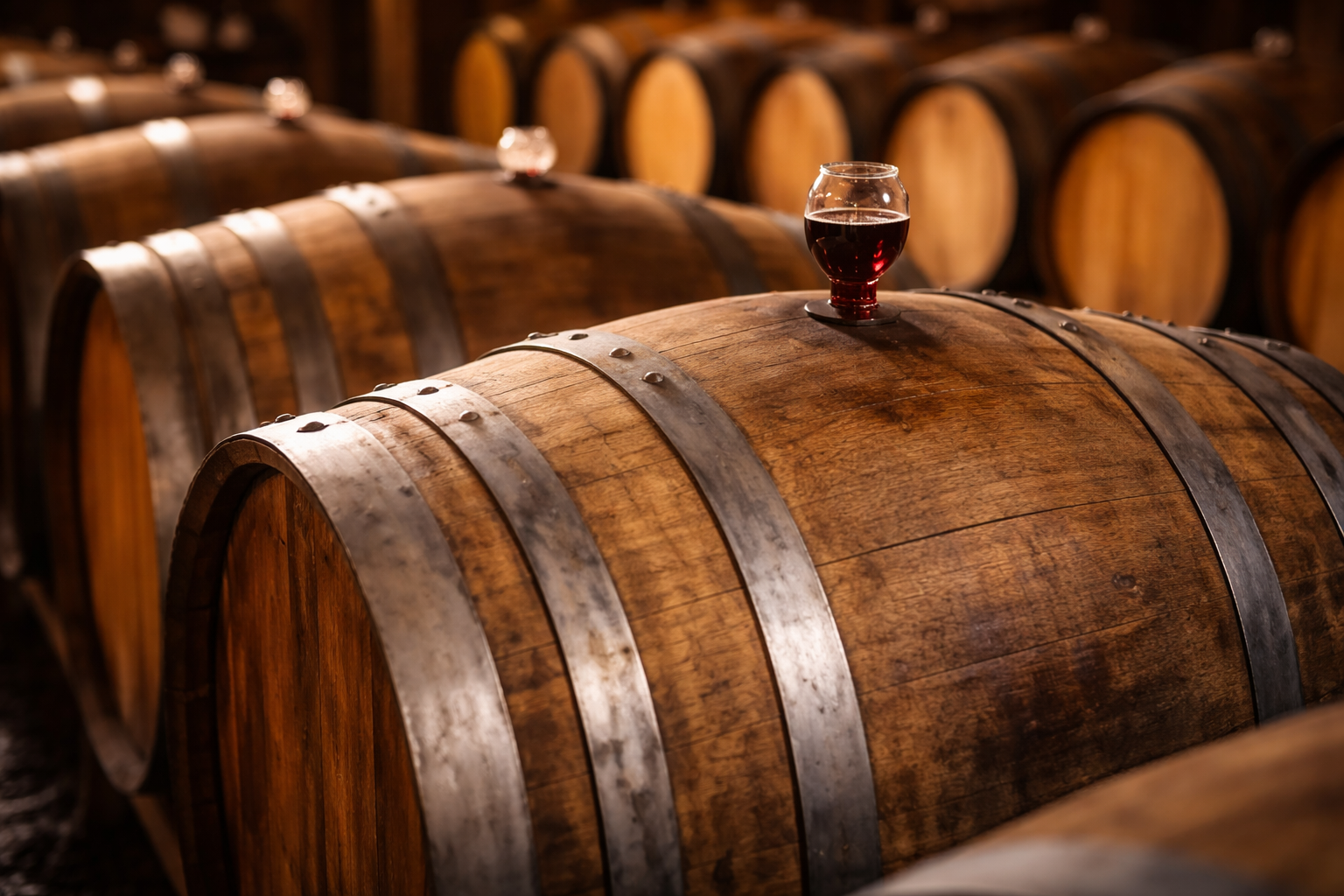
Some desires are so transparently unreasonable that the only proper response is a good saying. Italians, who rarely miss an opportunity to turn contradiction into imagery, settled on one of their most theatrical formulations: volere la botte piena e la moglie ubriaca. It sounds like the opening of a village anecdote—someone calculating, someone tipsy, a barrel of wine at the center of it all. Yet beneath the rustic staging lies a precise observation about human nature.
The logic is simple and unforgiving. The perfect outcome would be to have it both ways: the barrel untouched and the wife already drunk. But reality resists such generosity. One condition undoes the other. Yet the desire to secure both remains.
And that is precisely the point. The expression captures not merely contradiction but a deeper restlessness—the expectation that incompatible outcomes should somehow coexist, as if limits did not apply. We want abundance without reduction. Pleasure without consequence. Gain without sacrifice. When the world refuses to comply, dissatisfaction follows.
The saying is older than it might appear. A version surfaces in the fourteenth century in Il Pataffio, a comic-parodic work attributed to the Florentine Franco Sacchetti. Its playful irreverence suggests that medieval audiences already recognized the humor of the impossibility. Long before dictionaries stabilized its wording, the expression circulated in a culture that preferred satire to moral instruction.
Modern readers may hesitate at the imagery. Why wine and not bread, olives, or even cheese? And, above all, why a drunken wife, when English expresses nearly the same idea with the polite discretion of pastry—“You can’t have your cake and eat it too”? The Italian version, by contrast, unfolds into an entire domestic scene.
To understand it, one must step back into the world that produced it. In a rural economy, a full barrel of wine signified security and provision. Wine was stored carefully, expected to last through the season—a visible guarantee of stability. At the same time, it was meant to be consumed and enjoyed. The tension between preservation and enjoyment was concrete, almost tactile.
Within that same social framework, household authority was assumed to rest with the husband. A drunken woman was imagined—wrongly, and tellingly—as more compliant, more manageable, more inclined to fulfill what were once called her conjugal duties. In that mental universe, she represented not only domestic ease but a form of gratification thought to parallel the pleasures of wine itself. What now sounds unacceptable did not originally function as provocation; it simply mirrored the gender hierarchy embedded in daily life. History does not excuse the image, but it explains it.
Idiomatic language rarely revises itself to match evolving values. It preserves the mental furniture of earlier societies, even when that furniture no longer fits comfortably in the room. Attempts to modernize—or sanitize—the wording by reversing the roles rarely succeed. What woman, after all, would willingly prefer a drunk husband? The symmetry may appear grammatically neat, but the internal logic falters and the comic tension dissipates.
What gives the expression its staying power is not fairness but exaggeration. It pushes desire into caricature and lets the absurdity stand. By staging an impossible wish in concrete domestic terms, it makes the contradiction unmistakable. The barrel and the wife are narrative devices; the real subject is human impatience—the impulse to want incompatible things at once and to remain dissatisfied when the world refuses to cooperate.
In the end, whether voiced in a fourteenth-century parody or repeated today, the message remains brisk and unsentimental: some wishes undo themselves. The image may be imperfect, even awkward. Yet it is precisely this rough clarity—and the faint smile it invites—that has allowed the expression to endure for centuries.
Hungry for more Italian food idioms? Discover more of Samuel Ghelli's articles.
L’Appetito Vien Mangiando: Why Appetite Comes With Eating
Avere Gli Occhi Foderati di Prosciutto: Ignoring What is Right in Front of You
Finire a Tarallucci e Vino: When the Table Has the Final Word