

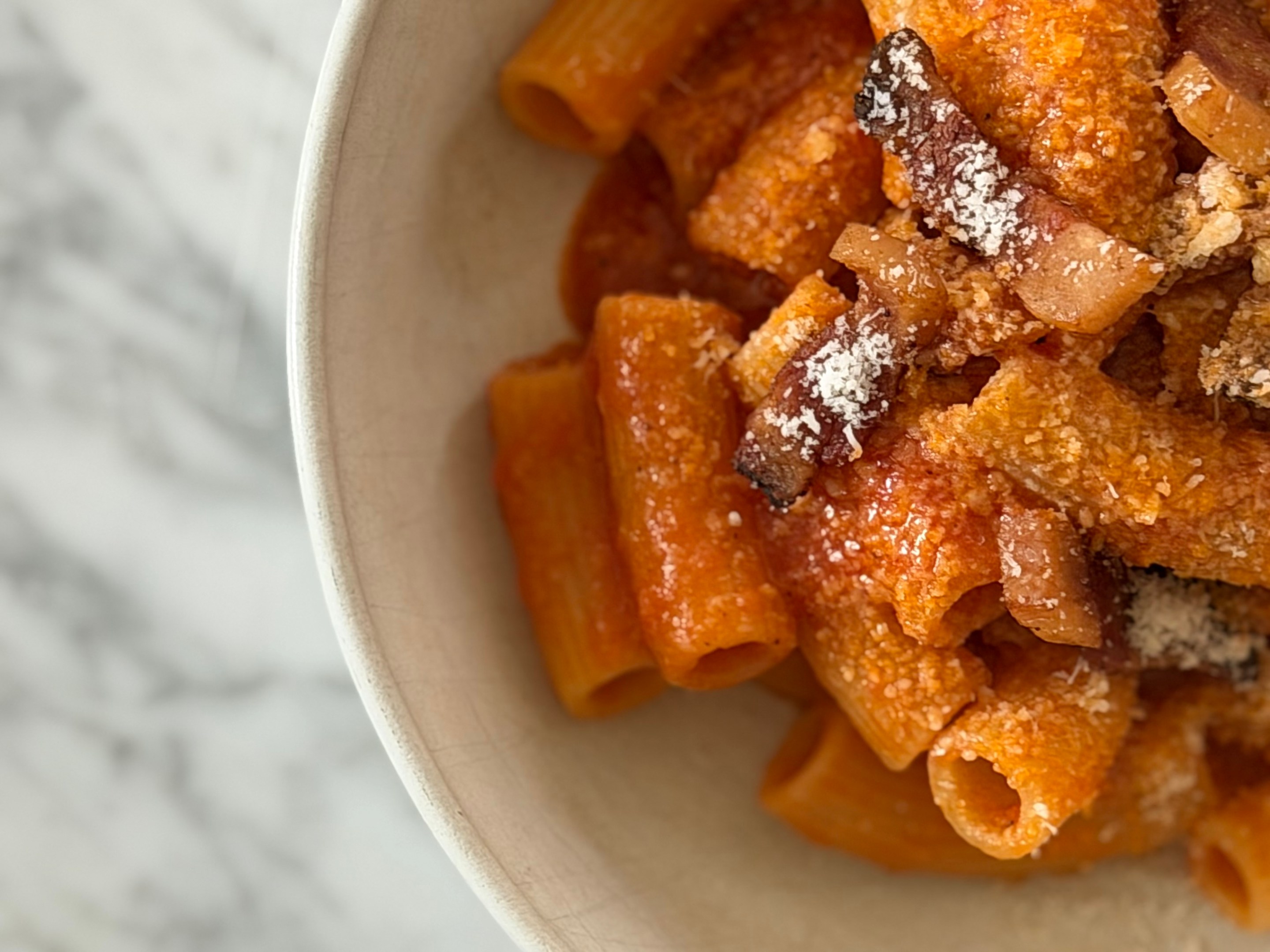
At Roscioli, there’s a quiet understanding that the most powerful dishes don’t announce themselves. They arrive simply—unadorned, almost understated—and yet, they linger. Amatriciana is one of those dishes.
In Rome, pasta isn’t about invention—it’s about discipline. There’s a confidence in doing less, in allowing a handful of ingredients to speak without interference. Amatriciana, at its core, is a study in restraint: guanciale, pecorino, tomato, pasta.
That’s it.
And because of that, every detail matters. When I was there, I found myself looking beyond the plate—wanting to understand not just how it tasted, but how it was made. Watching the kitchen at Roscioli, there’s a rhythm to it. No unnecessary movement, no excess. Just precision, repetition, and a kind of quiet confidence that comes from knowing exactly when something is right. The guanciale is where it begins—not just as an ingredient, but as the foundation of the dish.
Want more Roman recipes? Explore ideas for tonight's dinner at Appetito.
It’s rendered slowly, patiently, until the fat melts away and the meat turns crisp. There’s no rushing this step. The transformation is gradual, almost quiet, but it sets the tone for everything that follows. That rendered fat becomes the base of the sauce—silky, savory, deeply flavorful.
The tomato enters lightly. This isn’t a heavy, simmered ragù, but rather a restrained addition—just enough to bring acidity and balance. It softens the richness without overpowering it, creating that signature “blush” of red that defines a proper amatriciana.
Then comes the pecorino. I think this is where the dish really shifts. It’s grated finely—almost powdery—so it melts into the pasta and sauce rather than sitting on top. The sharpness of the cheese integrates with the fat from the guanciale and the starch from the pasta water, forming something cohesive. Glossy. Almost creamy in texture, but without cream—just technique.
It’s a dish that demands attention to timing and proportion. Too much tomato, and it loses its identity. Too much cheese, and it becomes heavy. Undercook the guanciale, and you miss the depth entirely. There’s no room to hide here—only to refine. I left inspired—not to replicate it exactly, but to understand it.
Back in my own downtown kitchen, I approach it the same way: letting the guanciale render slowly until crisp, grating the pecorino until it’s fine enough to melt seamlessly, and bringing everything together with intention. And when it does come together—pasta, fat, cheese, a touch of tomato—it transforms into something that feels far more complex than the ingredient list suggests.
That’s the beauty of amatriciana. It isn’t about adding more. It’s about understanding when to stop. Because in the end, what you’re left with is something deceptively simple—yet deeply considered. A dish that feels rich, but never heavy. Balanced, but never restrained in flavor.
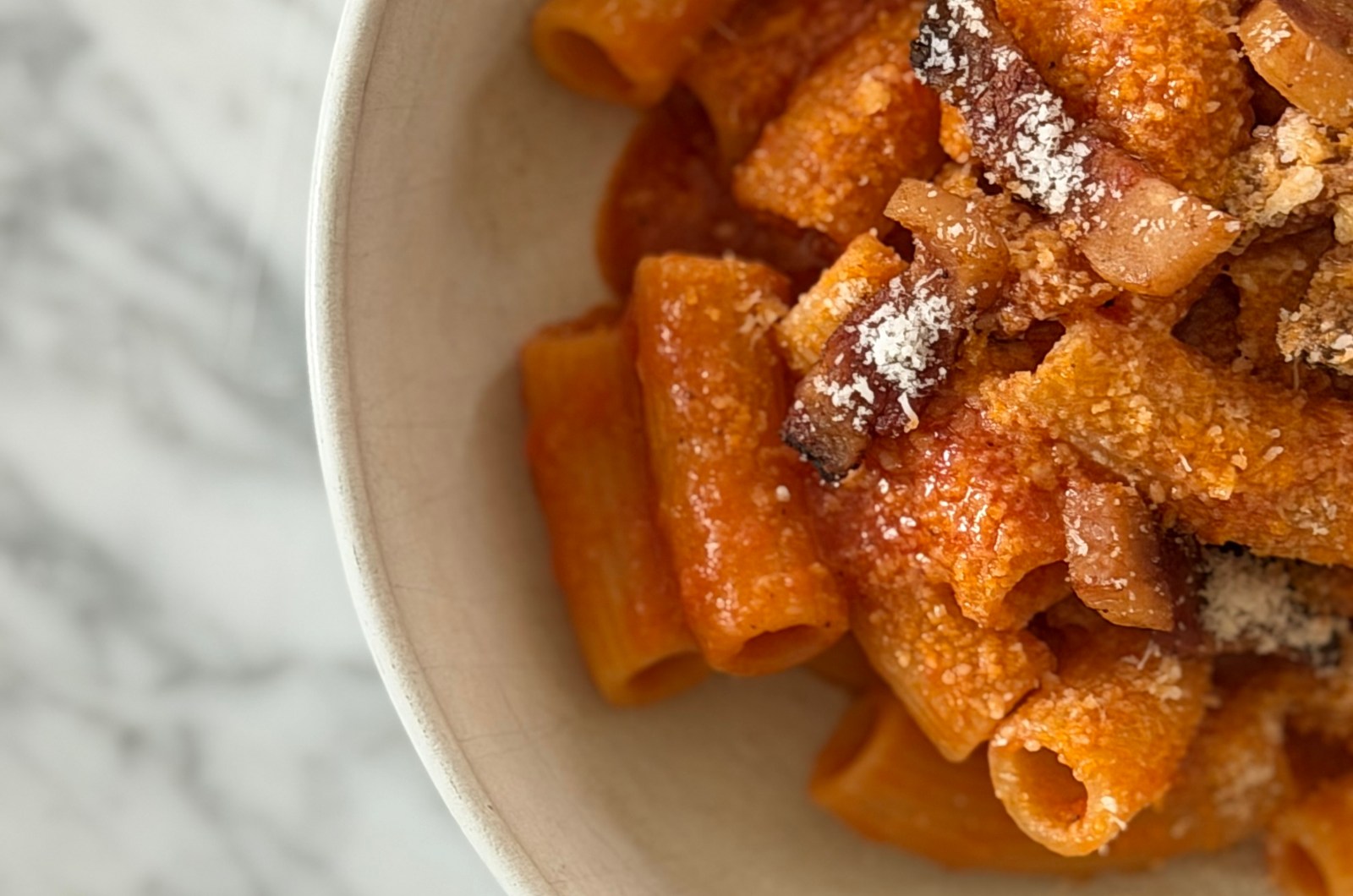
Amatriciana
4
servings20
minutes20
minutesIngredients
3 pieces 3 guanciale, cut into lardons
1 cup 1 freshly grated pecorino romano (Locatelli)
1 1/2 small cans 1 1/2 Mutti San Marzano tomatoes
12 oz. 12 dried rigatoni (imported Italian)
sea salt (for pasta water)
Directions
- Bring a large pot of water to a rolling boil and season it generously with sea salt — it should taste like the sea.
- This is your only chance to properly season the pasta itself, so don’t hold back.
- In a wide pan, add the guanciale to a cold surface and place it over medium heat.
- Let it render slowly, allowing the fat to melt out gradually while the meat turns deeply golden and crisp.
- This step sets the foundation of the entire dish — you’re not just cooking the guanciale, you’re building the flavor of the sauce.
- Once crisp, leave it in the pan along with the rendered fat.
- Meanwhile, blend the tomatoes until smooth.
- You’re looking for a light, cohesive texture — not too thick, not overly broken — something that will cling to the pasta without weighing it down.
- Drop the rigatoni into the boiling water and cook until just shy of al dente.
- The pasta will finish cooking in the sauce, absorbing everything you’ve built in the pan.
- Pour the blended tomatoes into the rendered guanciale and let it simmer briefly.
- Just a few minutes is enough — this isn’t about reducing into a heavy sauce, but rather allowing the tomatoes to marry with the pork fat.
- Taste, but be mindful: the guanciale and pecorino will bring plenty of salt.
- Using a spider or tongs, transfer the pasta directly into the sauce along with a splash of pasta water.
- Toss vigorously over medium heat until the sauce begins to coat each piece of rigatoni, glossy and unified.
- Turn off the heat completely before adding the pecorino. This is crucial.
- Add the cheese gradually, tossing continuously, allowing it to melt gently into the sauce.
- The residual heat and the starch from the pasta water will create a silky, emulsified finish — never clumpy, never heavy.
- Finish with the crisp guanciale and serve immediately, while the sauce is at its peak — smooth, glossy, and deeply savory.
Did you make this recipe?
Tag @appetitomagazine on Instagram and hashtag it with #italianfoodanddrink
Like this recipe?
Follow @Appetitomagazine on Pinterest
Follow us on Facebook!
Follow us on Facebook
Be the first to know about Italian food events, restaurant openings and culinary travel. Subscribe to the Appetito weekly newsletter.