

When in Italy, there are endless ways to indulge your palate with rich experiences. Whether you’re twirling pasta just steps from the Mediterranean Sea or raising a glass in one of the many timeless piazzas, Italy’s food culture offers a taste of the country’s vibrant history, traditions and way of life.
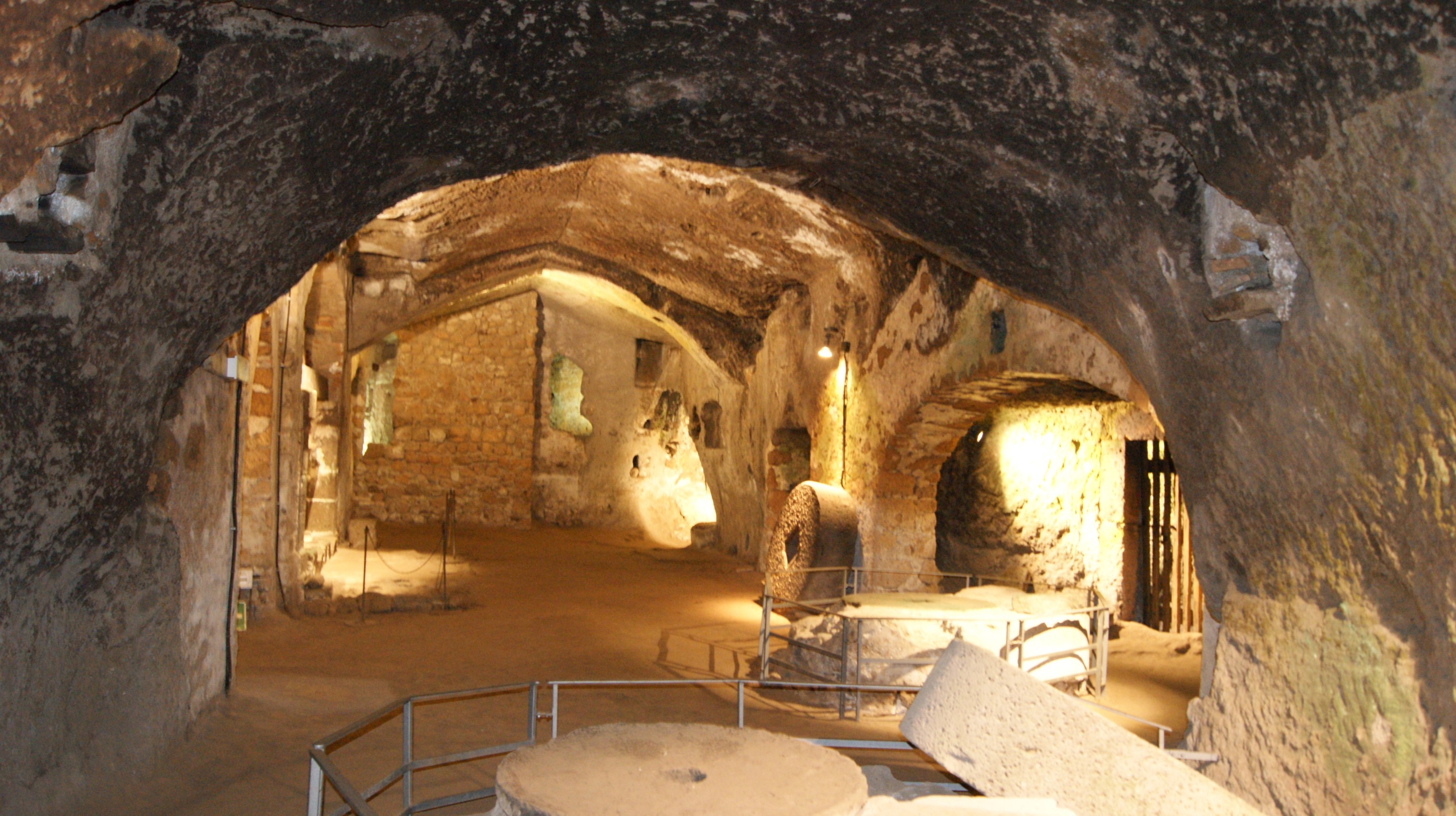
Orvieto is no less intriguing, with one attribute of its allure jumping out past the others: a centuries-old world of caves hidden beneath its hilltop streets. Tourists, including myself, flock to this small town in Umbria to explore a dense network of over 1,000 caves that was first an early Etruscan neighborhood.
While my own introduction to Orvieto’s underground world was still technically below ground, it didn’t involve stepping into a museum or staring down St. Patrick’s Well, the 174-foot dwelling and commisioned project of Pope Clement VII during the sack of Rome. Instead, my favorite memory happened over a leisurely midday meal. As the town’s only restaurant actually located within one of the caves, Ristorante Le Grotte del Funaro bridges the gap between Orvieto’s captivating historical importance and the bold, earthy flavors found in Umbrian cuisine.
For more Italian food stories delivered to your inbox, subscribe to the Appetito weekly newsletter.
Years of reshaping history
Ristorante Le Grotte del Funaro is a nearly five-decade-old establishment, but the space itself has assumed multiple identities since its beginnings. Part of its namesake, Funaro, is actually an Italian translation for craftsman or, more specifically, rope-maker, a nod to the cave’s previous life as a rope-making workshop.
Originally dug out to serve a multitude of purposes within daily life, Orvieto’s caves are so fascinating for this exact reason: Thanks to years of excavation and carefully preserved artifacts, tourists are able to picture history unfolding around them through generations of use. Similarly, the town itself embraces necessary modern restorations such as the funicular to avoid a winding, hilly drive, while still amplifying the work of local craftsmen specializing in traditional ceramics, lace and woodworking. These efforts allow Orvieto to continually welcome tourists from around the world while preserving the history that makes the town so captivating.
In the late 1970s, Sandra and Alfredo Branca transformed the cave workshop into their restaurant and have kept it in the family ever since, now including their son, Andrea, in the operations. Today, Ristorante Le Grotte del Funaro is one of Orvieto’s most celebrated dining spaces, with a quaint and cozy patio where guests can enjoy the sunshine outside, or, as I chose, an underground dining room that lures travelers beneath the surface.
Embracing and sharing Umbrian cuisine
Arriving at Le Grotte del Funaro, I was intrigued by the charming yet coy entryway that beckons visitors down into the earth like a fairy-tale dungeon. In a city known for its caves, sure, I had to investigate further.
Once inside, it’s impossible not to marvel at the wall of rock encompassing you from all sides. The chill of the stone coats your body almost immediately, and eyes adjust to the darkness of the cavern. The restaurant setup itself is simple with white tablecloths and intimately close dining tables. After being seated at a table for one, I ordered a crisp white wine to sip slowly while browsing the menu.
Le Grotte del Funaro serves a seasonal menu of Umbrian classics, rotating between the region’s traditional favorites of earthy vegetable and meat dishes. Black truffles, one of Orvieto’s specialties, can be tasted in the Ombrichelli with black truffle from Orvieto. Another local favorite is pork, so try the restaurant’s Suckling Pig Cooked in a Wood-Fired Oven. Lentils, porcini and farro are also on the menu; let your taste buds run amongst the forests.
I’m always a sucker for pasta, so my eyes gravitated toward the tagliatelle with wild boar ragu. The protein was also a tactical choice, fueling my energy before heading out again to walk and explore all afternoon.
I remember smelling my meal before I looked up to see it. The steamy plate of ragu sauce and pasta was my afternoon solace, appreciated alone but nevertheless in great magnitude in this underground Italian sanctuary. I took in the meal, the ancient tufa rock and the people around me that filled the space with a bustling yet calm energy that filled so naturally. It was a picture I’ll remember forever.
Craving more from Umbria? Explore Appetito’s stories on the region’s food, wine and places to visit.
Experiencing Orvieto: More than just its caves
Earlier that morning, I took the two-hour train from Rome up to Orvieto, a city I reluctantly admit I only knew of as the setting of a book I was reading at the time. I was eager to explore the network of caves, but knew virtually nothing about the hilltop town’s modern identity.
Sandwiched between the famed Tuscany and Lazio regions, Umbria might not be every first-time Italy traveler’s go-to. Known for its smaller, medieval-style towns teeming with history, like Orvieto, as well as an estimated 300,000 hectares of sprawling forests, Umbria appeals to travelers looking to venture off the beaten path. Other notable towns to visit in Umbria might include Assisi, Perugia or Spello.
Like many of my favorite travel memories, a solo experience in Orvieto was my preferred way of exploration. I ducked my head into every ceramic shop, woodworker's studio, gelateria, and museum I could spot throughout my day. The town’s elevation also provides picturesque views of the countryside as far as the eye can see from viewpoints and hikes like the Anello della Rupe.
Other can’t-miss spots in town include the Duomo di Orvieto and the Pozza della Cava museum. I spent a good portion of my afternoon marveling at the display of medieval artifacts on show in this museum, as well as the ancient pottery studio.
Reflecting on my day in Orvieto, dining at Le Grotte del Funaro was the moment that brought everything together for me. The magic of Orvieto’s underground history can be felt tangibly when walking above on its streets, but being able to dive right in and taste classic Umbrian dishes was an ensemble experience. I would suggest this spot to anyone passing through Orvieto for an afternoon, but if possible, I would encourage you to linger even longer in the town and experience more than I could. You might just find something even greater.