
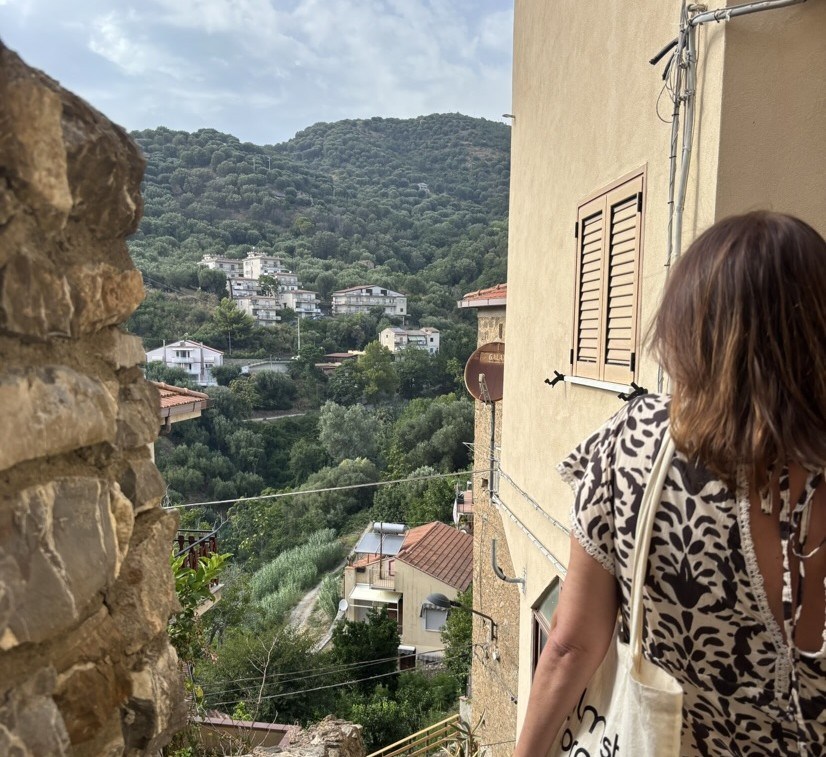
The winding road from Pisciotta-Palinuro train station to the medieval hill town of Pisciotta offers the first clue that you have arrived somewhere deeply Mediterranean. Olive groves blanket the hillsides. Fig and citrus trees grow beside the road. Between bends, the brilliant blue of the Tyrrhenian Sea appears far below.
Pisciotta lies on the Cilento coast in Campania, south of Salerno and the better-known Amalfi Coast. Despite feeling removed from Italy's main tourist trail, it is surprisingly accessible, around three to four hours by train from Rome.
On arrival, Pisciotta is a cluster of stone houses perched above the coast, opening onto a lively piazza where, that afternoon, it seemed as though half the village had gathered.
I did not know it then, but that square would become the center of our days.
Looking for somewhere on the coast away from the summer crowds, I had asked my friend Fabrizia for advice. Originally from Carrara, she had fallen completely for Pisciotta.
“Pisciotta, without question,” she told me.
Love discovering Italy one bite at a time? Subscribe to the free Appetito newsletter for the latest restaurant openings and Italian travel news.
A rhythm between hill and sea
On her recommendation, my family and I stayed at Marulivo, a converted monastery high above Pisciotta that its owners, Massimo and Lea, had restored. Old stone walls opened onto terracotta terraces, and from the rooftop the village tumbled down the hillside towards the sea.
The next morning, breakfast was less a hotel buffet than an introduction to Cilento: freshly baked bread, local jams and fruit, bruschetta made that morning, and other ingredients grown and produced nearby.
Sometimes before breakfast, sometimes afterwards, one of us would wander down to the piazza for an espresso. From there, narrow stone lanes threaded through the village and eventually joined the route towards Marina di Pisciotta below.
The fifteen-minute walk down to the coast took us through what were essentially the backyards of Pisciotta. Ancient olive trees twisted from the dry earth, harvesting nets gathered beneath their branches. And at the end of the walk, the sea.
At the marina, the rhythm shifted to swimming and lunch at one of the seafood restaurants along the esplanade. Pisciotta is particularly known for its anchovies and the menaica, a traditional method of catching them that has survived along this stretch of Cilento.
When it was time for an afternoon siesta and we couldn’t face the climb back from the marina, we took the local tuk-tuk back up to the village.
One afternoon, I asked the driver where I could buy good local olive oil. Almost every family made its own, he told me. His family did too, and he could sell me some of their batch.
The groves we walked through each morning weren’t scenery but working groves, tended by local families. The oil on our table was the landscape itself, bottled.
The piazza as an open living room
Back up at the piazza, life gathered as the afternoon heat subsided. Older women I came to recognize sat beneath a large fig tree. Parents appeared with children for gelato, friends gathered for aperitivo and adolescents stayed into the night.
The piazza was Pisciotta's open living room.
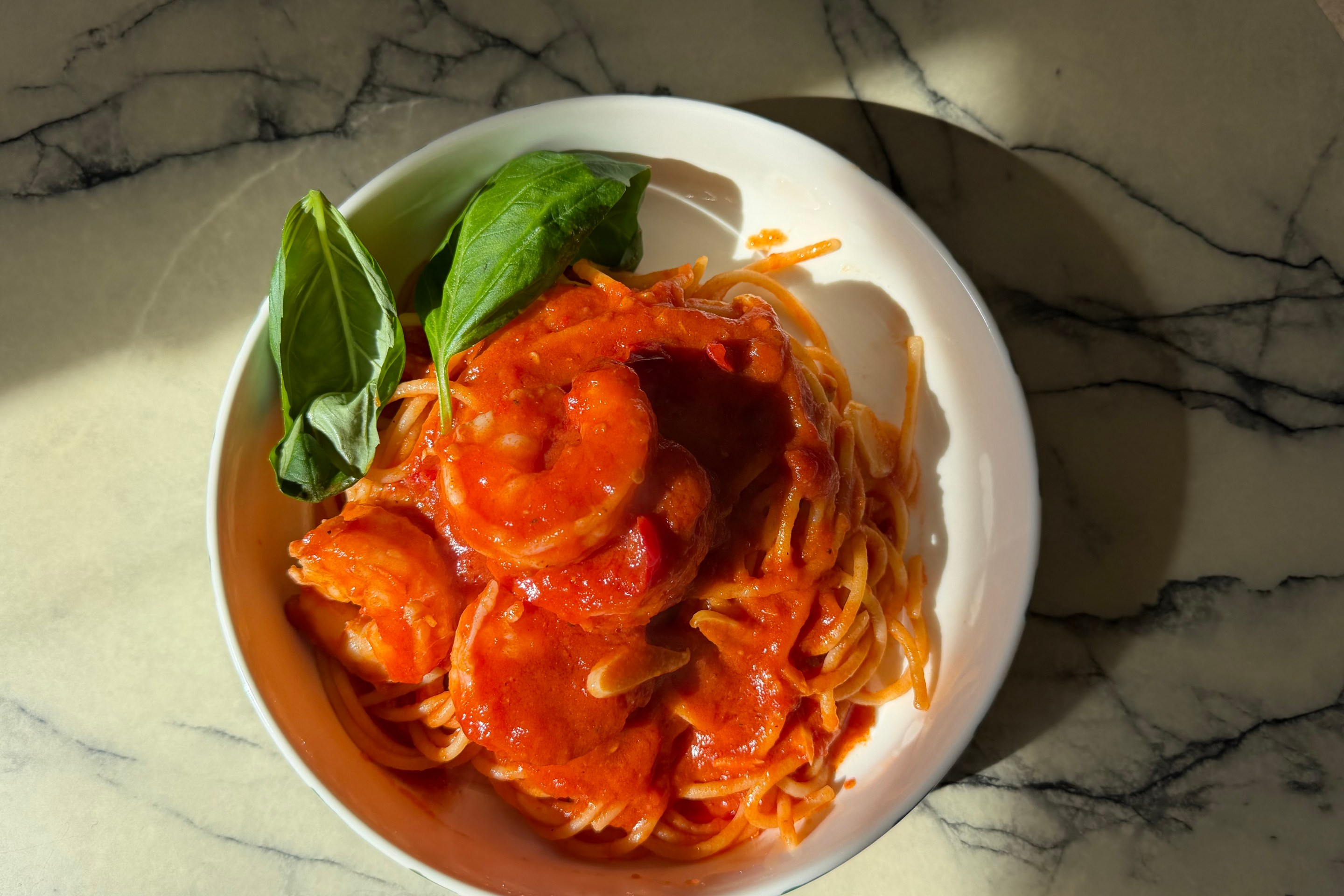
Aperitivo often gave way to a short walk through the village for dinner. One evening we wandered to Malabar, its tables laid on the paving stones of a tiny medieval square beneath the old church. We ate grilled escarole served over a light, creamy anchovy sauce, followed by tiny tartlets of zucchini and shrimp with lemon mayonnaise. Of all the food I ate during that year in Italy, that plate of escarole remains one of the dishes I remember most.
Another night, we landed a last-minute table at Cantina Lamadè, a restaurant and artisan food laboratory whose tables spilled up the cobbled street. Built around chilometro zero ingredients, the crostini were an edible map of the surrounding countryside—one with fig jam, another with olive tapenade and another with creamy local cheese.
Inside, shelves held house-made preserves and oils; a jar of that dark, sweet fig jam went straight into my handbag. Again, the hills and sea seemed to meet on the same plate.
And somehow, after dinner, we always found ourselves back in the piazza.
More than a way of eating
Only later did I understand that what we were experiencing was part of the Mediterranean diet itself.
“There isn't really one single, universally agreed definition of the Mediterranean Diet,” explains Yara Sfeir, a global nutritionist and cookbook author based in Rome. Broadly, it favours fresh and minimally processed foods, vegetables, fruit, cereals and olive oil, with moderate amounts of fish and dairy and relatively little red meat.
But food is only part of it. Sfeir points to UNESCO's recognition of the Mediterranean diet as something broader, encompassing seasonality, cooking, physical activity, socialising and conviviality.
Suddenly, the rhythm we had fallen into in Pisciotta made perfect sense. We had gone there thinking of the Mediterranean diet as something people ate. What Pisciotta was showing us was that it was something people lived.
The food could not easily be separated from the life around it: the olive groves and the families who tended them, the fishermen and anchovies, the walk to the sea, the long lunch and the evening gathering in the piazza.
Even our own bodies seemed to notice the difference before we did. We slept better. Aches and pains seemed to disappear. More noticeably, I stopped wanting to do more.
Perhaps it should be no surprise that this part of southern Italy became so important to the story of the Mediterranean diet. Cilento is a place of remarkable biodiversity, where mountains, farmland and the Tyrrhenian coast meet and where food traditions remain closely tied to that landscape.
In the mid-twentieth century, American physiologist Ancel Keys became fascinated by the comparatively low incidence of coronary heart disease in Mediterranean populations. He eventually settled further along the Cilento coast at Pioppi, where his research helped bring what became known as the Mediterranean diet to international attention.
Today, the term Mediterranean diet appears on restaurant menus, in cookbooks, health advice and supermarket aisles around the world, yet often reduced to a collection of ingredients.
On our last morning, I sat in the piazza with one final fig sorbetto, waiting for the taxi that would take us back to the railway station. Around me, the life of Pisciotta carried on as it had every day we had been there.
Perhaps that is what we have misunderstood about the Mediterranean diet. We have taken the olive oil, the tomatoes and the fish and turned them into advice about what to put on our plates, while leaving behind much of the life that surrounded them.
Back home, we may not have a medieval piazza or a fig tree to gather beneath. But we can stay at the table longer. We can walk after dinner instead of disappearing indoors. We can know who lives next door, buy food from people who grow it, and make room in our days for the people around us.
Perhaps the real lesson of Pisciotta is that an open living room can exist anywhere. We just have to make room for it.