
For my 12-year-old American son, sitting down for a family meal usually means eating as quickly as possible and asking to be excused. That changed on our recent visit to Rome, when we joined a pasta class in the Testaccio neighborhood.
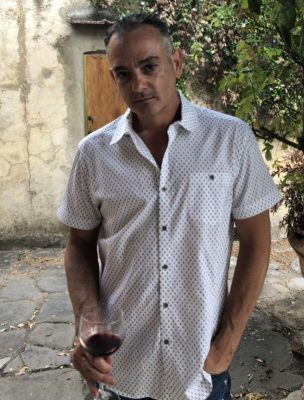
Much is written about the food made by Italian nonnas, but we were pleasantly surprised to spend our cooking lesson with Andrea, an Italian nonno. In his kitchen, passing down family recipes and spending time together were clearly traditions shared by men and women alike.
Andrea described how making food with his family is an expression of love. “Food creates unity,” he said, explaining that cooking with his family has always been less about eating and more about being together.
Like many Italian children, he learned how to cook from his mother when he was young. “We would prepare for days, then eat for hours. You start with an antipasto - prosciutto, maybe - then the fettuccine, then chicken with potatoes, then cheese before dessert. And always a coffee. Always an ammazzacaffè—limoncello, or sambuca to finish."
My son’s eyes were wide. His hands, full of flour, were busy. But his attention was entirely on the man in front of him, a stranger with decades of stories, telling them like they still surprised him too.
Love discovering Italy one bite at a time? Subscribe to the free Appetito newsletter for the latest in food, travel, recipes and Italian culture stories.
Three recipes, three stories
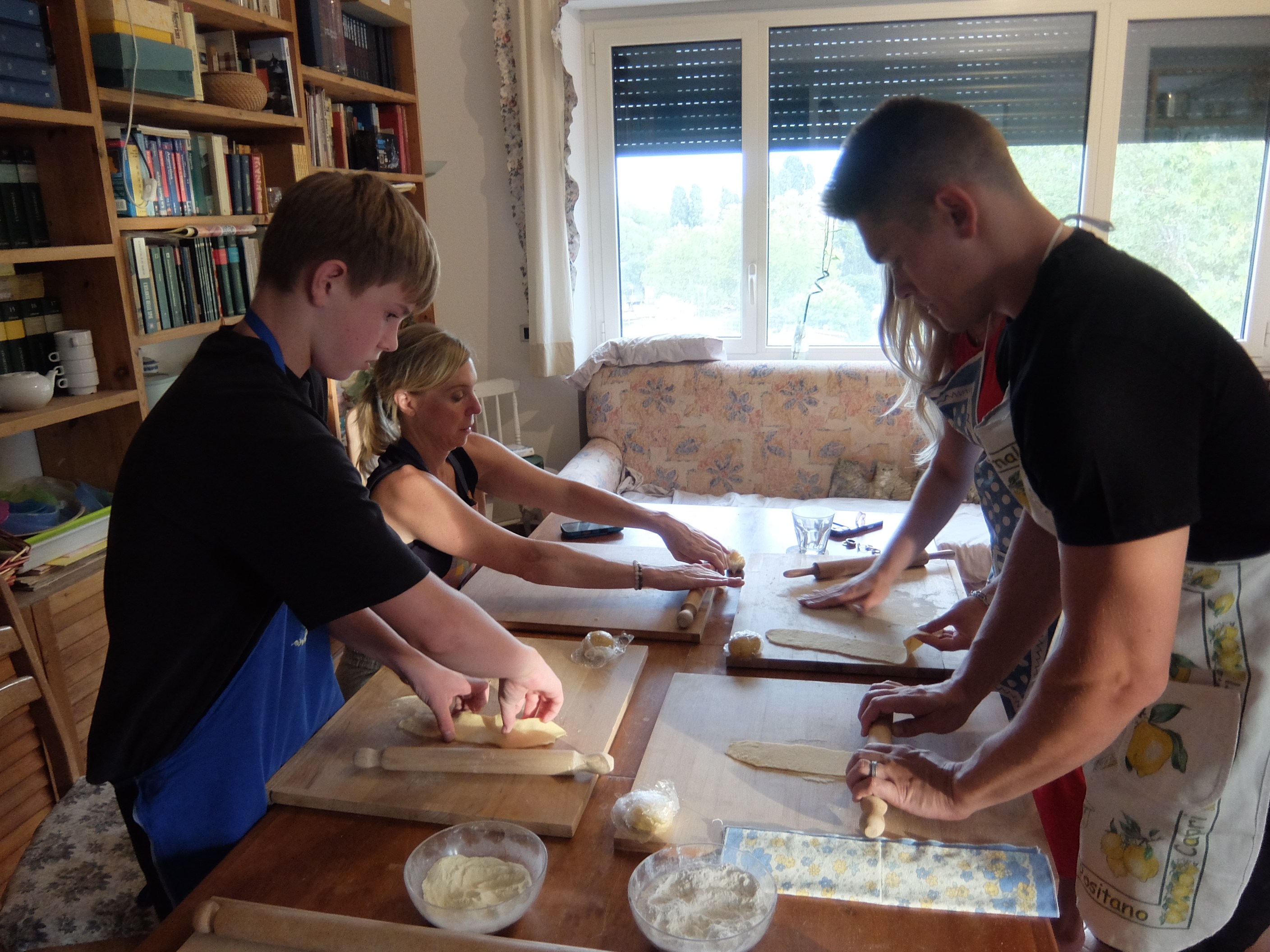
It was a small cooking class, with just a handful of us, an apron each and a wooden table dusted white. Step by step, we learned three dishes. Each one came with a story that my son has retold at our Chicago dinner table since.
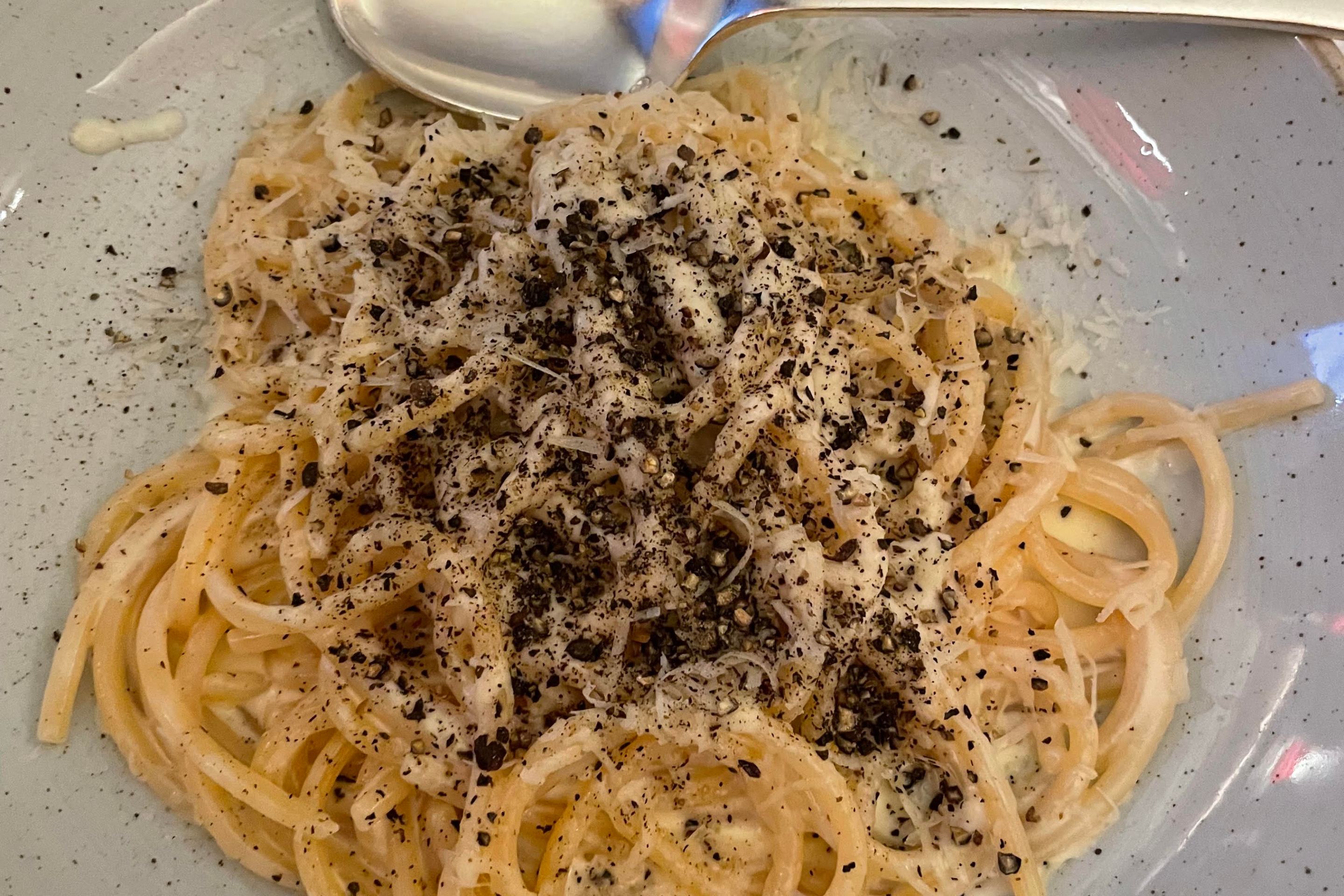
Andrea introduced cacio e pepe as a shepherd’s dish born from the need to preserve food with nothing more than salt and pepper. Its simplicity comes from three main ingredients: pasta, Pecorino Romano and black pepper.
For carbonara, he shared one theory about its origins. When American soldiers entered Rome in 1944, they brought powdered eggs and bacon along with the Coca-Cola. Someone married those rations to a plate of pasta (not the Coca-Cola), and carbonara was born. Its exact origins remain debated.
Amatriciana, one of the oldest of the three, he explained, takes its name from Amatrice, a shepherd village northeast of Rome.
We ran the dough through an Imperia machine to cut it into fettuccine, watching the sheets come out even and thin in a way our first attempts by hand never quite managed.
Along with the recipes, Andrea offered practical advice for making pasta at home. All eggs are not equal, so he measured the flour-to-egg ratio by weight. He also emphasized patience. The dough starts sticky, but continuing to knead it for about 10 minutes helps it all come together. He called the process “irritating the flour.”
For his dough, he used only yolks. Egg whites are “tasteless,” Andrea said.
Explore more of Rome through our guides to the city’s restaurants, neighborhoods and food traditions.
Time at the table
Rome does not usually let you slow down. Between the Colosseum, the crowds and the next thing on the list, a family trip has its own momentum. But in Andrea's kitchen, neither the eating nor the making was ever rushed. It was the first time all week we weren't moving toward something—we were just in it.
In Italy, food has never been simply fuel. Every recipe carries the fingerprints of whoever handed it down: a shepherd's need to preserve meat with nothing but salt, a village's isolation in the hills north of Rome or a mother's insistence to her son that yolks matter and whites don't.
Even the shape of an Italian meal is built to slow you down: antipasto, primo, secondo, contorno, dolce, caffè, not because Italians have more hours in a day than anyone else, but because they decided, generations ago, that time spent at a table is never time wasted. It was strange, in a city so layered with ruins and monuments, to realize that some of the oldest history in Rome wasn't behind glass in a museum. It was sitting on our plates.
When we were ready to enjoy the food we had prepared, we sat down with the other guests and Andrea. My son asked him several questions: Did he always use a recipe or sometimes cook by feel? What was it like learning to cook with his mother? What advice would he give American families who rush through dinner?
My son still recounts that conversation fondly. “I loved his stories of living in Africa and how fettuccine was so popular that his friends always asked him to make the recipe,” he said. “I didn’t think of time at all while we were eating. I just listened to the stories and how food was part of life in so many ways. Andrea gave me ideas of how to do that on the rest of the trip, and back home too.”
The food was delicious and the cooking lesson was useful. I also got to witness a connection between generations and see my son’s understanding of food grow.
If you go
Andrea Parboni and his wife host cooking classes in their home in Rome’s Testaccio neighborhood. Each guest puts a pin on a world map, marking the places visitors have come from to cook in their kitchen and hear their family stories.
Editor’s note: The writer booked the class through Curioseety, which offers cooking classes and other experiences in Italy. Andrea and his wife also write about fettuccine and pasta making at Cuoco Mannaro.