
As a child, I rode a bicycle with my grandparents through the countryside near, out to the farmers and small producers who fed us. I hadn't thought about those rides in years.
Then, one warm morning in late summer, on a different bike on a different road, they came back to me.
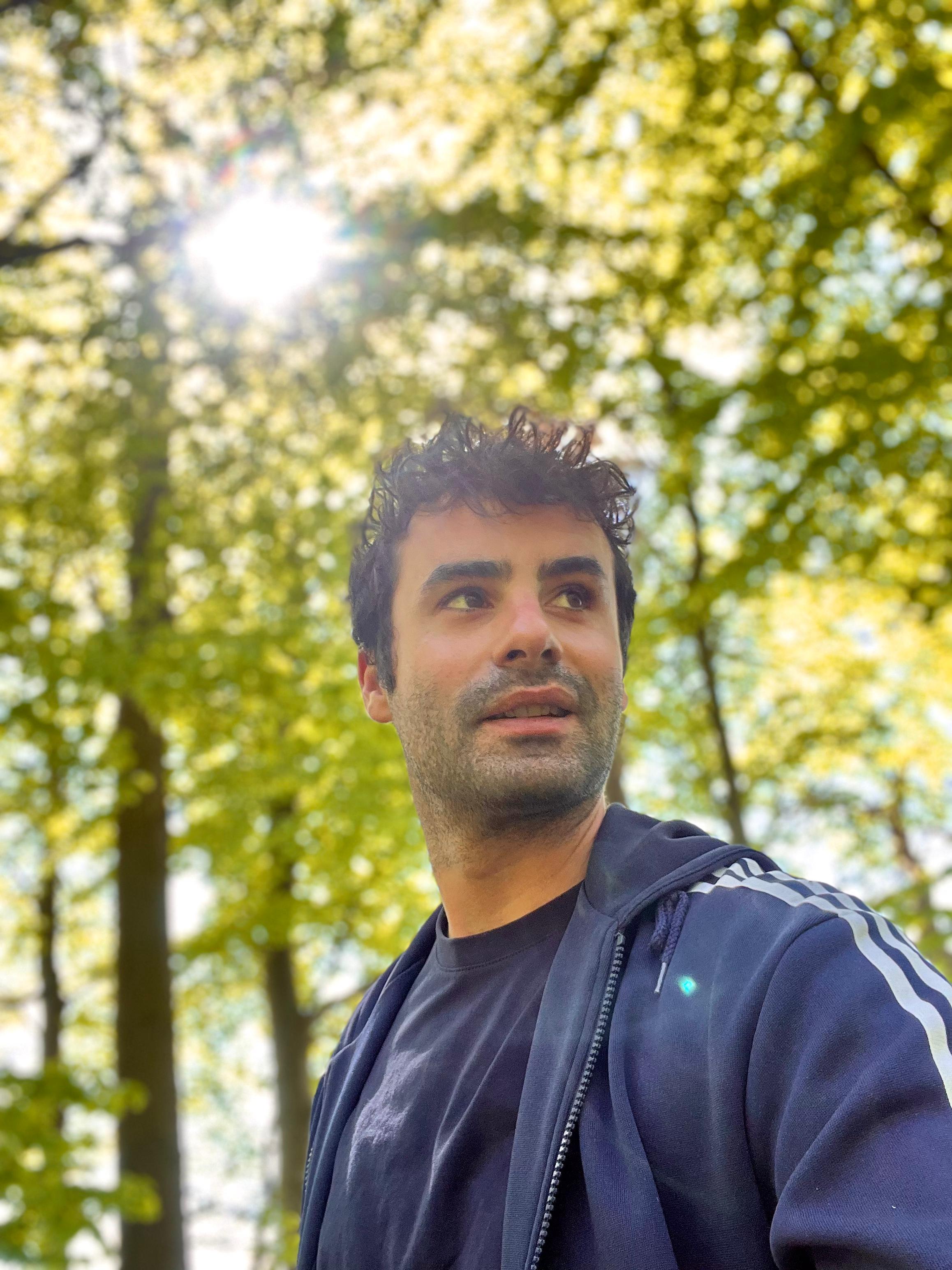
I'm a documentary filmmaker from the hills outside Bologna, and my work is about how food carries the story of a place. I thought I knew this territory well. Twenty minutes of country road taught me something I had spent years missing.
That morning I was riding with a couple from Colorado.
They had already seen Italy — Rome, Florence, Venice — several trips over several years, all the famous rooms and tables. This time they were looking for something unfamiliar.
They ride at home for pleasure. So they asked whether they could see this part of Italy that way.
I came along to document it.
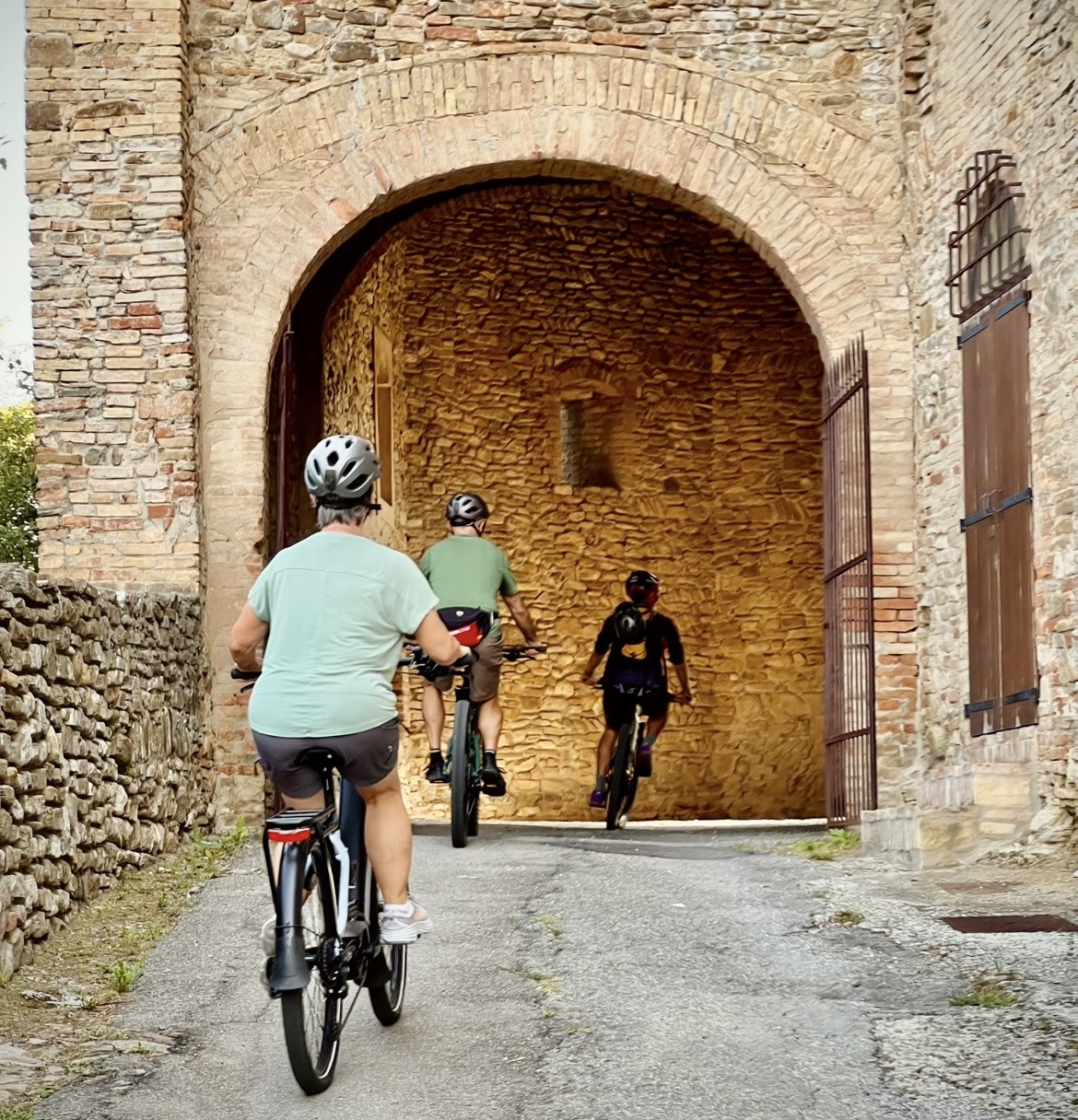
Cycling through Castelvetro
We met in Castelvetro di Modena at nine, in Lambrusco country — a hilltop village with brick towers and a checkerboard square, vines running down every slope toward the plain where the Parmigiano Reggiano is made.
Our guide was Tommaso. He talked about the land as we rode, then about downhill racing, which turned out to be his real subject — he races and works as a bike mechanic. A guide who is genuinely excited about something tells you more than one reciting a script.
The roads out of Castelvetro are small and quiet. Vineyards on both sides, old stone villages, farmhouses with the shutters still closed against the coming heat. For long stretches the road belonged to us.
The pedaling becomes automatic after a while, and your attention moves outward. The air carries what a car window keeps out — cut grass, warm dust, the mineral smell of a vineyard after watering.
Twenty minutes later, the destination: a Parmigiano Reggiano caseificio.
Inside a Parmigiano Reggiano caseificio
Stepping inside is stepping into another climate. Cooler. Louder. The casari were still working — two of them in white, moving around the copper vats with long-handled tools, reaching deep into the milk. Their movements were quick and economical, the kind that come from doing something several thousand times.
In a corner, ricotta — made from the whey left behind, the second life of the same milk. Then the brine tanks, wheels floating in long rows of salt water, the air gone heavy and saline, like a strange indoor sea.
And then the aging warehouse. Wheels stacked floor to ceiling, running away down corridors in a low, even light, thousands of them, each one carrying a fire-branded seal that takes months to earn and years to prove. The silence in there has weight.
This is what most people never see standing in front of a wedge at a market stall. The hills it came from. The hands that turned the milk. The year it spent resting in the dark before anyone was allowed to cut into it.
A visit to the acetaia
Back on the bikes, a different road, this one climbing toward the hills above town, to an acetaia — a family house with an attic full of barrels, each series started the year a child was born, moving down the line for decades, losing volume, gaining weight. The owner poured a drop on the back of each hand. Thick, dark, sweet and sharp in the same second.
A different craft, the same patience.
We rode back to Castelvetro on a third road, one we hadn't seen yet. Slower now, sun higher, everyone easy in the saddle.
Three hours, nine to twelve. One product, followed from the fields to the vats to the dark room where it waits—fifteen kilometers of quiet country road.
At the end, the couple invited me to visit them in Colorado. I think they meant it.
Parmigiano Reggiano is one of the most documented foods in the world. You can read its history before you land in Italy. You can buy the real thing, aged and legitimate, in a good shop back home.
What doesn't travel is the twenty minutes of road before the door. The hills that feed the cows. The hands that work the vats before sunrise. The weight of a room built to hold years of patience.
By the time you see the wheel, you have already ridden through the reason it exists.
That's the part that stays with you.
Love discovering Italy one bite at a time? Subscribe to the free Appetito newsletter for the latest restaurant openings, Italian travel news and favorite recipes.