

In Italian, food is rarely just food. It organizes time, relationships, and expectations. This column explores Italian sayings and proverbs as ways of thinking shaped at the table.
These expressions preserve that knowledge in compact form. Read literally, they speak about eating. Read more closely, they offer insight into how experience, pleasure, and social life are understood.
The aim is simple: to treat language as another ingredient—handled with care, tasted slowly, and shared. No prior appetite required. It tends to arrive along the way.
Essere una buona forchetta
Literally: “A good fork”
Meaning: Someone who eats with pleasure, often generously—and makes that pleasure visible
There is always one at the table. Not the loudest, not the one choosing the wine, and not even the one who eats the most.
They stand out quietly: measured, natural. They welcome what is offered, return to what they enjoy, without hesitation or display. They never rush, nor do they withdraw. And, without quite knowing why, you find yourself watching them with a certain admiration.
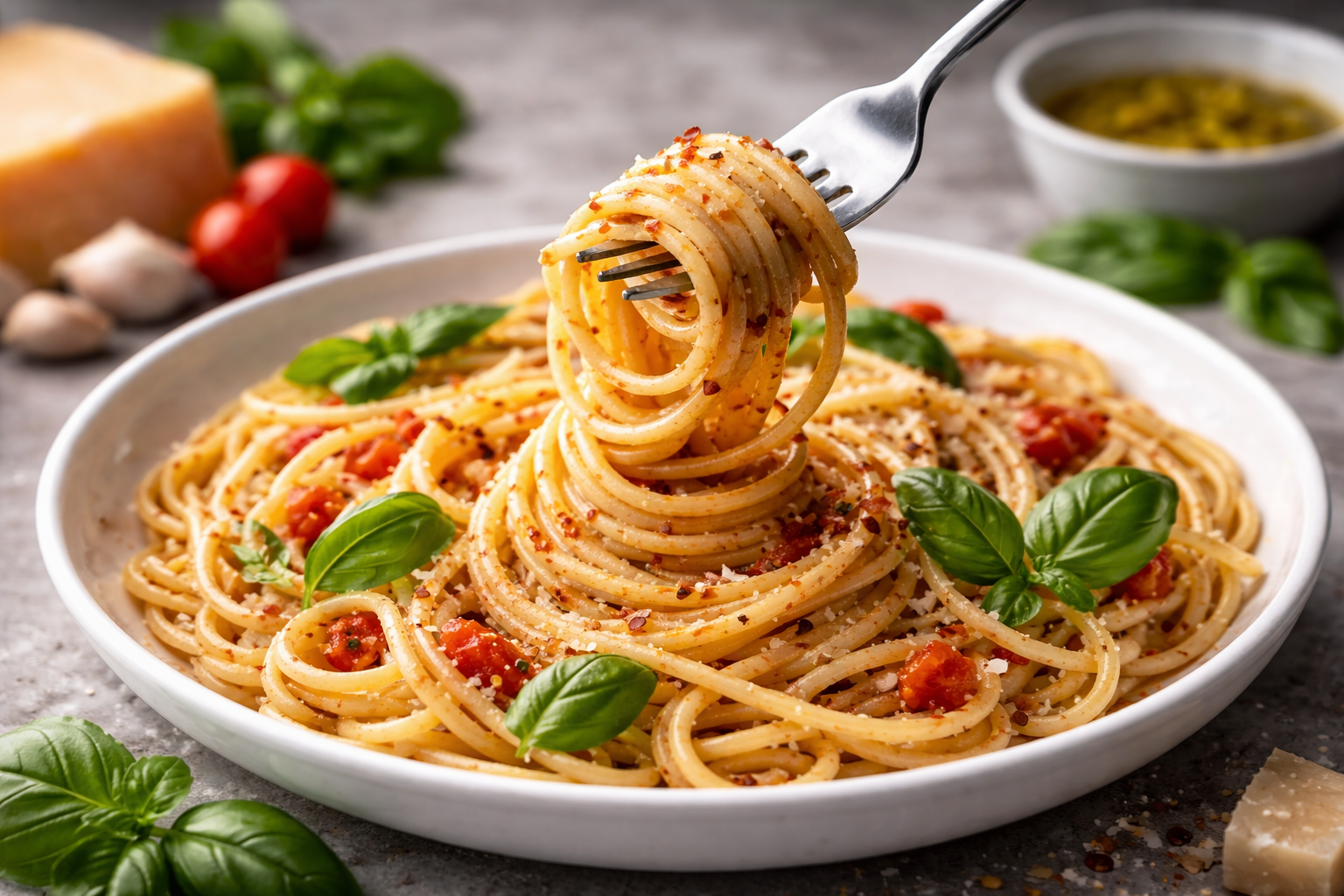
In Italy, this person has a name: una buona forchetta—literally, “a good fork.”
The expression is not a warning. If anything, it is a compliment.
A buona forchetta is not defined by how much one eats —though often, it is not exactly little—but by how one responds to food. It has nothing to do with body type. It points to something more precise: a person who approaches food with openness, curiosity, and visible pleasure, bringing to completion the cycle that forms around the table—almost sealing it with a response that leaves no doubt.
Because a meal in Italy is never a one-way gesture. It is an exchange.
Want to be the first to know about Italian food events, restaurant openings and culinary travel? Subscribe to the Appetito weekly newsletter.
Food is prepared, offered, shared within a structure shaped by care and expectation. The buona forchetta is the ideal counterpart: the guest who recognizes the effort, receives it fully, and rewards it in the simplest way—by eating with genuine pleasure. The success of the table lies not only in what is served, but in how it is received.
Italian does not merely say that someone “has” an appetite. When needed, it does something more exact: it gives that appetite a concrete form, translating it into a repeated gesture.
The fork is not just a utensil, but the sign of a behavior confirmed over time—a way of being that becomes recognizable. You are what you do, again and again, fork in hand, meal after meal.
Other languages, in this sense, stay further removed. English speaks of appetite; Spanish of eating well; German of being a good eater. All accurate, but descriptive rather than embodied. Italian, by contrast, remains anchored—almost stubbornly—in the visible act of eating with pleasure.
The French, it must be said, come closest—but only just. Avoir un bon coup de fourchette follows a similar intuition, though not quite the same logic. In French, one has it (avoir). In Italian, one is it (essere). The difference is not minor: it is the difference between possessing an appetite and actually embodying it.
The shared fork, inevitably, reawakens a familiar rivalry. The French guard their culinary stature; Italians do the same. Even a utensil, it seems, is enough to sustain the conversation.
So who said it first? The question, inevitably, arises.
Italians tend to answer without fanfare. When much of Europe still ate with hands or knives, the fork—as we know it—had already entered Italian courts, refining gestures and shaping habits. If the utensil later traveled north, then—so the reasoning goes—the expression may have followed.
Proof, as often happens in such matters, is elusive. The logic, however, is appealing.
And perhaps that is not the central issue.
Beyond language and origin, every culture recognizes its own version of the buona forchetta. Names change, gestures vary, but the figure remains constant: someone who knows how to receive food, respond with pleasure, and quietly confirm that the cook’s effort was worth making.
Italian gives this figure a sharper outline, closer to the gesture itself. But the substance is shared.
A buona forchetta does not belong to a language. It is simply recognized—at the table.
Hungry for Italian food idioms? Discover more of Samuel Ghelli's articles.
Fare la Scarpetta: The Last Sweep of the Plate
Finire a Tarallucci e Vino: When the Table Has the Final Word