

In Italian, food is rarely just food. It organizes time, relationships, and expectations. This column explores Italian sayings and proverbs as ways of thinking shaped at the table.
These expressions preserve that knowledge in compact form. Read literally, they speak about eating. Read more closely, they offer insight into how experience, pleasure, and social life are understood.
The aim is simple: to treat language as another ingredient—handled with care, tasted slowly, and shared. No prior appetite required. It tends to arrive along the way.
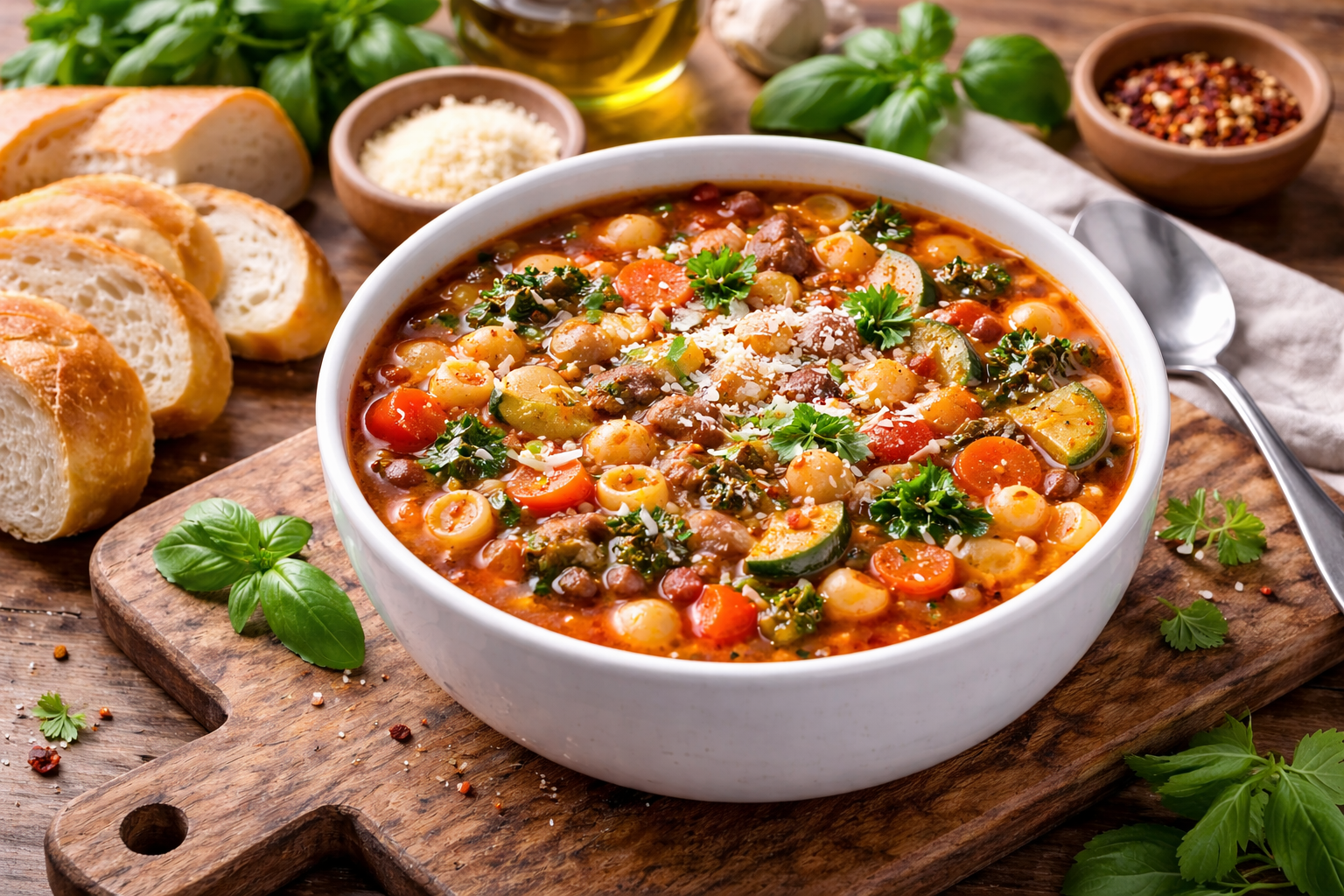
Essere una minestra riscaldata
Literal translation: "To be a reheated soup"
Meaning: A situation, idea, or relationship revived after its time—inevitably weaker than the original.
Some expressions are lyrical. Others are theatrical. Minestra riscaldata is neither. It is sober, almost austere—and precisely for that reason, exact. The phrase has circulated in Italian for at least two centuries, long enough for a household image to harden into social judgment. What begins in the kitchen eventually ends in the courtroom of public opinion—and rarely in acquittal.
It may seem surprising that, in a cuisine like the Italian one—where the reuse of leftovers has long been elevated to an art—a reheated soup should receive so little credit. After all, this is a culinary culture that turns stale bread into ribollita, leftover beans into fagioli rifatti, and wilted greens into verdure ripassate. But that is precisely the distinction. These dishes are not simply warmed; they are reworked—acquiring structure, depth, a second life. Reuse becomes invention.
Minestra riscaldata, by contrast, simply reheats; it does not reshape. No new composition, no shift in form—just heat applied to what has already completed its first expression. And just as a replica rarely rivals the original, a soup warmed again cannot sustain even its modest first appeal. Anyone who has reheated soup knows the small shift: the broth thickens slightly, the aroma grows quieter, flavors lose their brightness. What was once simple begins to feel slightly tired. The reheated version settles just below the original.
That quiet lowering—almost imperceptible, yet unmistakable—is the core of the idiom. Compared to its English approximations—“same old story,” “second time around,” “old flame”—the Italian expression carries a sharper inflection. The emphasis is not on sameness, but on diminution. It is not merely that something returns unchanged. It is that something essential has been thinned, eroded, gently reduced. The second instance lives in the shadow of the first.
The expression moves easily across contexts. In public life, it describes initiatives brought back without recalibration—ideas returned as though time had politely stood still. In cultural production, it hovers over sequels and revivals that rely more on recognition than on invention (a film remake, a sequel that returns years later, a nostalgic television reboot). The tone is rarely outraged. It is measured. What returns feels slightly weaker, subtly exposed to comparison.
Its most pointed application concerns relationships. Two former partners decide to try again. Friends smile politely. Someone, more realistic, murmurs: “Attenzione, è una minestra riscaldata!” There may be an initial glow—nostalgia is persuasive—but it rarely lasts. The same conversations resurface. The same silences return. What once felt intense now feels slightly smaller. Not dramatic. Just reduced.
Soccer—Italy’s other national language—offers an equally efficient example. A beloved coach returns to the club where greatness once seemed inevitable. Headlines speak of destiny. Fans buy the jersey again. And yet, a few months in, the comparison begins. The old magic looks thinner the second time. The return does not collapse spectacularly—it simply fails to rise. That is the essence of minestra riscaldata: not catastrophe, but a quiet lowering. The illusion may flare briefly. The decline, however, is inevitable.
In the end, to call something una minestra riscaldata is not to predict disaster. It is to acknowledge, with understated irony, that warmth can be restored—but freshness cannot. Some moments derive their force from immediacy, from conditions that do not easily return. Once cooled, they may be warmed again, but they never recover their first intensity.
And in that delicate distinction—between revival and renewal—lies the precision of the expression.
Hungry for more Italian food idioms? Discover more of Samuel Ghelli's articles.
L’Appetito Vien Mangiando: Why Appetite Comes With Eating
Avere Gli Occhi Foderati di Prosciutto: Ignoring What is Right in Front of You
Finire a Tarallucci e Vino: When the Table Has the Final Word