
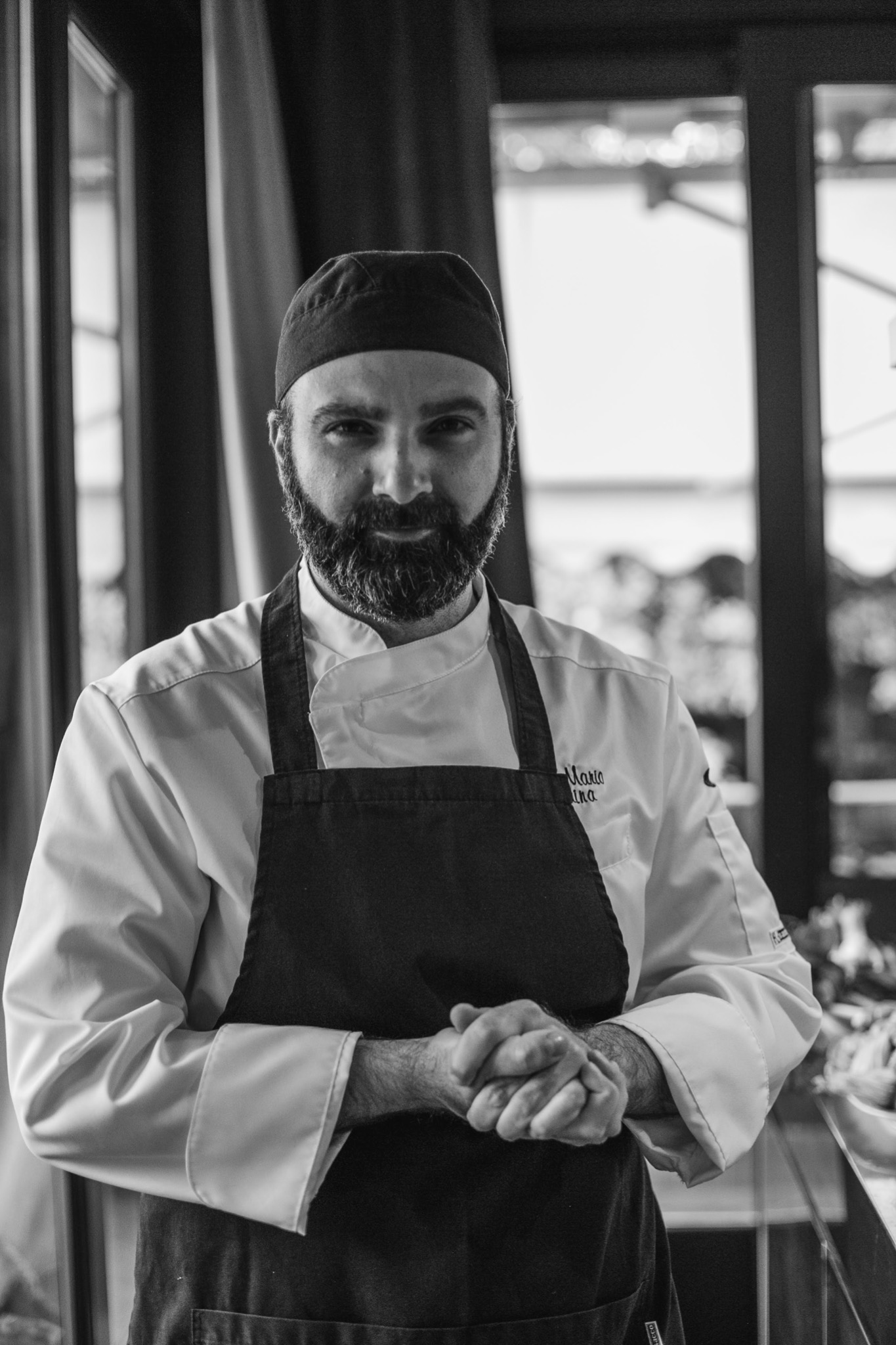
There is something eternal in an emotion. It outlasts the physical things: hands that made the dish; the kitchen where it was made; the table where it was eaten. It outlasts time. It outlasts the banality of intellectual frameworks that try to explain what food is and what food does. An emotion, once felt, does not disappear. It waits.
I have been thinking about this for many years, and I have come to believe that the most honest thing I can do as a chef, and the most honest thing I can do as a man, is to share the emotions that food has given me. Not the techniques or the trends. Not the vocabulary of the professional kitchen. The emotions. Because those are the only things worth passing on.
This regular column at Appetito is called "I Will Be Your Grandmother." I chose that title deliberately because a grandmother, in the Sicilian tradition I come from, is the first and most important teacher of the table. She teaches with smells, with gestures, with the sound of a pot on the stove at a certain hour of the evening. She teaches with love, which is the only pedagogy that truly works.
My gastronomic life was baptized in two kitchens. My father's mother, Nonna Pina, cooked with a refinement that seemed almost inherited from a noble household, yet poured entirely into popular sentiment. There was nothing aristocratic about her table, but there was a precision in everything she did, a dignity, as if each dish were a small act of devotion. My mother's mother, Nonna Anna, was the opposite: totally rural, imprecise, as delicious as she was instinctive. When her gestures produced what a culinary school would call a technical error, it became truth. I did not understand this as a child, but I do understand it now.
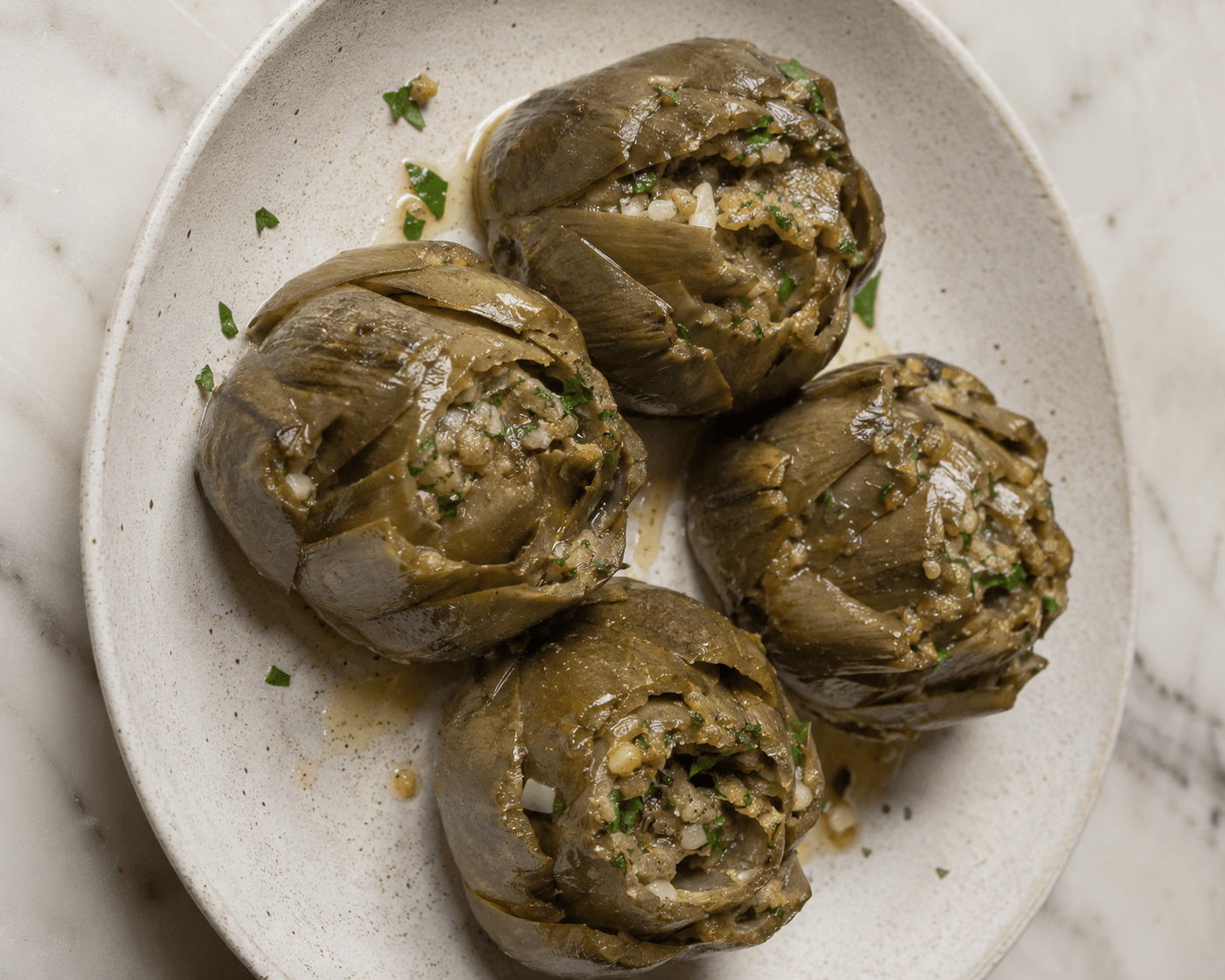
Both grandmothers made their own version of Carciofi Imbotiti — stuffed artichokes. This column tells the story of Nonna Pina's version. But the lesson belongs to both of them, and to all the grandmothers who cooked before them, and to all the ones who will cook after.
Want to be the first to know about Italian food events, restaurant openings and culinary travel? Subscribe to the Appetito weekly newsletter.
The artichoke season in Sicily runs from late March to late May. The variety Nonna Pina used was a local one — a variant of the Violetto Catanese, less purple than its name suggests, more green, very large and dark, with a density that tells you immediately it has grown slowly and in good soil. When you hold one of these artichokes in your hand, it has a weight to it. A seriousness. It is not a decorative vegetable. It is a vegetable that means something.
Around six-thirty or seven in the evening, Nonna Pina would begin. She prepared the artichokes whole, cutting the stem almost to the base, bruising the leaves gently on all sides to open them slightly, and then stuffing them. The filling was breadcrumbs made from homemade bread — semolina flour, sourdough starter, dried and reduced to mollica at home, never bought from a shop. Parsley. Pecorino in small pieces, light enough to melt inside. Extra virgin olive oil, abundant but perfectly calibrated — the magic, as in every Sicilian dish, is in this calibration. And garlic. I want to speak about the garlic for a moment, because it is important. Not just for this recipe, but for everything I will write in this column.
Craving artichokes for dinner tonight? Here are a few of Appetito's favorite artichoke recipes.
Nonna Pina cut the garlic into small but coarse pieces. It was not minced fine or left whole to be removed after cooking. It was so coarse that sometimes when you bit into a petal, you would encounter a piece. Today, this would be called a mistake. The modern kitchen has decided that garlic should be invisible, grated to a paste with a microplane, or left whole and pulled out before serving so that only its ghost remains. I reject this entirely. The coarse piece you bite into is not bad manners. It is history and truth. It is flavor education that becomes pleasure — and the fact that we have begun to call it a culinary sin is itself the real error. This is what I mean when I say that eating well today means eating truth, not eating perfection.
Once stuffed with the filling pressed abundantly into every open petal, the artichokes were placed upright in a pot. Nonna Pina used a pressure cooker. I can still hear the sound of the whistle during the late evening hours, that particular rhythm that meant dinner was coming, that the house was alive, that my grandfather was already at the table waiting. He waited every evening,
seated, after a day of important work. The smell of the artichokes filled the house before the pot was even opened.
For the version I give you here, a heavy covered pot works beautifully. There is no pressure cooker required. The artichokes cook in a bath of extra virgin olive oil, water, a little white wine, and salt, covered, over medium-low heat, until the outer leaves yield and the heart becomes fragrant and soft. The time is not fixed. You will know when they are ready because the house will smell the
way my grandmother's house smelled.
When they were served, slightly cooled on a large plate, exactly as they came from the pot, the eating began. And this is where I ask you to pay attention, because what I am about to describe is not just a way of eating an artichoke. It is a ritual and a lesson It is, I believe, one of the most beautiful things a table can offer.
You take the first petal. It is fibrous, still a little resistant. Inside it, as if in a small spoon, a portion of the breadcrumb filling has collected, slightly melted, softened, and consolidated into something that is no longer filling and not yet flesh. You scrape it with your upper incisors. You take all the softened flesh of the artichoke and all that seasoning, and you leave only the fibers on the plate. Come memoria dell’accaduto - as a memory of what happened.
The petals become progressively softer as you move inward. The desire grows to take two at a time, three at a time, with what I can only call signorile foga, a kind of noble urgency, an aristocratic eagerness that has nothing aristocratic about it and everything human. Until you reach the central part - the heart. And attached to the heart is the base of the artichoke, which has formed a slight crust against the bottom of the pot — the final bite, superior to all the others already eaten.
Having finished one artichoke, it is very difficult not to start another.
Some always remained for the next day. Eaten cold, they were as good as when just made, if not better. There is something in a dish that has rested, that has had time to think about itself overnight, that no amount of technique can replicate. The cold artichoke the next morning, eaten standing at the kitchen counter before anyone else was awake, was its own kind of perfection. It was not the kind that belongs to the professional kitchen, but the kind that belongs to truth.
These are the emotions of an artichoke. They are the child of my grandmother. And my grandmother was the child of her love for her family. I am giving you pieces of myself in this column, because these are the only things worth sharing.