

In Italian, food is rarely just food. It organizes time, relationships, and expectations. This column explores Italian sayings and proverbs as ways of thinking shaped at the table.
These expressions preserve that knowledge in compact form. Read literally, they speak about eating. Read more closely, they offer insight into how experience, pleasure, and social life are understood.
The aim is simple: to treat language as another ingredient—handled with care, tasted slowly, and shared. No prior appetite required. It tends to arrive along the way.
Tutto fa brodo
Literal translation: “Everything makes broth”
Meaning: Even what seems negligible can still contribute
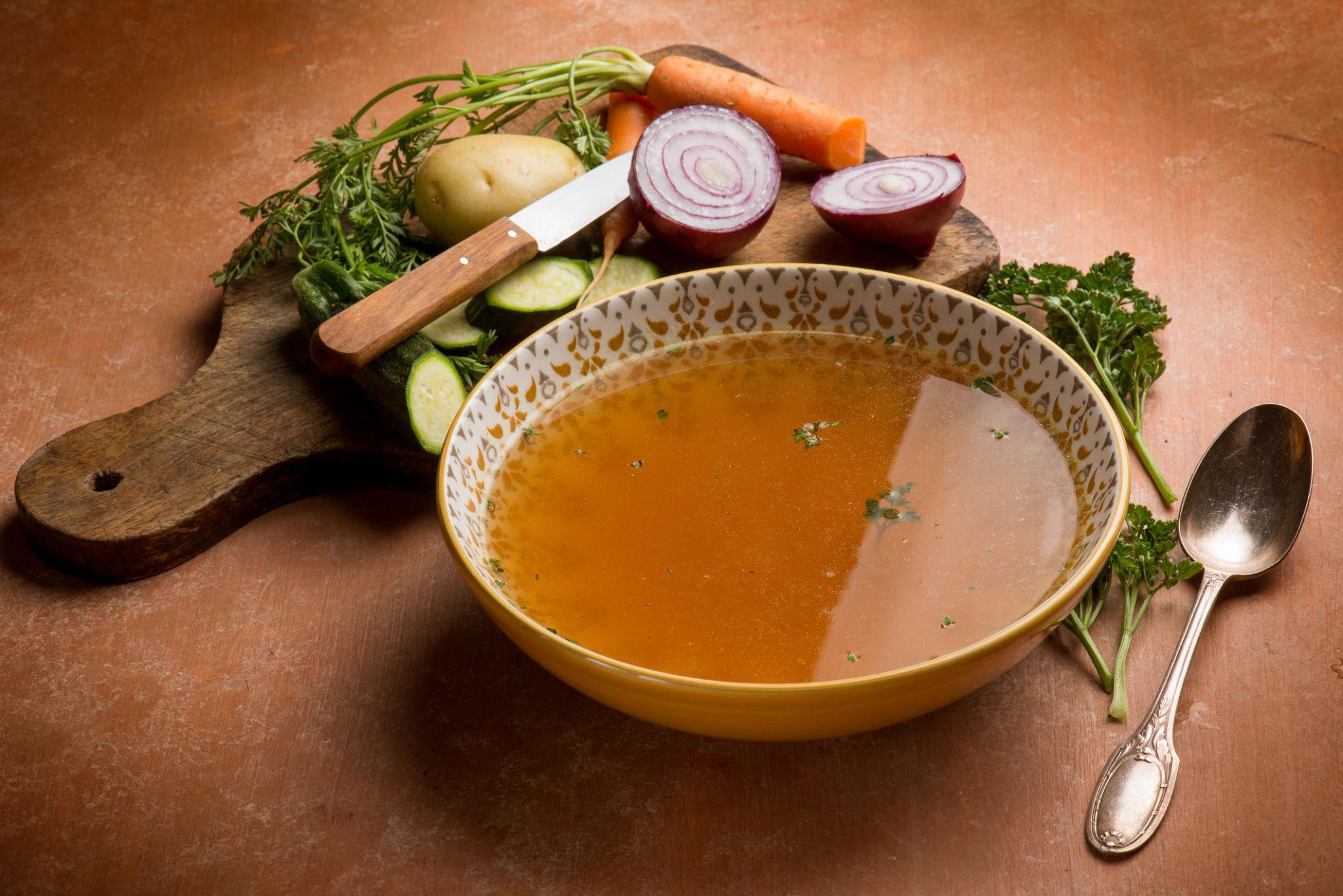
Not so long ago, many Italian kitchens operated with a little quiet system always running in the background: a bowl on the counter, a bag in the fridge, sometimes an entire freezer drawer filled with things that looked one step away from the trash. Celery ends. Carrot trimmings. A Parmesan rind now too hard to grate. Stretching ingredients was not a culinary trend, or a moral performance. It was simply an ordinary domestic reflex, shaped by the assumption that discarding food too quickly was a luxury one could not afford. Sooner or later, all of it would end up in a pot. Tutto fa brodo.
At first glance, the phrase sounds almost comically optimistic. Everything makes broth? Really? Apparently, yes. Italian, in this case, sets the bar for usefulness impressively low. The point is not that every ingredient is exceptional. Quite the opposite. The genius of broth is precisely that nothing involved needs to be.
Be the first to know about Italian food events, restaurant openings and culinary travel. Subscribe to the Appetito weekly newsletter.
In that older kitchen economy, ingredients were not expected to shine individually. They were expected to cooperate. A single scrap could do very little alone. Together, however, they could keep a meal—and sometimes an entire household—going. The goal was not taste in the modern sense, nor refinement, balance, or culinary self-expression. It was making sure there was always something to put on the table, broth after broth.
Tutto fa brodo preserves this logic with remarkable efficiency. It does not claim that everything is important, valuable, or worthy of applause. It simply refuses premature exclusion. What appears marginal does not need to prove itself before entering the pot. It only needs to contribute something. Broth handles the rest.
The material conditions that produced this mentality have largely changed. Contemporary Italian kitchens are not universally governed by scarcity. Ready-made stock exists. Supermarkets are full. People buy “artisanal broth” in glass jars, which would probably confuse several Italian grandmothers beyond repair. And yet the expression survives, carrying forward a mentality that has outlived the circumstances that produced it.
Outside the kitchen, the phrase travels effortlessly. A small contribution to a group gift. A half-formed idea in a meeting. An imperfect attempt that does not solve the problem but keeps things from collapsing into nothing. Tutto fa brodo does not promise brilliance. It makes room for imperfect participation.
English offers a familiar equivalent: “Every little bit helps.” Close—but not identical. “Little” already measures and classifies; it labels the contribution before conceding that it may still matter. Tutto fa brodo begins elsewhere. It does not sort. It absorbs. Tutto means everything—not because all things are equal, but because once inside the pot, distinctions become less important than participation itself. English imagines accumulation. Italian imagines fusion.
That difference matters. English tends to recognize usefulness afterward, once the pieces have visibly added up. Tutto fa brodo operates earlier, while the outcome is still uncertain. It does not ask whether the contribution will change everything. It merely declines to discard it in advance.
Which may explain why the phrase remains so easy, so casual, so oddly reassuring. It accompanies small gestures, modest efforts, partial solutions. It asks for neither excellence nor heroism. Only presence. Only partecipation.
What began as a literal pot on the fire became, quietly, a way of moving through the world: not everything needs to dominate in order to matter. Sometimes it is enough simply to enter the broth.
Tutto fa brodo.