
Since the introduction of the first "café espresso" machines at the Milan Fair in 1906, a passionate love affair between Milanese and coffee has burned hot. It is also in Milan, the cosmopolitan city through which global trends first reach Italy, where a leafy green challenger to coffee domination is sprouting up.
Not since caffè d'orzo (barley coffee) was popularized as a substitute during World War II—due to scarcity—has a coffee alternative stood up to the coffee scene quite like matcha does. Teas imported from Asia are hardly a new phenomenon for Italians, but, with its roots in Japanese tea ritual and association with American wellness obsession, matcha is ushering in a new generation of cafe culture in Milan.
Whether jostling for a standing spot at the busy bar in a grungy tabbacchi, or sitting for a moment with a cappuccino and a pastry, coffee is a codified culture. No matter the context, it comes with a strict set of expectations about preparation and consumption. An espresso should cost around 1€, is never taken to go, and, while the no-cappuccinos-after-lunch rule is widely exaggerated, certain beverages are indeed more or less acceptable based on the circumstances. This complex backdrop of rules might seem impenetrable to interference, but matcha is making a mark by entering through an entirely separate lane.
Get more stories like this. Subscribe to Appetito for Italian food, travel and culture delivered weekly.
Matcha origins & wellness trends
Once a quiet ceremonial staple in Japanese tea culture, reserved for particular occasions and practitioners, matcha made its way to Italy by way of American and British culture and media.
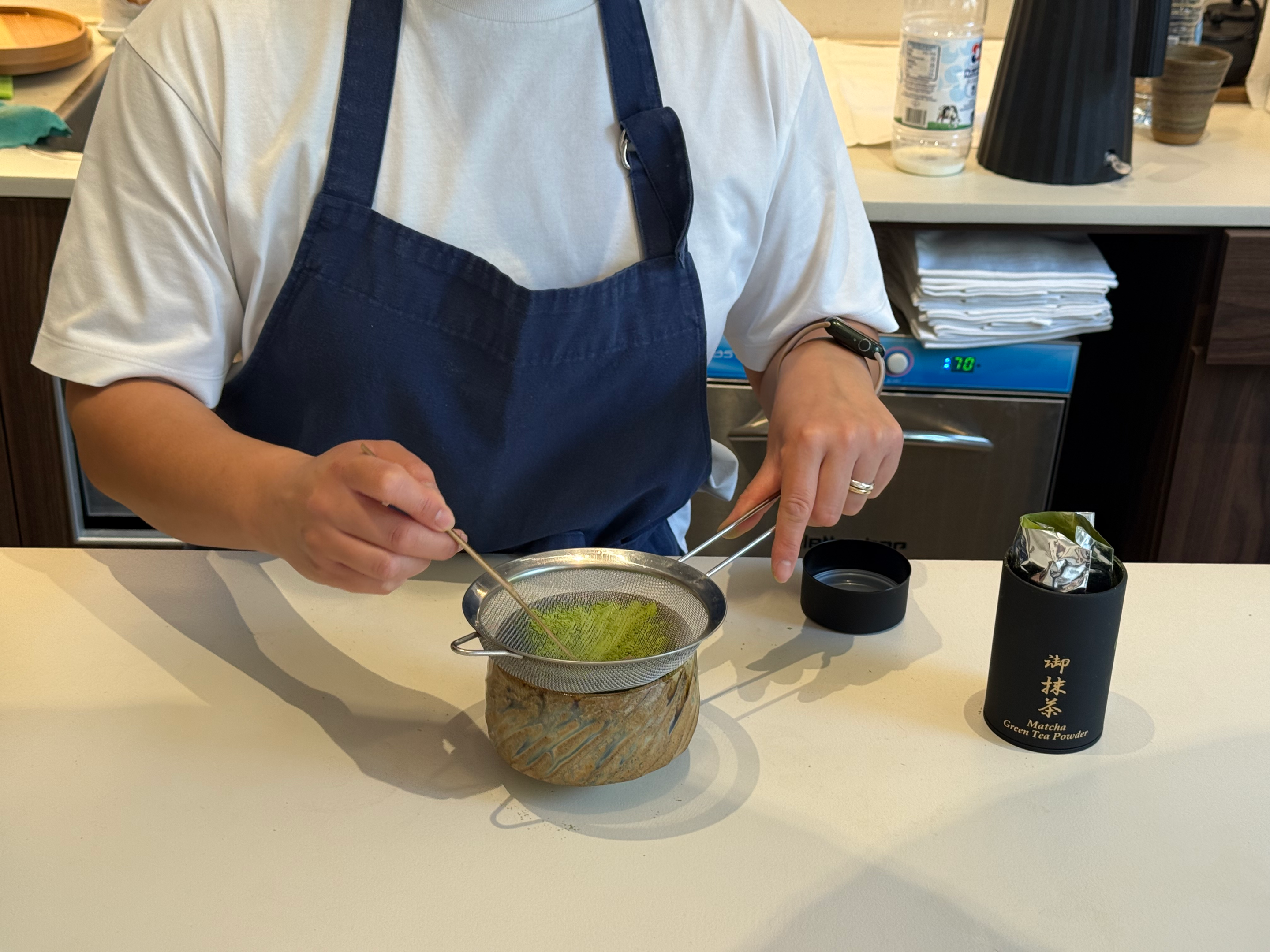
The tea is remarkably difficult to procure, sourced from only the tiniest leaves on plants that take several years to mature. Unique tools and meticulous preparation, from stone grinding and hand-whisking, kept the product a relative curiosity outside of Japanese tea houses for a long time. Lately, the particular properties of the drink, from antioxidants to caffeine without the crash, have dragged matcha into the spotlight as a wellness darling in the U.S. and U.K. markets.
In those countries where matcha is perceived as a premium health product, it is tied to clean eating, mindfulness and aspirational lifestyle branding. Brands tap into this trend through wellness-centric messaging and visually compelling presentations aimed at health-conscious young people. Consumers are drawn to the purported benefits, especially an energy boost without a crash, making it an appealing alternative to daily coffee.
The recent matcha surge primarily entered the Milan lexicon by way of this U.S., U.K., and other European media and context, another step removed from its Japanese roots, and already heavily steeped in Western, functional messaging.
One Milan matcha dealer's take
Kenzo Terada is a Japanese Tea Advisor, the equivalent of a sommelier for tea, and is bridging the gap between Italy and his country, Japan, through his brand Teaste It. Conscious of consumer habits, Terada argues that a tactful slow infusion of tea into Italian culture is the way to approach assimilating the product here, unlike the flashy social media-forward strategies that may work in other markets. He calls Italy’s food and drink culture “a bit conservative,” but argues that when Italy does accept something new, it sticks, rather than fizzling after four or five months as consumers move on from rainbow bagels or avocado toast to the next trendy thing.
Terada’s background in the fashion industry is on full display in his brand. His own Mocha Cha product, a tea designed for brewing in a moka pot, addresses the practical barrier of Italian families owning only coffee equipment, unlike families in Japan, who all have teapots. His communication strategy employs reference points familiar to his audience, such as referencing tomatoes, mushrooms, broth, and Parmigiano to explain umami flavor to Italians who may expect only bitterness and astringency from tea.
Further, comparing matcha to broth allows him to emphasize how slow preparation and generational artisanship influence quality. As matcha demand skyrockets, putting pressure on growers, grinders, and global supply chains, Terada is optimistic that matcha's popularity will serve as a gateway to broader popular appreciation of Sencha tea infusions that are simpler to prepare at home.
The Milan scene and its future
In Milan, the matcha scene is already a broad spectrum. Rooted in Japanese tradition, with interiors that emulate teahouses, Emoraya Shop, Moko’s Matcha, and Kagurazake Saryo serve lattes and drinks alongside bright green matcha-loaded desserts. Pan keeps one foot in Asian flavor and tradition, with a sleek green-tiled interior rife with Milanese design influence. Other new purveyors, like Atelier Prato and Serra di Quartiere, draw aesthetic inspiration from the Nordics with minimalist interiors.
Ritual is already building around matcha at Noï, The Seed, and Bootiful Studio, where the tea is served directly adjacent to fitness classes. And the ritual is not only workouts; Awaken matcha can be found popping up around the city with interactive social workshops, and the brand’s product is served at Mica Bar, where matcha can be sipped over arts and crafts with the community.
As Italy continues to watch American and British trends in food and wellness, will espresso dominance give way to this grassy green powder? Likely not entirely. The espresso bar is too deeply woven into the Italian social fabric to be unraveled by a single ingredient. However, matcha is doing something far more interesting than replacing coffee: it is expanding the meaning of cafe culture in Milan.
As the city continues to act as Italy's gateway for global trends, the presence of matcha indicates a more verdant future—one where a morning shot of espresso and an afternoon cup of tea exist side by side in a city with one foot planted in Italian tradition and the other stepping toward change.