

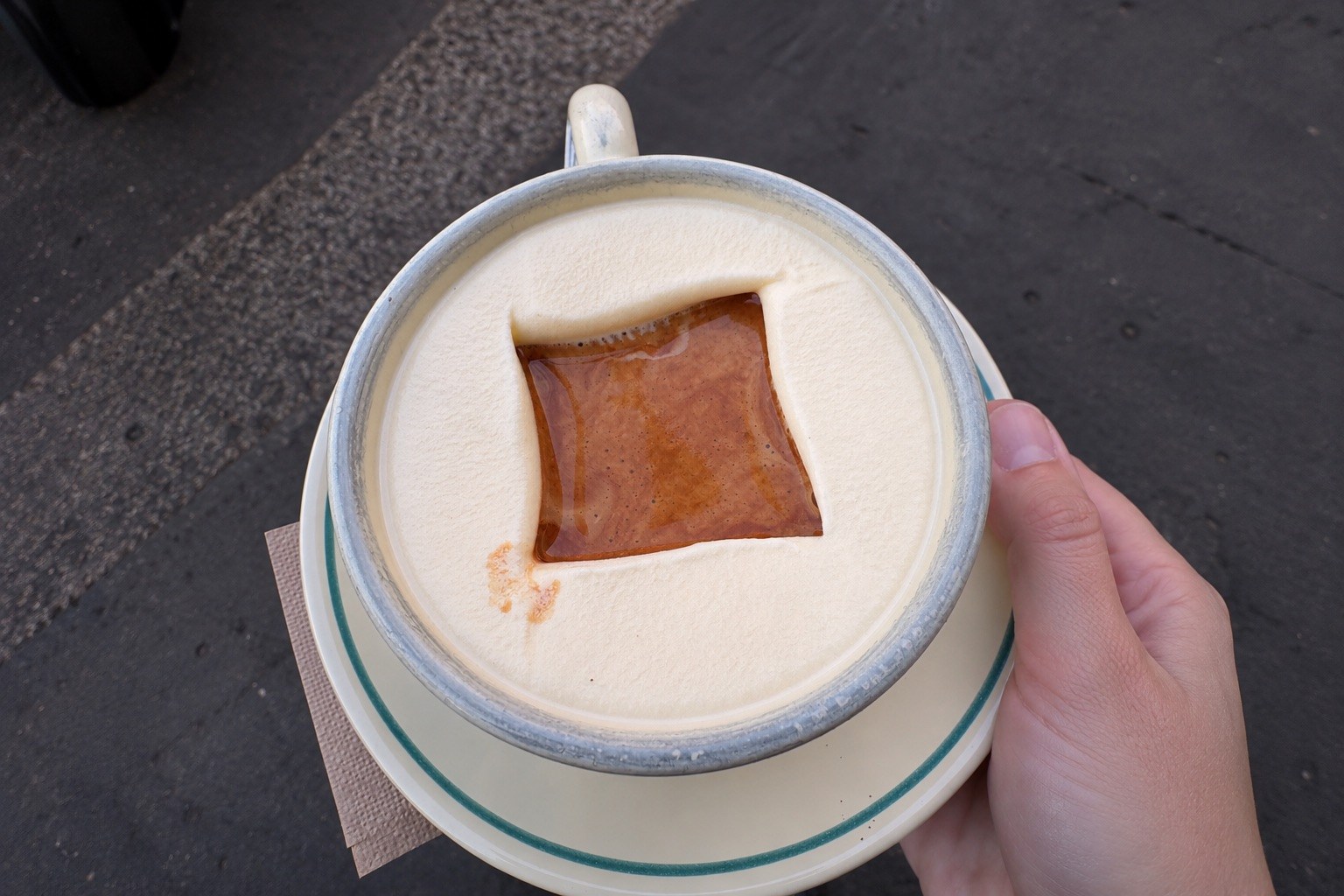
The most recognizable thing about Gelateria Umberto's affogato is a square hole. A server packs gelato into a branded cappuccino cup, carves a square well into the center and fills it with espresso. Against the pale gelato, the coffee looks almost impossibly neat. The pistachio version, finished with crumbled nuts, is gorgeous. It's a dessert with a close-up built in.
I had watched versions of this dessert get prepared and eaten repeatedly on Instagram before arriving in Milan. Umberto wasn't a place I happened upon while wandering. It was already on my list of things I had to eat in Italy because of how many videos I had seen in my feed. By the time I reached Piazza Cinque Giornate, a cup of coffee and gelato had become a culinary destination.
I was happy to organize part of my vacation around dessert. Italy is full of important things to see, and I intended to give this one the attention it deserved. If the algorithm wanted to inspire my life by recommending gelato with espresso, we could work together.
The shop was much smaller than its presence on my phone suggested: cute, compact and busy, with a line out the door. There were two lines, one for affogatos and one for gelato. Most people were waiting for affogatos. Most people were tourists waiting to film their own Instagram reel. A business founded in 1934 was managing the distinctly contemporary problem of everybody arriving to film the same 60 seconds.
Affogato means “drowned” in Italian, referring to the coffee poured over the gelato. The classic preparation is a scoop of ice cream in a small cup topped with warm, unsweetened coffee. The dessert's precise birthplace and inventor are uncertain.
Umberto has a history of its own. According to the shop's account, its founder was born in Pozzuoli in 1907 and learned gelato-making at Peppino in Naples. He moved to Milan in the 1930s and opened his gelateria at Piazza Cinque Giornate 4 in 1934. The war interrupted business, but the shop has remained open since 1945. It passed to his daughter Cesira and son-in-law Elio, then to his grandson Stefano. The family describes a deliberately limited selection made in small batches, with seasonal fruit and custard made from eggs.
Inside, there are several affogato flavors to choose from, and the workers were churning out orders. They looked tired and over it. Fair enough. I had been looking forward to this cup for weeks; they had probably made enough of them to lose all interest in its geometry.
Want to be the first to know about Italian food events, restaurant openings and culinary travel? Subscribe to the Appetito weekly newsletter.
I ordered a Crema di Umberto affogato. The tables were full of patrons sipping their treats, so I took mine outside. The gelato cooled the espresso immediately. Its sweetness tempered the coffee's bitterness without overwhelming it. The result was balanced, perfectly cool and delightful. I stood there eating, or drinking, it, a distinction that seemed less pressing with every sip. Coffee and dessert had settled their differences in a cappuccino cup.
There is a reason this particular Italian dessert has been so hard to escape online. Umberto's surge was documented by Corriere della Sera in October 2025. Reporter Gianni Santucci described a video labeled “Best affogato - Milan” with 12 million views and visitors arriving with videos on their phones to show what they wanted. Customers filmed the preparation and posted their own versions, extending the cycle.
By my visit, that attention had translated into millions more views and a line out the door. But the attraction still depended on someone behind the counter making a good affogato.
This little stop in Milan was worth making it part of the trip. I got to visit a family gelateria that had been there for generations, order something I'd been excited to try and enjoy it outside in Milan. The affogato was perfectly cool, I was in Italy, and I got my viral treat.