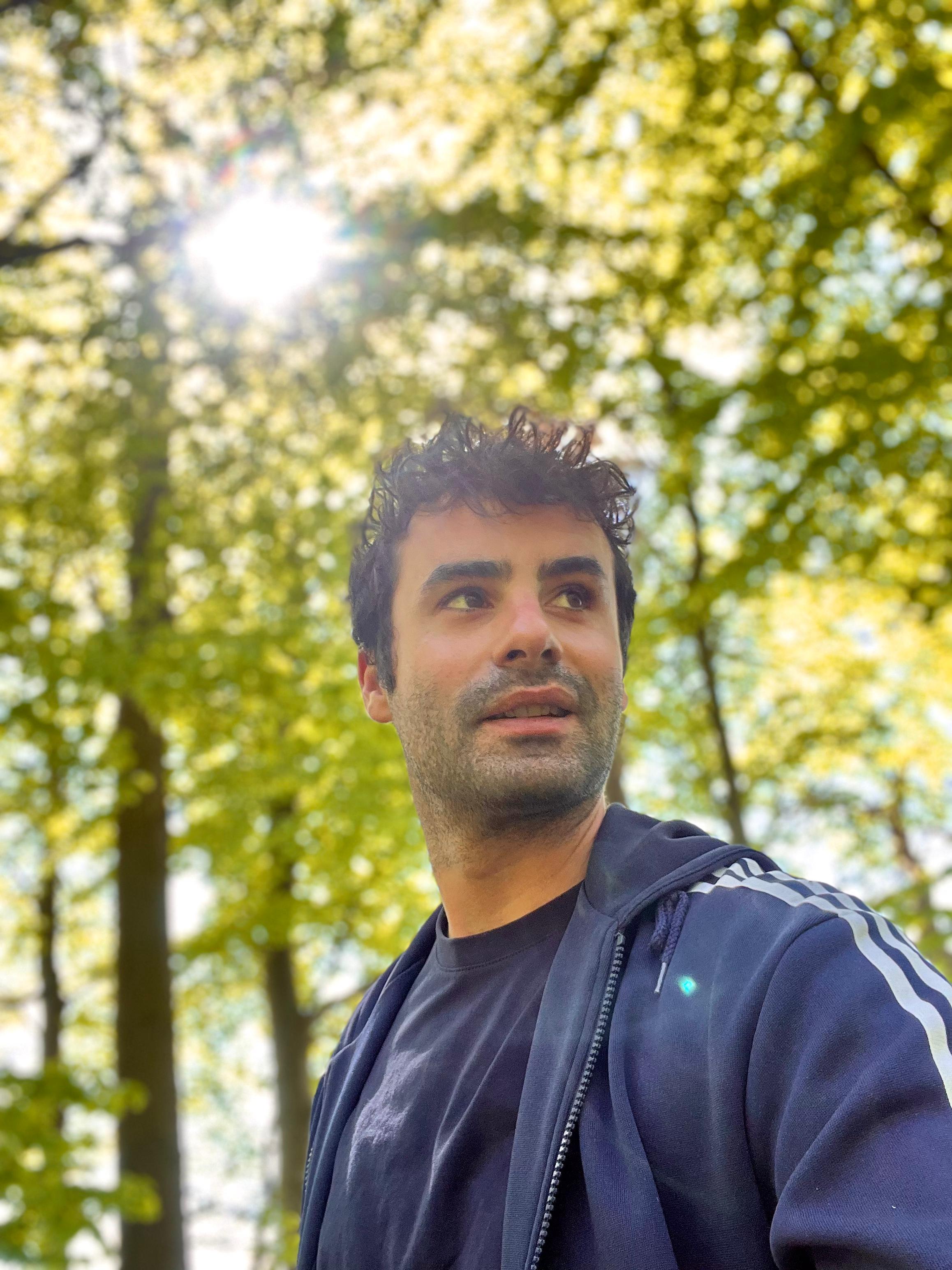

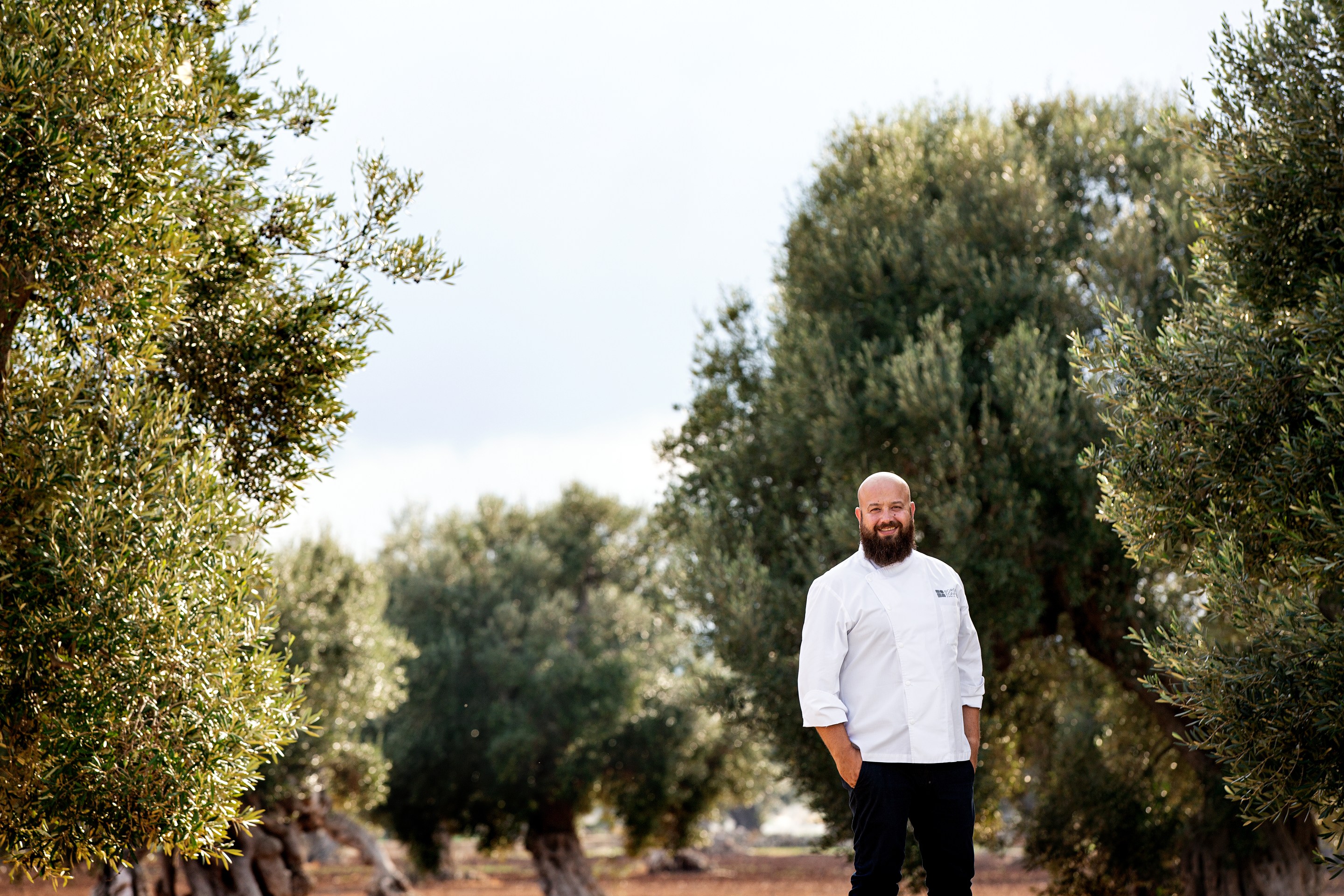
At Due Camini, the Michelin-starred restaurant at Borgo Egnazia in Puglia, Chef Domingo Schingaro approaches cooking as an extension of the land itself. His work is deeply tied to the region’s agricultural heritage, from regenerative gardens to heirloom seeds preserved through the resort’s Seed House initiative.
As Borgo Egnazia prepares to reopen for the season soon, Schingaro shared how biodiversity, collaboration with farmers, and hyper seasonal ingredients shape the menus at Due Camini and reflect the deeper cultural spirit of Puglia.
Chef Schingaro discusses his philosophy, the role of the Seed House, and how Puglia’s landscape continues to inspire his kitchen:
How would you describe your culinary philosophy at Due Camini today?
My philosophy at Due Camini is ingredient-led and deeply connected to the agricultural reality that surrounds us. The kitchen is no longer separate from the land, it is an extension of it. Every dish begins with what is grown in Borgo Egnazia’s regenerative gardens or recovered from heirloom and endangered seed varieties cultivated on site.
What does the Seed House concept mean to you personally?
The Seed House represents a place of research and preservation, but also of dialogue. It allows us to work alongside farmers, agronomists and fellow chefs to recover varieties that are often out of commercial circulation and to transform this shared agricultural knowledge into a living culinary language.
How do regenerative farming and hyper seasonal sourcing shape your daily work in the kitchen?
Working with regenerative gardens cultivated without chemical inputs changes our entire approach to time. It means adapting constantly to the rhythm of cultivation from research and recovery to cooking and sharing, allowing biodiversity and seasonality to guide the menu rather than imposing an external structure upon it.
Want to be the first to know about Italian food events, restaurant openings and culinary travel? Subscribe to the Appetito weekly newsletter.
Which ingredients from Puglia are inspiring you most this year?
This year I am particularly inspired by the first harvests coming from the Seed House project. Two vegetables that have caught my attention are mugnoli and collarizz, traditional Puglian varieties that are still little known outside the region.
How do you balance tradition with modern technique in your dishes?
For us, innovation begins with preservation. By working with seeds, traditional cultivation methods and local agricultural knowledge, modern technique becomes a way to honour rather than replace the cultural memory embedded within Southern Italian cuisine.
When Borgo Egnazia reopens this season, what can guests expect to feel at the table?
Guests can expect a table that captures the immediacy of the landscape, from the fragrance of freshly picked herbs to the texture of sun ripened vegetables. Each dish is intended to evoke a sense of place and season through aroma, warmth and depth of flavor.
How does the landscape of Puglia influence your menus?
The landscape is our primary reference point. Every menu reflects the agricultural knowledge and biodiversity of the region, translating what is grown locally into a gastronomic expression that remains faithful to place while open to new perspectives.
What role do local farmers and producers play in your creative process?
Local farmers and producers are essential collaborators in our work. Through ongoing dialogue, we exchange knowledge, stories and techniques, allowing the creative process in the kitchen to evolve alongside the people and practices that sustain Puglia’s agricultural heritage.
How has earning and maintaining a Michelin star changed your perspective as a chef?
Receiving a Michelin star certainly strengthens your sense of responsibility. Over time, however, it also brings a deeper sense of awareness. For me, the star is not an endpoint but a reminder that the work must continue to evolve. It pushes the team and myself to stay focused on what truly matters: the quality of the ingredients, the integrity of the work in the kitchen, and the connection between the land and the plate.
What do you hope guests understand about Southern Italian cuisine after dining with you?
First of all, I believe it is important to say that there is not just one Southern Italian cuisine. Every region has its own traditions, ingredients and cultural identity. What I hope guests understand after dining with us is something deeper about Italian food culture as a whole.
Italian cuisine was recognized by UNESCO not for a single recipe or a single chef, but for the way we approach food as a culture. In Italy, food is never only about nourishment. It is about sharing, gathering around the table, and celebrating rituals that connect people to one another and to the land.
Through our dishes at Due Camini, we try to express that cultural spirit as much as the flavors themselves.
Interested in learning more about Puglia? Read Appetito's Italian travel and dining coverage.