
In a city filled with old school Italian instituations, Chicago’s Monteverde Restaurant & Pastificio has carved out something distinctly its own. Opened by James Beard Award winning chef Sarah Grueneberg, the restaurant has become known for its handmade pastas and seasonal Midwestern ingredients.
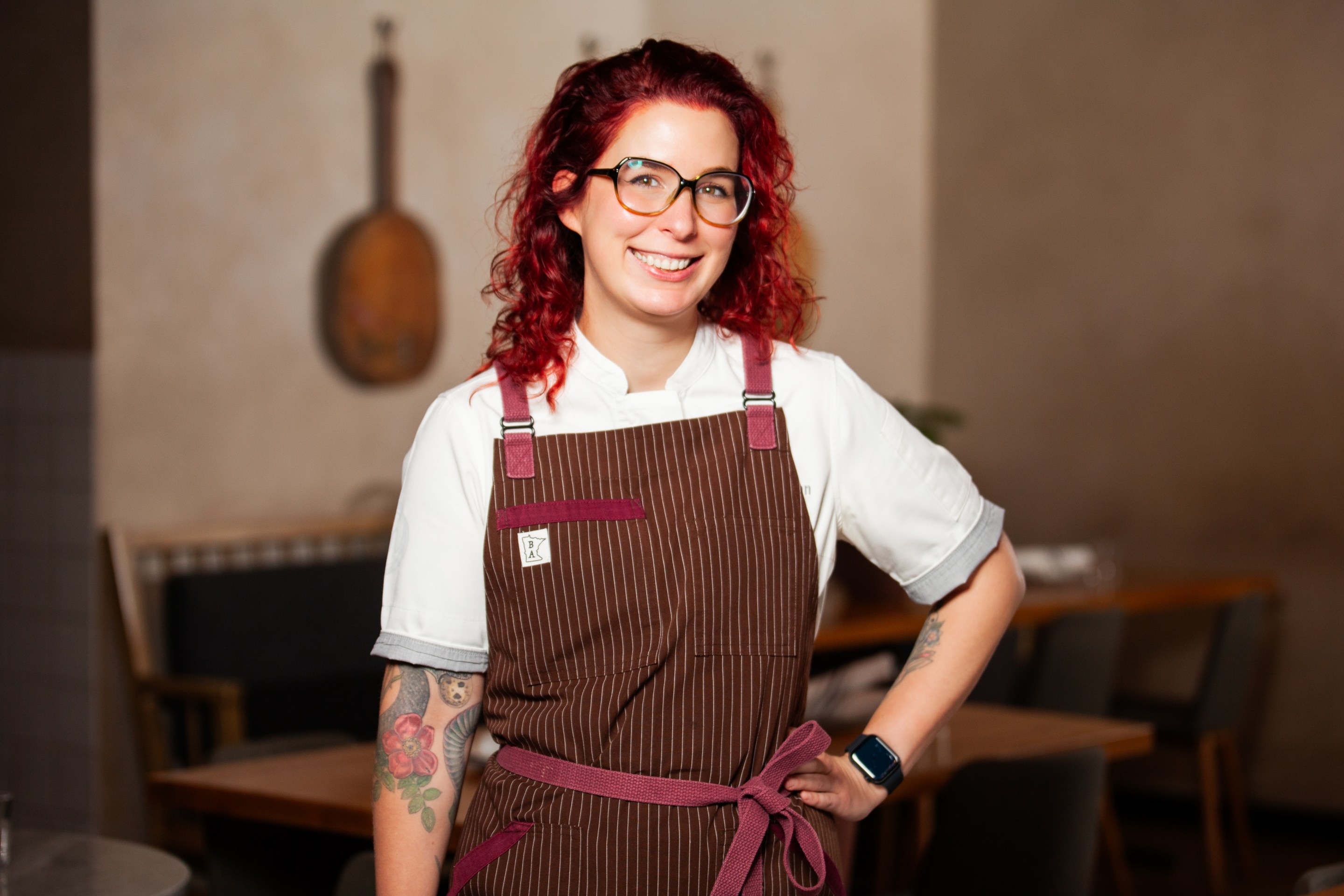
At the center of the restaurant is the pastificio, where guests can watch dough rolled, extruded, filled, and shaped, turning pasta-making into part of the dining experience itself. But while Chef Sarah remains the creative force behind Monteverde, one of the restaurant’s rising voices is executive chef Bailey Sullivan, recently named a 2026 James Beard Emerging Chef Award nominee.
Sullivan first joined Monteverde nearly a decade ago as a line cook. Today, she helps lead one of the country’s most celebrated Italian kitchens while developing a style she describes as “atipica” Italian cooking, one that blends deep respect for Italian culinary traditions with playful, unexpected ideas.
Sullivan recently shared with Appetito her thoughts on pasta innovation, Top Chef, and where she believes Italian cooking in America is headed next.
Explore more Chicago Italian restaurants and chef spotlights at Appetito.
How would you define your approach to “atipica” Italian cooking?
To offer a different approach to this type of cooking, it was important to first learn and respect tradition. Once you understand what makes classic dishes special and unique, you can really start having fun, which allows me to play with new flavors, reinterpret old techniques, and flip familiar ideas on their head.
What drew you to Monteverde initially, and what made you stay and grow within the team?
What initially drew me to Monteverde was Sarah. I met her while working as her assistant during a Ramen Battle at Yusho, where I was a line cook at the time. She was such a delight to work with, her dish was killer, and we bonded pretty quickly.
A few months later, I had a meal at Monteverde, and it was incredible. Naturally, the next step was to stage. That experience was unlike any other. I could immediately tell Monteverde was beyond special and had a work culture I would fall in love with.
When I started, despite my love of noodles, I knew very little about the Italian side of pasta, but I quickly became immersed in it. From there, I stepped into a sous chef role and began teaching and mentoring line cooks, developing new dishes, building systems, and keeping work culture at the center of how I lead. I was hooked. This June will mark 10 years for me at Monteverde.
How has working under Sarah Grueneberg shaped your perspective as a chef?
Working with Sarah has shaped not just my career, but really my entire life. I’d like to think we’re kindred spirits. Over the last decade, she has taught me so much about being a great Italian chef and an overall great human being. She has shown me the importance of making the best decisions for our team, for our guests, for the food, even when they’re the hardest or scariest ones.
We challenge each other constantly to grow, lead with integrity, and push for excellence. Above all, I think she taught me that ‘it’s the hard that makes it good.’
Can you walk us through how a new pasta dish comes together from idea to execution?
Usually, the first inspiration for a new pasta comes with the changing of the seasons. Most recently, I was inspired by winter produce and wanted to make celery root the star of a new filled pasta. Celery root is sweet yet vegetal, so the question became: how do we balance it?
I was inspired to pair it with a Dijon and white wine braised rabbit ragù that leaned a little more French in flavor. It was delicious, and in the right proportions, it played more as a supporting character than the star. Sarah then had the idea to incorporate a beautiful, aged goat gouda into the filling instead of the parmigiana I was playing around with. Once we tried that, the whole dish clicked.
Now, as spring onions and asparagus start popping up, my brain is already back in R&D mode, looking for the next seasonal pasta.
How do you balance respecting Italian culinary traditions while still pushing them forward?
For me, pushing Italian food forward isn’t about reinventing it for the sake of being different, but is more so about understanding the cuisine deeply enough to evolve it with intention and respect. Nothing makes me happier than when a dish’s components read ‘atipica’ but the soul of the dish itself gives nothing but love and respect to Italy.
How has your experience on Top Chef influenced your cooking or leadership style?
My experience on Top Chef was a huge lesson in remembering that the food I’ve been studying and learning about my whole life is special. Being surrounded by so many talented chefs I was in awe of made me hesitate at times. I found myself worrying more about cooking what I thought I ‘should’ be cooking instead of what truly brings me joy.
It reminded me that the most meaningful food comes from a place of authenticity.
What does being named a James Beard Emerging Chef nominee mean to you at this stage in your career?
I am beyond grateful and humbled by this nomination. Being named an Emerging Chef nominee feels incredibly meaningful at this stage of my career. Awards are never the reason you do the work, but they can be a powerful reminder that the work matters.
For me, it feels like recognition not just of my cooking, but of the years of growth, mentorship, and the team it takes to get here. This award is never reflective of just one person, but of the collective.
I’ve spent nearly a decade at Monteverde learning, failing, improving, and helping build something bigger than myself. To be recognized alongside so many talented chefs is both humbling and motivating. More than anything, it feels like encouragement to keep pushing myself, supporting my team, and working toward making this industry a better, more sustainable place for the people in it.
Where do you see the future of Italian cooking in America heading, especially through your lens?
I think the future of Italian cooking in America is rooted in a deeper respect for both tradition and individuality. I hope people genuinely want to understand the origins of dishes, regional differences, the stories behind ingredients, and why certain techniques matter.
At the same time, I think there’s more room than ever for chefs to bring their own perspective to Italian food. Through my lens, it’s about honoring the foundation while allowing your own experiences, your environment, and your creativity to shape the final dish.
Learn more about chef Bailey Sullivan and Monteverde Restaurant & Pastificio on their Instagram.
Want to be the first to know about Italian food events, restaurant openings and culinary travel? Subscribe to the Appetito weekly newsletter.