

In Italian, food is rarely just food. It organizes time, relationships, and expectations. This column explores Italian sayings and proverbs as ways of thinking shaped at the table.
These expressions preserve that knowledge in compact form. Read literally, they speak about eating. Read more closely, they offer insight into how experience, pleasure, and social life are understood.
The aim is simple: to treat language as another ingredient—handled with care, tasted slowly, and shared. No prior appetite required. It tends to arrive along the way.
Fare le nozze coi fichi secchi
Literal translation: “To make a wedding with dried figs”
Meaning: To attempt something ambitious without adequate means
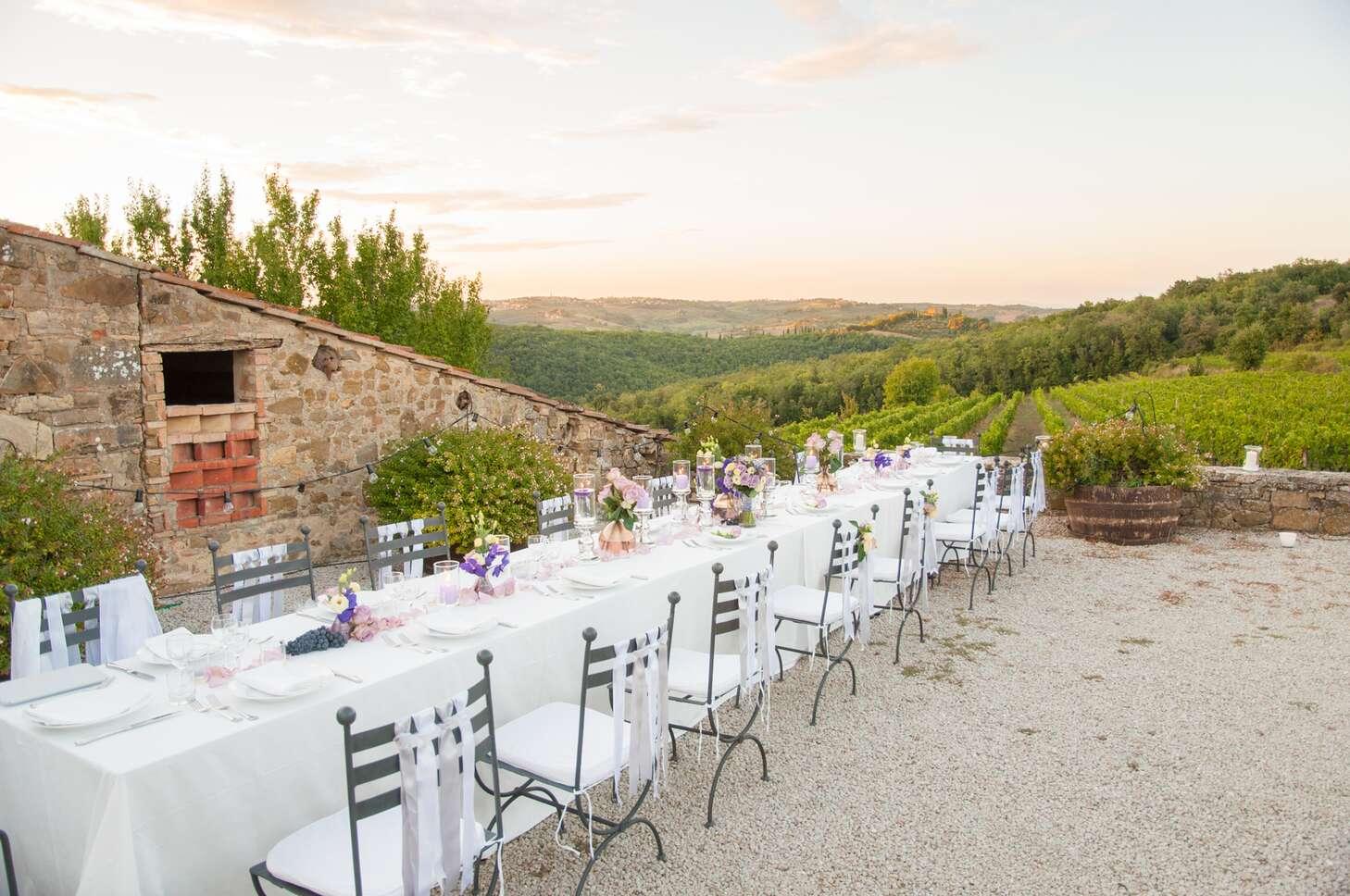
A wedding in Italy may no longer last as it once did, but it remains—at least the first one—an exercise in abundance. It expands almost by instinct: tables stretch to accommodate relatives, neighbors, and acquaintances; courses follow one another with a persistence that borders on insistence; generosity is not implied but displayed, made visible, almost measurable. For a day, economy is quietly set aside—not out of carelessness, but because the occasion does not permit restraint. A wedding does not simply mark a union. It demonstrates that there is more than enough to go around.
Dried figs stand, quite clearly, on a different stage. There is no spectacle in them, no ambition—only a quiet, almost programmatic modesty. They do not seek attention, nor promise more than they are. They belong to a cuisine of preservation rather than performance, to a table that sustains rather than impresses.
Be the first to know about Italian food events, restaurant openings and culinary travel. Subscribe to the Appetito weekly newsletter.
Bring the two together, and the imbalance is immediate. The image barely needs explanation. Fare le nozze coi fichi secchi names precisely this dissonance: the attempt to mount an event defined by abundance with means that cannot sustain it. What should signal generosity instead reveals its limits. The form remains—a feast, a gathering, a celebration—but its internal logic has shifted. Something meant to expand now contracts.
Italian, especially when it speaks through food, tends toward a particular kind of precision. The issue here is not the fig in general, but the dried fig. The distinction is telling. The fresh fruit is full, yielding, even faintly excessive—long associated with ripeness and a certain sensuality. The dried fig, by contrast, is what remains after reduction: contracted, diminished, stripped of immediacy. It is precisely this version that enters idiomatic language when Italian wants to signal minimal or negligible value.
The pattern is consistent: non valere un fico secco (“not to be worth a dried fig”), non contare un fico secco (“not to count for a dried fig”), non stimare un fico secco (“not to esteem something a dried fig”). Italian does not say non valere un fico. It is not the fig as such that carries little value, but the fig already reduced.
This is why the idiom lands with such accuracy. Fare le nozze coi fichi secchi is not just about doing something cheaply. It is about insisting on the form of abundance while quietly removing its substance—asking a diminished thing to perform an expansive role, and being surprised when it cannot.
English offers partial equivalents—“champagne taste on a beer budget,” or “to cut corners”—but neither fully captures the Italian emphasis on the staging of adequacy. The problem is not wanting more than one has. It is the quiet, persistent hope that less might still pass for enough.
As noted in the Grande dizionario della lingua italiana, the expression appears alongside a close variant—fare le nozze coi funghi—which conveys the same gesture. Dried figs or mushrooms, the substitution may seem casual. It is not. The version with mushrooms has remained just that—a variant—while fichi secchi have held their ground, sustained by the force of their image: small, wrinkled, darkened, drawn in on themselves. The visual economy is already there—and with it, a sense of inadequacy, of insufficiency, that the expression quietly carries.
In the end, it is precisely this persistence that brings into focus what the expression has been suggesting all along. Italian does not simply name an ingredient; it selects one that already carries its own argument. And here, as the idiom quietly reminds us, some things—however useful in themselves—are simply not meant to bear the weight of a feast.