

In Italian, food is rarely just food. It organizes time, relationships, and expectations. This column explores Italian sayings and proverbs as ways of thinking shaped at the table.
These expressions preserve that knowledge in compact form. Read literally, they speak about eating. Read more closely, they offer insight into how experience, pleasure, and social life are understood.
The aim is simple: to treat language as another ingredient—handled with care, tasted slowly, and shared. No prior appetite required. It tends to arrive along the way.
Essere come il prezzemolo
Literal translation: “To be like parsley”
Meaning: To show up everywhere; to be constantly present
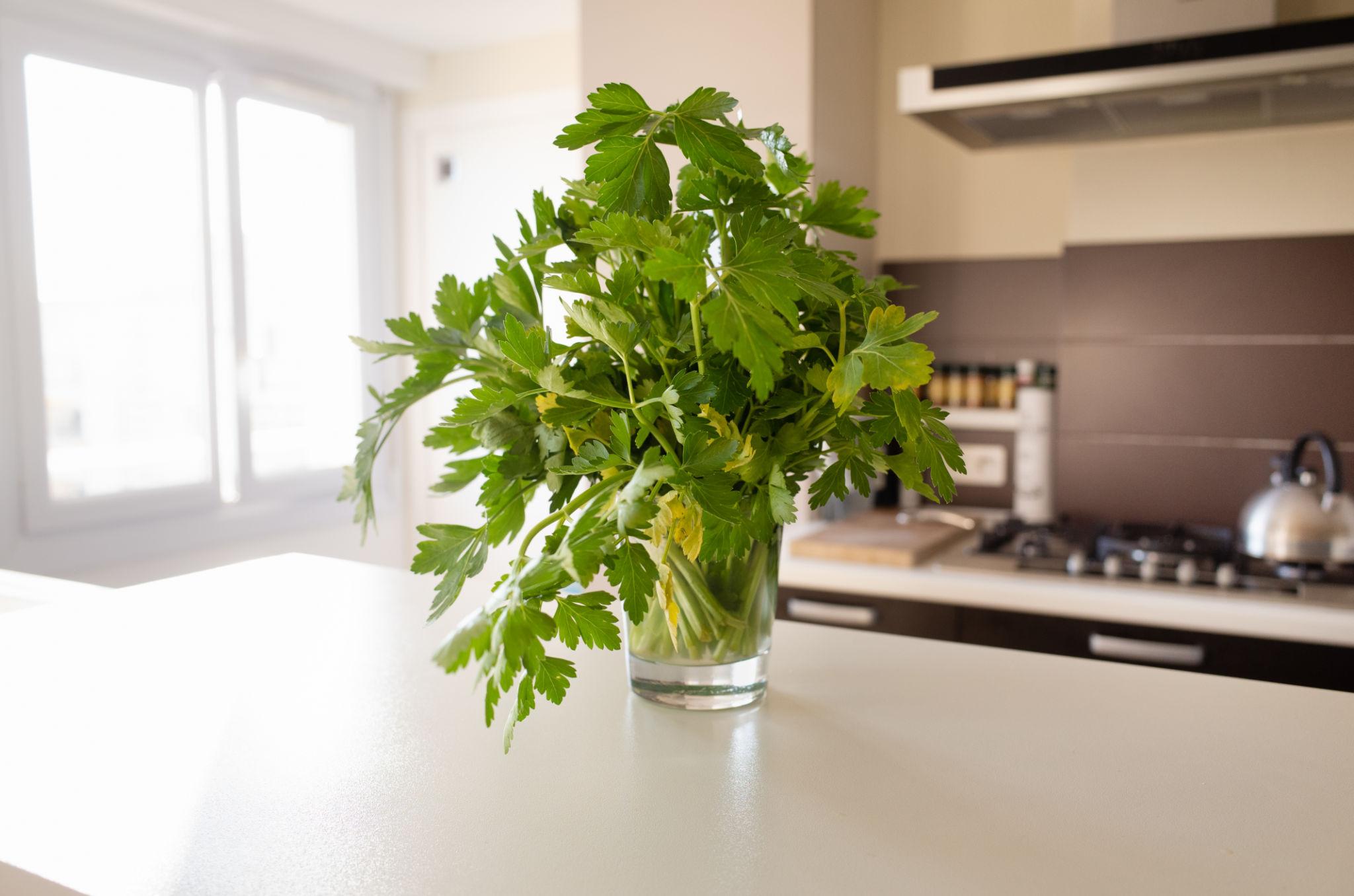
In the taxonomy of Italian cooking, parsley occupies a peculiar position. It is never the ingredient one builds a dish around, and yet it is almost impossible to avoid. It moves lightly across the table—over pasta, into sauces, alongside fish, through soups, finishing meat—never insisting, always there. It does not announce itself; it simply recurs, with a familiarity that at first barely registers. If Italian cuisine had a background actor, parsley would be it: tireless, discreet, and best not examined too closely.
From this quiet regularity emerges the idiom essere come il prezzemolo. The comparison is less metaphor than recognition. A person described in this way is not dominant or overbearing. Their defining trait is an effortless recurrence—so natural that it initially escapes notice. They appear at dinners, in conversations, at events with such consistency that their presence begins to feel less like a choice than a habit. Like parsley, they require no introduction. More often than not, they are already there.
Want more dishes where parsley quietly brings everything together? Find them at Appetito Magazine.
If in Alfredo Panzini’s Dizionario moderno (1905), where it is first recorded, the expression appears without comment—suggesting a largely descriptive use—contemporary dictionaries retain this sense while more readily registering an additional nuance, carrying a mild but perceptible irony. What is noted is no longer simple frequency, but frequency that begins to draw attention to itself. What starts as barely noticeable can, with repetition, become difficult to ignore—until constancy edges toward excess, even if never openly unwelcome.
The individual who is “like parsley” moves easily from one setting to another—often welcome, sometimes expected. Yet what in the kitchen passes without remark, in social life is more quickly perceived. At a certain point, ease gives way to overexposure. The idiom registers this shift without dramatizing it. It does not accuse; it simply adjusts the frame.
A small, almost incidental echo of this logic can be found in the American supermarket. Among neatly packaged herbs, one often encounters “Italian parsley,” as if parsley required a nationality—though, in the end, the difference is mostly a matter of leaves. The label suggests distinction: something more deliberate, perhaps more authentic. And yet the effect is quietly familiar: this “Italian” parsley, too, seems destined to find its way into everything—only now with better branding.
The irony is instructive. What in Italy risks excess becomes abroad a marker of identity. Parsley, once merely present, is now culturally marked—and all the more widely used for it. Like the person it describes, it adapts easily, inserting itself into new contexts with quiet confidence.
A contrast appears in language. In English, expressions such as “to turn up like a bad penny” imply irritation, even exclusion. The repetition is unwelcome; its persistence, suspect. The Italian idiom essere come il prezzemolo, by contrast, stays within a domestic register. It tolerates what it observes. The figure it names may be excessive, but not objectionable—familiar, not disruptive. If there is criticism, it is softened, almost preemptively forgiven.
There is, finally, a principle at work. Italian cooking often turns on balance—not as abstraction, but as practice: knowing when to add, and when to stop. Parsley, modest as it is, tests this sense with particular clarity.
The idiom does the same. The issue is not presence, but accumulation. Between the two lies a boundary rarely articulated but widely understood. In the kitchen, as in life, the difference is rarely a matter of rules—only of knowing when to stop.
Be the first to know about Italian food events, restaurant openings and culinary travel. Subscribe to the Appetito weekly newsletter.