

Travelers are increasingly choosing to experience destinations like a local. This trend has led to a shift in accommodation preferences, with a sharp rise in the popularity of short-term rentals like Airbnb and VRBO. For the culinary traveler visiting a gastronomic paradise like Italy, this is an attractive option as the convenience of a kitchen allows them to cook using local ingredients.
But the departure from traditional hotels comes with tradeoffs that make it an unsuitable option for some. Fortunately, that’s changing, thanks to Oriana Homèl, a fast-growing luxury aparthotel brand in Italy that’s championing a hybrid model that seamlessly blends home and hotel.
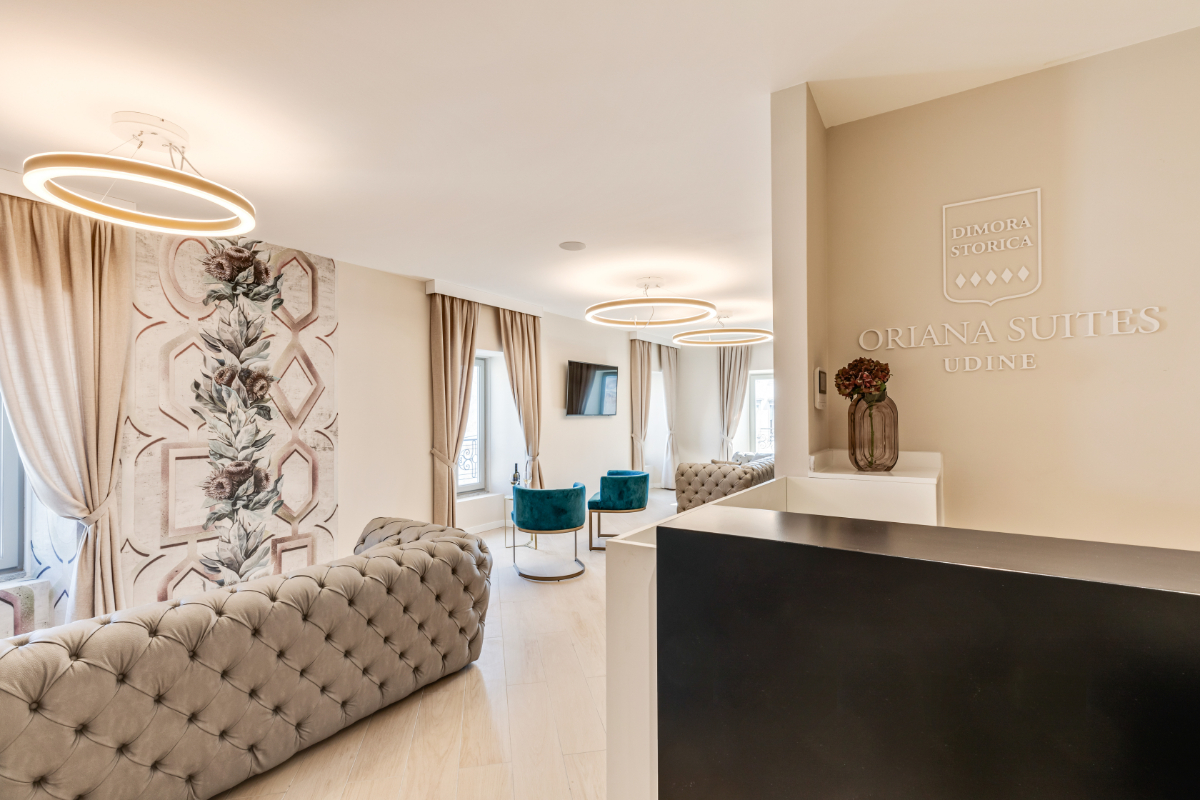
Oriana Homèl currently has five locations: Milan, Rome, Verona, Turin, and Udine. The brand is also on track to open several new locations in the coming months, expanding its reach across Italy. Their elegant, serviced suites feel like a home away from home, while still offering the conveniences of a hotel like housekeeping and concierge services. Like a short-term rental, their properties don’t offer amenities like onsite dining or beauty and fitness centers, however they all boast prime locations in the heart of a city’s historic center, bringing the best of a destination to your doorstep.
I recently caught up with a representative from the brand to get a better sense of their hospitality model by understanding its origins and where it’s headed in the future. This is a must-read for anyone ready to embrace something new in the world of travel and tourism. Buon viaggio!
Editor’s Note: This interview has been translated from the original Italian and edited to best reflect the spirit and intent of the interviewee’s responses.
Where did the concept of “Homèl” (the fusion of “home” and “hotel”) come from? And what kind of travel experience did you want to create when you launched the brand?
“Homèl” was born from the union of two words that, for us, represent the essence of contemporary hospitality: home and hotel. When we launched the project in 2015, our goal was to introduce a style of accommodation that was still relatively underdeveloped in Italy at the time: spaces capable of combining the freedom and comfort of a private apartment with the care, standards, and reliability of a hotel.
The idea was to create elegant spaces in central locations that were deeply connected to the urban context around them, where guests could feel genuinely welcomed, even if only for a few days. From this vision emerged a different way of experiencing a stay—more personal, more fluid, and more closely aligned with the real rhythm of the city.
Oriana Homèl exists somewhere between a traditional hotel and a short-term rental. How do you define this hybrid model today, and how do guests typically respond to the experience?
When we launched the brand, we realized that the way people travel was changing rapidly. People were no longer looking simply for a room, but for places they could truly live in, with greater freedom and comfort.
For this reason, we developed a model that combines spacious, well-appointed accommodations, fully equipped kitchens, and the freedom to organize your stay with the services and standards typical of a hotel: dedicated customer care, professional management, and a constant focus on quality.
The response from guests has been extremely positive. Those who arrive expecting a traditional hotel discover a more relaxed and independent experience; those who are accustomed to short-term rentals find a significantly higher level of reliability and service. Today, the group maintains an average rating of 9.4 on Booking.com, is recognized as a Superhost on Airbnb, and consistently ranks among the top properties on TripAdvisor in the destinations where we operate. These results confirm just how well this model meets the needs of the contemporary traveler.
In recent years, travelers seem to be placing more importance on flexibility, privacy, and longer stays. Which changes in guest expectations have stood out to you the most?
In recent years, we have seen a growing desire for more versatile, genuinely livable spaces. Today, many guests work remotely, choose slower travel rhythms, and seek increasingly personalized experiences. The concept of privacy has also evolved: it no longer simply means discretion, but above all the freedom to manage one’s time without rigidity, knowing that at any moment they can rely on a dedicated staff.
We have responded to this evolution by focusing on spacious suites, essential design, and technologies designed to simplify everyday life. But what truly makes the difference is the quality of the sensory experience: guests want to wake up in front of a view that leaves a lasting impression, touch quality materials, and use carefully selected objects. For this reason, our suites feature Made in Italy linens, Smeg espresso machines with Lavazza pods, and Dyson hairdryers. These are not simple details, but a concrete sign of attention designed to make every guest feel welcomed even before their arrival.
The growth of short-term rentals has sparked a broader debate about tourism, sustainability, and the relationship between visitors and local communities. How do you see the aparthotel model within this conversation?
We believe the aparthotel model can represent a more sustainable balance compared to unstructured short-term rentals. We operate with hotel standards, professional processes, and a long-term vision, with the aim of integrating into the urban fabric in a responsible and coherent way, bringing value both to guests and to the cities that host them.
For us, sustainability is not only about the environmental aspect, but also the social and cultural one: restoring historic buildings instead of constructing new spaces, collaborating with local businesses, and promoting a more conscious form of tourism that is respectful of cities. Hospitality must be a driver of enhancement for the area, not exploitation.
This approach is reflected in concrete choices: we work on existing historic buildings, restoring them in respect of their identity and improving their energy efficiency. For example, our Milan property has achieved LEED Gold certification, while projects such as the restoration of the former 15th-century Mulino Mandelli in Treviso or the former Bank of Italy headquarters in Trapani represent for us a way to preserve historical identity and architectural heritage, giving new life to places that already exist.
The growth of short-term rentals has sparked broader conversations around tourism, sustainability, and the relationship between visitors and local communities. How do you see the aparthotel model fitting into that discussion?
As Oriana Homèl has expanded into new cities, have there been any lessons, guest requests, or operational insights that are influencing the way you approach future projects?
Absolutely. Each city has taught us something different. Udine, for example, which initially seemed like a gamble, showed us that there are no secondary destinations – only places that are less spoken of. In just one year, we reached a 90% occupancy rate and climbed the TripAdvisor rankings.
This experience confirmed that our model can also work outside major international destinations, provided there are strong local identities, a lively historic center, and quality properties.
We have also understood how important it is to maintain a consistent identity, while still adapting to the characteristics of each city. Today, guests look for simple, seamless, and personalized experiences: for this reason we continue to invest in the quality of spaces, technology, and service, without losing focus on design, the authenticity of places, and the sustainability of projects.
And then there is one aspect we learned very early on: often, it is the most subtle details that determine the memory of a stay.
Oriana Homèl continues to grow across Italy. Are there any new destinations or projects that particularly excite you? And how do you imagine the evolution of hybrid hospitality over the next ten years?
After finalizing important operations, in the coming months we will open new properties in Naples, Treviso, Trapani, and Como. For us, Naples has a special value because it represents a return to our origins: we will open in a historic, heritage-protected building in the heart of the city. Meanwhile, in Treviso, 23 apartments will be created inside the former 15th-century Mulino Mandelli in a project designed by Studio Matteo Thun & Partners, while in Trapani we are restoring the former Bank of Italy headquarters overlooking the marina, which will be transformed into suites with views of the Egadi Islands.
At the same time, we are observing with interest iconic cities such as Venice and Florence, where our approach to the restoration and enhancement of historic buildings could be expressed at its best.
Looking to the future, we believe that hybrid hospitality will become increasingly central. Travelers, both leisure and business, will seek spaces capable of offering autonomy, comfort, and services in a natural way, without the rigidity of traditional hotels but with high quality standards.
Are there any final thoughts or aspects of Oriana Homèl’s philosophy that haven’t come up during the interview, but that you would like to share with our readers?
Yes, and it is perhaps the aspect we care about most. The name “Oriana” is not accidental: it evokes light, beauty, and a discreet elegance. When we chose it, we wanted every property to convey exactly this feeling: not ostentatious luxury, but the sense that every element has been considered with sensitivity and attention even before the guest’s arrival.
For this reason, we choose places where history is still tangible: a window overlooking the Arena of Verona, an eighteenth-century floor in Rome, the sea of Trapani just a few steps away. We believe that traveling also means leaving space for wonder, and that a well-lived stay can change the way a city is remembered.
More than simply offering hospitality, our aim is to create a sense of belonging. We want every guest to feel naturally welcomed, experiencing the city at their own pace and carrying with them, upon departure, the feeling of leaving a second home.