

In Italian, food is rarely just food. It organizes time, relationships, and expectations. This column explores Italian sayings and proverbs as ways of thinking shaped at the table.
These expressions preserve that knowledge in compact form. Read literally, they speak about eating. Read more closely, they offer insight into how experience, pleasure, and social life are understood.
The aim is simple: to treat language as another ingredient—handled with care, tasted slowly, and shared. No prior appetite required. It tends to arrive along the way.
Literal translation: By force, not even vinegar can be made
Meaning: Trying to force people into action rarely produces good results. Things done unwillingly tend to be done badly.
English speakers have a horse.
Italians have vinegar.
The first imagines leading a stubborn horse to water, only to discover that willingness cannot be forced. Italians arrive at the same conclusion, but by taking a detour through the kitchen: Per forza non si fa nemmeno l'aceto—"By force, not even vinegar can be made."
The imagery could hardly be more different. The message is much the same.
Italians still use the expression whenever someone tries to force an outcome—whether pushing another person, insisting on a decision, or refusing to let events unfold at their own pace.
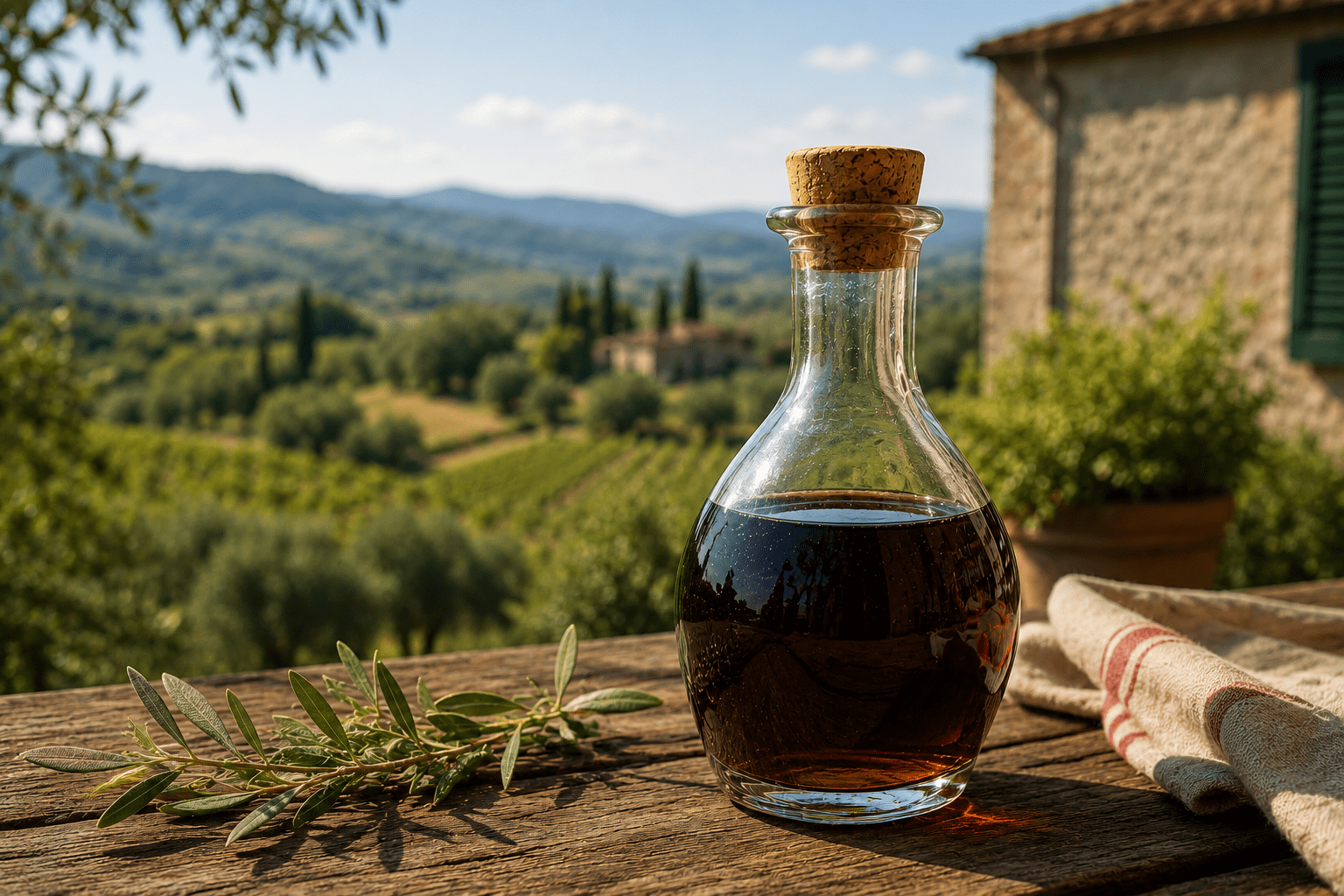
For many American readers, the choice of vinegar may come as a surprise. The vinegar they most readily associate with Italy is balsamic. A few drops can elevate everything from Parmigiano Reggiano to fresh strawberries. The finest bottles spend years aging in wooden barrels before ever reaching the table. It is the last ingredient one would expect to symbolize failure—or the futility of trying to force things.
Want to be the first to know about Italian food events, restaurant openings and culinary travel? Subscribe to the Appetito weekly newsletter.
The people who first lived by this proverb lived in a very different culinary world. Long before vinegar became something to taste and discuss, it was simply something to use. For centuries, it was a staple of household kitchens, valued as much for preserving food as for seasoning it. It quietly did its work, day after day. In a culture where wine occupied the place of honor at the table, vinegar inevitably stood a step below. It often marked the moment when wine had become something else—not without value, but no longer what anyone had hoped for. More often than not, it was simply the final stage of a transformation that had run its own course.
That is precisely what makes it such a powerful metaphor. Ordinary, useful, and never especially celebrated, it also possessed another quality that fits the proverb remarkably well. Vinegar cannot be rushed. It is the result of a gradual transformation that follows its own rhythm rather than ours. Whether or not that was the proverb's original inspiration, it certainly deepens its wisdom.
Italian cooking teaches that lesson every day. Dough cannot be bullied into rising. Ragù refuses to cook faster simply because we are impatient. Good cheese matures in its own time. The kitchen reminds us that some results depend less on force than on respecting the nature of the process itself.
Perhaps that is why this old saying feels unexpectedly modern. We live in an age obsessed with speed, efficiency, and instant results. Yet some things simply refuse to be forced. They require willingness, the right conditions, or simply the time to take shape. Some of the best things in life, whether at the table or beyond it, follow their own course.
Push less. Wait more. Even vinegar cannot be made per forza.
Looking for authentic Italian recipes? Explore Appetito's collection of regional dishes, traditional favorites, and easy weeknight meals inspired by Italy.