

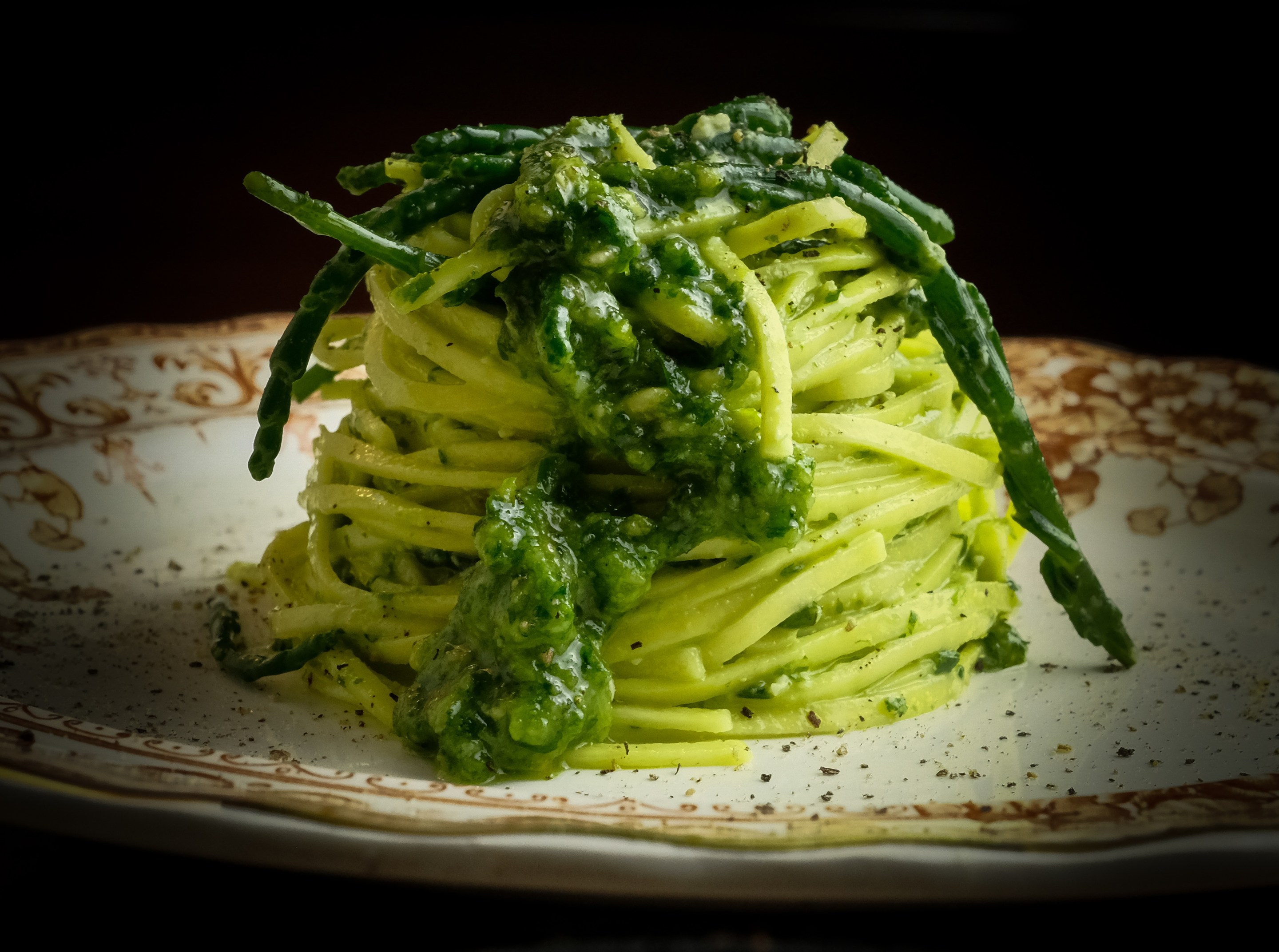
With spring and wild garlic season just around the corner, this is a pesto that garlic lovers will want to make on repeat.
Wild garlic is one of those ingredients that can take you by surprise. In my experience, sometimes it's very subtle, and sometimes it isn’t. That’s exactly why the quantities in this recipe are deliberately vague. You’ll need to use all your pesto superpowers to blend, taste and adjust the flavors in the sauce to get it just right for you.
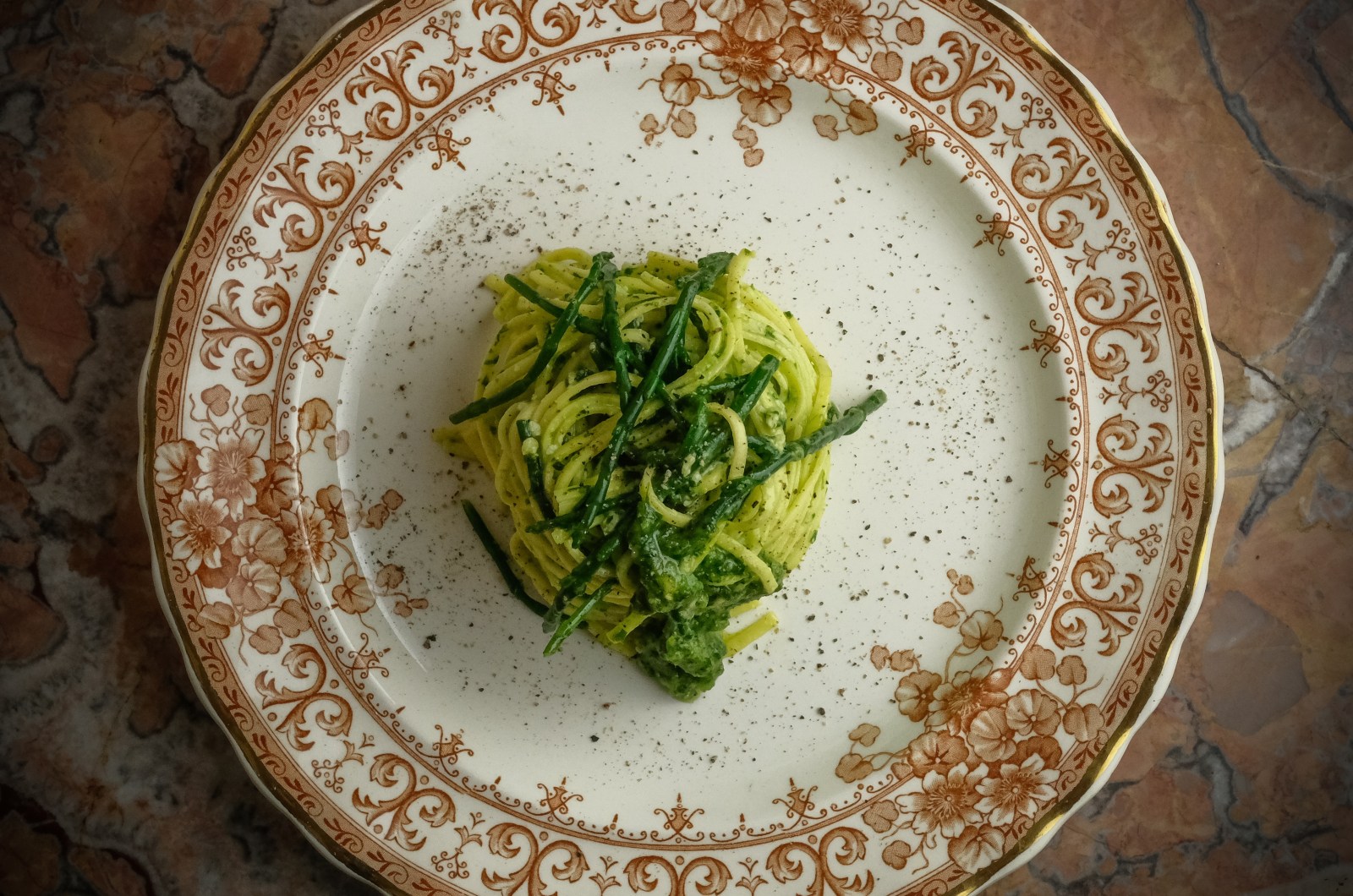
Filini in Wild Garlic Pesto with Samphire
4
servings30
minutes30
minutes698
kcal Notes: I’ve used samphire as a substitute for the green beans traditionally added to pesto Genovese, but if the samphire you have is particularly slaty you might want to limit how much you use, or make sure you don’t make the pesto blend too salty with large amounts of parmesan.
Ingredients
2-3 2-3 large handfuls of wild garlic leaves**
large handful of parmesan
large handful of pinoli (pine nuts)
large handful of samphire
EVO, to taste (at least half a cup)
marjoram/thyme leaves, to taste
- Pasta
14 oz. 14 dry filini, spaghetti alla chitarra or linguine
- Mantecatura: none
Directions
- Chill the blender bowl and blade, as you would for a Pesto Genovese, for about 30 minutes before you’re ready to make the pesto.*
- Pinch the wild garlic leaves off the stalks, which you’ll discard, then wash and pat dry the garlic leaves.
- Grate the cheese (about two large handfuls). If you’d like a smoother texture pesto, you can begin to crush the pinoli in a pestle and mortar.
- Boil the samphire and then set it aside.
- Following the normal pesto technique, begin by adding the garlic leaves, a pinch of salt and a drizzle of the EVO to the chilled blender bowl.
- Pulse-blend to form a paste with the garlic and a pinch of salt.
- Add the other ingredients, varying quantities until you get the balance of flavours that you prefer.**
- Boil the pasta and then combine the pasta and sauce. The best way to do this (with any pesto, in fact) is to use room temperature pesto, then first warm the tossing pan or mixing bowl you’re going to use with some of the pasta cooking water.
- When the pasta’s cooked to your liking, discard the water in the bottom of the mixing pan and add roughly half the total amount of pesto.
- Loosen it up a little by adding a tablespoon of cooking water, no more.
- Fish the pasta out of the cooking water with tongs or a pasta spoon and toss/mix to combine.
- You can add small amounts of extra cooking water if you want to loosen it up further, and of course, more pesto, too.
- Finally, throw in the samphire and toss some more until the samphire’s evenly distributed throughout the pasta.
- Serve with freshly grated black pepper and parmesan.
Notes
- *Chilling the blender bowl and blade is to make sure the temperature of the crushed herbs is as low as it can be in the blender. Many herbs, including garlic and basil, can turn almost black in color and take on a very bitter taste if they’re warmed too much in a blender. This is also the reason that you always pulse-blend any pesto that is made with a green leaf.
- **If you’re wary about the strength of the wild garlic leaves, you can go for a mix of basil and garlic leaves instead to tweak the strength of the garlic flavour in your pesto.
Did you make this recipe?
Tag @appetitomagazine on Instagram and hashtag it with #italianfoodanddrink
Like this recipe?
Follow @Appetitomagazine on Pinterest
Follow us on Facebook!
Follow us on Facebook