

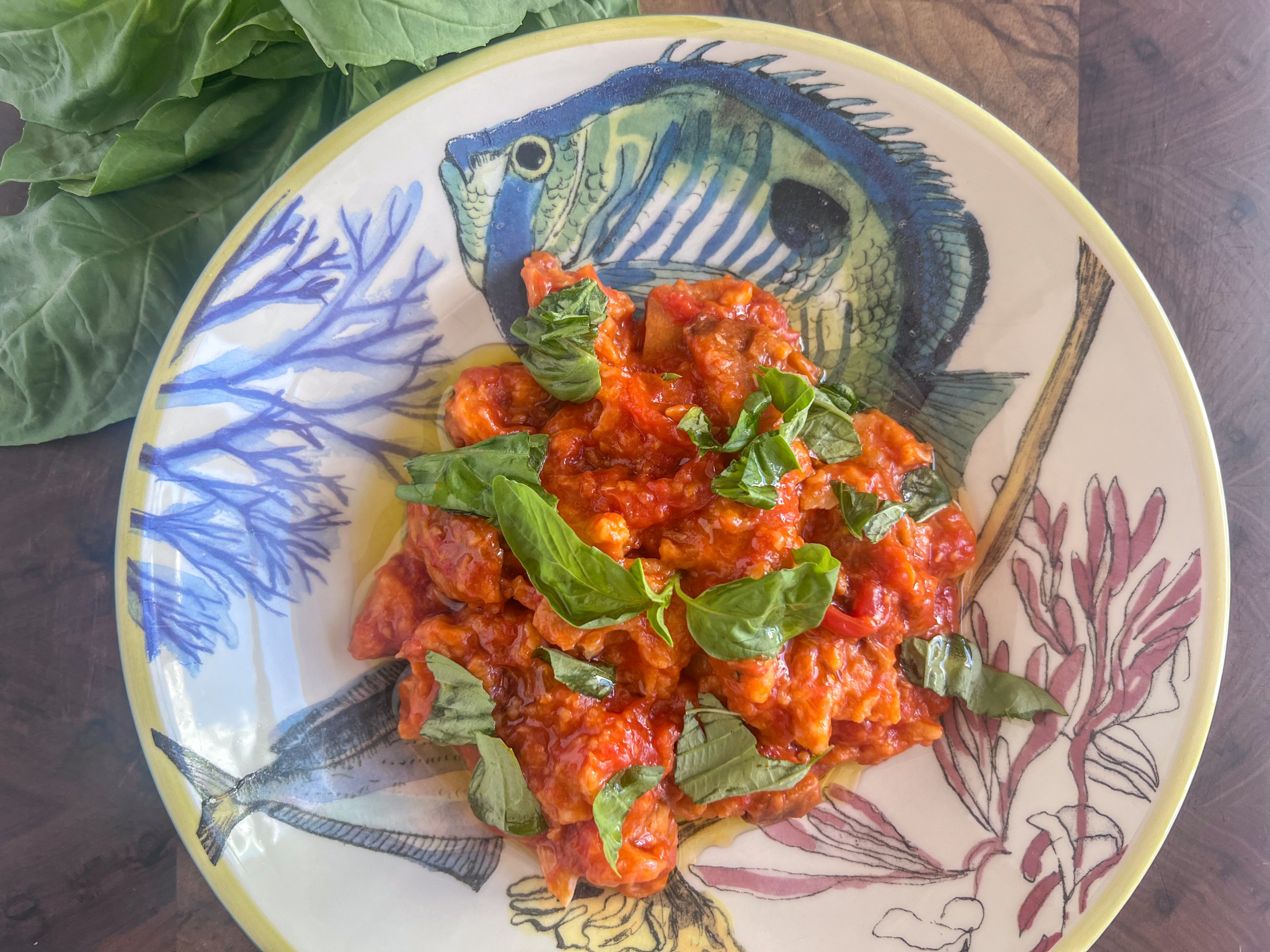
This is Cucina Povera at its finest. Say hello to a Tuscan classic called Pappa al Pomodoro. It sounds better in Italian, but if you must know, it means tomato mush. A better way to imagine it would be to think of a rustic tomato bread stew.
Cucina Povera is the Italian way of resourceful cooking. In this classic recipe from Tuscany, the body of the dish is built from stale bread. It demonstrates an extraordinary way to use up old bread instead of wasting it. When the hard bread is simmered with tomatoes, garlic and olive oil, it soaks up incredible flavors and juices that bring it back to life in a magical way.
The secret that elevates any simple recipe is to use quality ingredients. While making this one, use fresh garlic, not powder or pre-peeled from a jar. Use fresh, ripe summer tomatoes if available; canned tomatoes work great too if they are San Marzano.
The final two important ingredients are the basil and olive oil. For certain recipes, my nonna always said, “Better to use no basil than dried basil.” This is one of those recipes where you should apply that rule. Next, use extra virgin olive oil. A good quality extra virgin olive oil is what gives this dish its richness. Lastly, although cheese might seem like a natural finishing touch, it isn’t traditionally added.
Every family has their own version of Pappa al Pomodoro, yet all are built on the same foundation. There are versions that have a smoother texture, while others appear more rustic with visible pieces of bread. Then some use onions, carrots or celery in the base. It’s often common for Italian families to create a smooth bowl of this recipe for their young children. If this recipe is new to you, give it a try. It’s very beginner-friendly, and with quality ingredients, you’ll easily create something special with minimal effort. It can be served hot, warm or at room temperature. If you have leftovers, you'll notice that it becomes even better the next day as the bread has extra time to absorb more of the flavor.
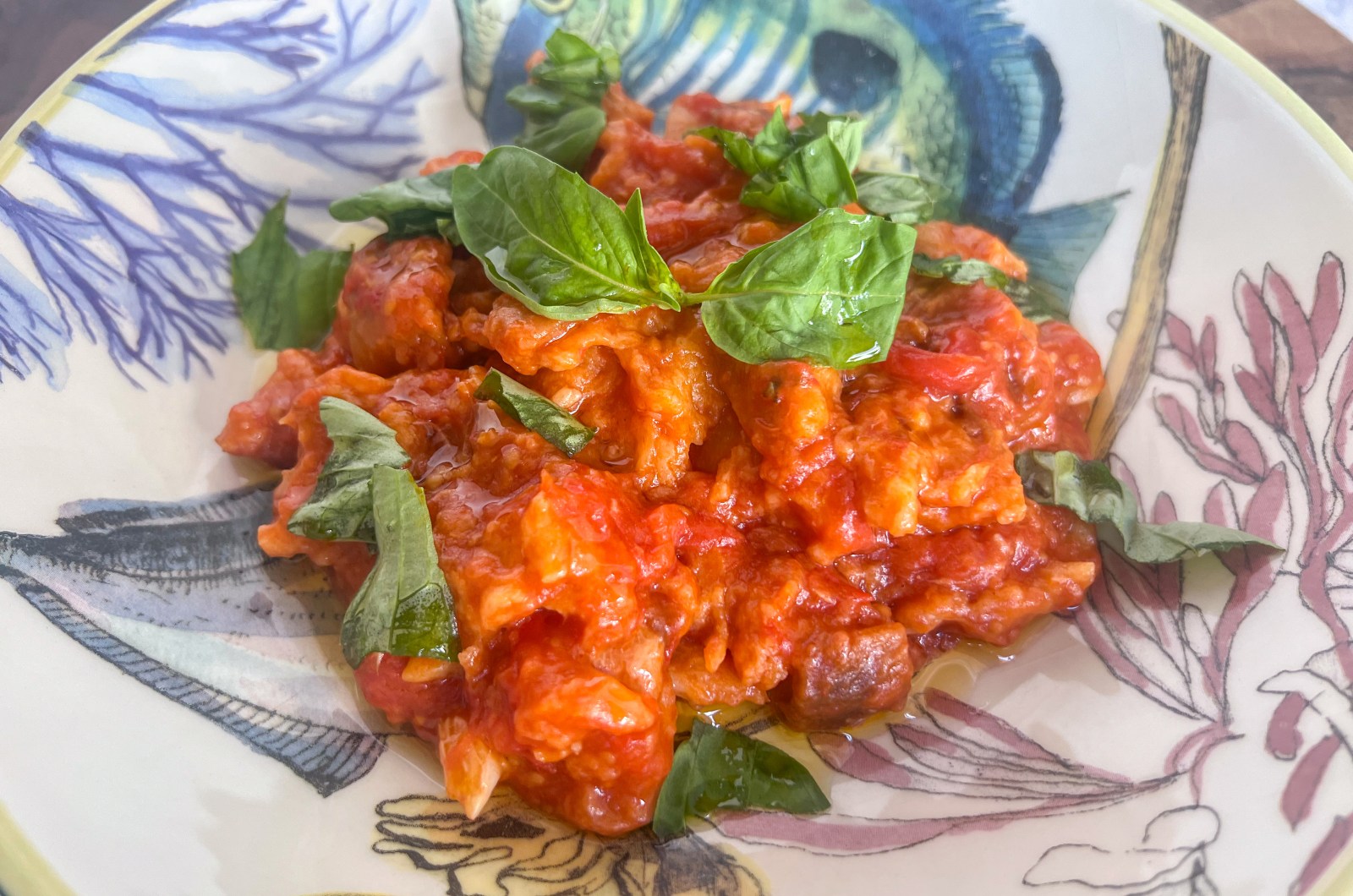
Pappa al Pomodoro
4
servings30
minutes40
minutesIngredients
14 oz. 14 canned tomatoes or 2 cups chopped cherry tomatoes
2-3 handfuls 2-3 stale bread cubes (or enough slices to cover the bottom of the pan)
3 tbsp. 3 olive oil, plus more for drizzling
3 cloves 3 fresh garlic, peeled and smashed
1 cup 1 vegetable broth or water, plus more as needed
1-2 tbsp. 1-2 freshly torn basil leaves
salt to taste
Directions
- Heat olive oil in a medium-sized saute pan over medium heat.
- Add the garlic and let it simmer for about 30 seconds, making sure not to burn it.
- If the pan is too hot, lift it up from the burner and tilt it to one side to let the garlic sizzle in the pool of hot olive oil as the flavors infuse without burning.
- Add tomatoes and sprinkle with two pinches of salt.
- Stir, let simmer for about five minutes then add one cup of broth or water, and stir.
- Once this mixture comes to a light bubble, cover the bottom of the pan with slices or pieces of stale bread.
- If the tops of the bread aren’t wet, push them down with a wooden spoon, or simply splash more broth or water over them to get wet.
- Cover and let simmer for 20-30 minutes over low heat, stirring occasionally.
- You want the bread to have enough time to rehydrate.
- Once time is up, the bread should be very soft as it easily breaks apart.
- Use a whisk or wooden spoon to break or mash it all up as it combines.
- If it’s too dry, add a little broth or water as you’re mixing.
- The texture should be soft, thick and spoonable, not soupy.
- Let sit for five minutes so the bread can absorb more of the flavor and liquid.
- Spoon mixture into serving bowls. Make sure to garnish with a generous drizzle of extra virgin olive oil and freshly torn basil leaves.
Notes
- You can choose to use tomatoes from a can, like peeled San Marzano, or chop up fresh ones like cherry or Roma tomatoes. For the bread, you can choose any bread you have that has gone stale. Some of my favorites are ciabatta, Italian or sourdough. To reheat leftovers, add a splash of water or broth and warm gently.
Did you make this recipe?
Tag @appetitomagazine on Instagram and hashtag it with #italianfoodanddrink
Like this recipe?
Follow @Appetitomagazine on Pinterest
Follow us on Facebook!
Follow us on Facebook